Museum Entrance
Sofia, Bulgaria
Explore the Museum Entrance of Sofia Central Mineral Baths, now the Regional History Museum in Sofia, Bulgaria, delving into 8,000 years of city history.
Overview
The ‘Museum Entrance’ at the Sofia Central Mineral Baths leads you into the fascinating Regional History Museum of Sofia, a cultural gem housed within one of the city's most iconic architectural landmarks. This grand building, once a bustling public bathhouse, has been meticulously restored and transformed into a repository of Sofia’s rich past, spanning over 8,000 years of history. Visitors stepping through its doors embark on a journey from prehistoric settlements to the vibrant modern capital, exploring the layers of civilizations that have shaped this ancient city.
While the building’s exterior still hints at its original purpose with its vibrant yellow and green facade and the persistent scent of mineral water, its interior is now dedicated to telling the compelling story of Sofia. The museum offers a comprehensive collection of artifacts, interactive exhibits, and engaging displays, making it an essential stop for anyone eager to understand the soul of Bulgaria’s capital.
History & Cultural Background
The site of the Central Mineral Baths has been a hub of activity thanks to Sofia’s natural mineral springs, with a history of public bathing dating back to at least the 16th century. The current magnificent building, designed by architects Petko Momchilov and Friedrich Grünanger, was constructed between 1906 and 1913.
Its architectural style is a captivating blend of Vienna Secession, Neo-Byzantine, and traditional Bulgarian elements, featuring striking ceramic mosaics and ornate decorations that were largely designed by artist Haralampi Tachev. The baths served as a popular public bathing facility until 1986 when they closed due to deteriorating condition. After decades of neglect and extensive restoration efforts, the building found a new life, officially reopening its doors in September 2015 as the permanent home of the Regional History Museum of Sofia, fulfilling a vision for a city museum that began as early as 1928.
What Makes It Special
What truly sets the Museum Entrance of the Sofia Central Mineral Baths apart is the building itself. It is not merely a venue for history but a historical artifact in its own right, a testament to Sofia’s architectural grandeur and its enduring connection to mineral waters. The exterior, with its colorful majolica tiles and distinctive domes, makes for an unforgettable first impression.
Inside, the transformation from a bustling bathhouse to a tranquil museum is remarkable. The former bathing halls now house eight exhibition rooms, showcasing a vast collection of over 120,000 cultural treasures. These artifacts trace Sofia’s continuous development from the 6th millennium BCE through the Roman Empire, Ottoman rule, and up to the 1940s. Furthermore, an active mineral water fountain continues to flow outside the building, allowing both locals and curious visitors to taste the therapeutic waters, connecting them tangibly to the city's ancient past.
Stories, Fun Facts & Local Details
Upon entering the museum, look closely above the main entrance for ceramic images of Apollo Medicus, the god of health, and the goddess Tyche, patroness of towns, beautifully crafted by Professor Stefan Dimitrov. These figures are a subtle nod to the building's healing past and the city's enduring spirit.
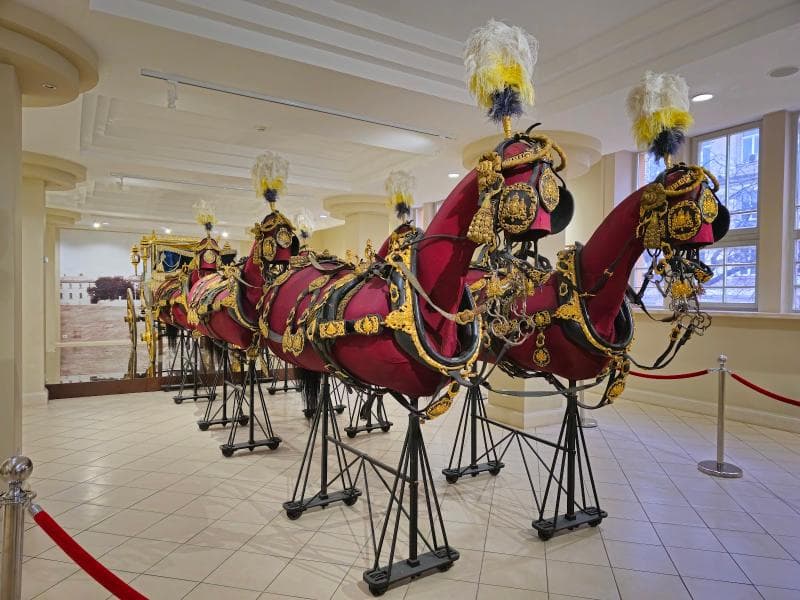
A fascinating detail is that while the museum's collection was established in 1928, its first dedicated exhibition space was tragically destroyed during the World War II bombings. It wasn't until 2015 that the museum found its magnificent permanent home. Among the museum's prized possessions are King Ferdinand's royal carriage and the Vitosha gold-sealed Deed of Tsar Ivan Shishman from 1378, which provides the earliest known mention of the city by the name 'Sofia'. The museum also features a unique recreation of a Neolithic home, complete with a rare stone ploughshare, offering a glimpse into life six millennia ago. Recent renovations have introduced modern digital technologies, including interactive screens and AI-enhanced videos, bringing Sofia's storied past vividly to life for contemporary audiences.
Visitor Perspective
For a curious traveler, stepping through the Museum Entrance offers more than just a historical tour; it is an immersion into Sofia’s identity. The museum is thoughtfully organized, guiding you through chronological exhibits that explain the city's evolution from ancient Serdica to its present form. You’ll discover ancient tools, Roman mosaics, Ottoman-era artifacts, and exhibits detailing Bulgaria's National Revival.
The grandeur of the building itself, with its ornate interiors and historical echoes, makes for a captivating experience. It is easily accessible, located on Banski Square, within comfortable walking distance of other significant landmarks like the Banya Bashi Mosque and the Ancient Serdica Complex. The museum generally operates from 10:00 AM to 6:00 PM, Tuesday through Sunday, with guided tours available in English to enrich your understanding. A visit here provides a profound appreciation for Sofia's resilience and its deep cultural heritage, revealing the city not as a static entity, but as a living, evolving story.
Coordinates: 23.3236483, 42.6993364
View on Google Maps💬 How Travelers Describe This Place
Based on community votes
Must See
517Beautiful
422Unique
394Interesting
269Photogenic
145
Traveler Stories
Discover memorable experiences shared by travelers who have visited this place.
No traveler stories yet.
Be the first traveler to share what made this place memorable.

Tour
By
Spot
Discover amazing places around the world. Your journey starts here.
Explore
© 2026 TourBySpot. All rights reserved.