Museum Areas
Astana, Kazakhstan
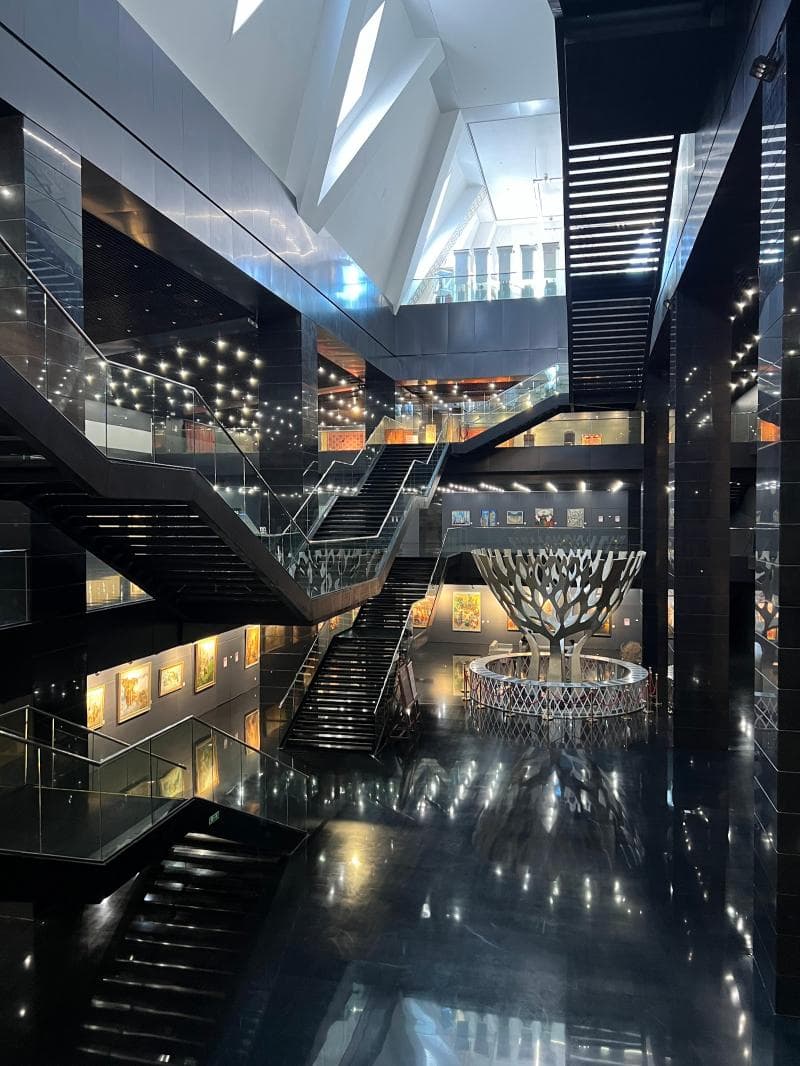
Explore the Museum Areas within the Palace of Peace and Reconciliation in Astana, Kazakhstan, a unique pyramid symbolizing interfaith harmony and culture.
Overview
The Palace of Peace and Reconciliation, often referred to as the Pyramid of Peace and Accord, stands as a striking symbol of interfaith harmony and cultural diversity in Astana, Kazakhstan. This magnificent pyramid-shaped structure, designed by the acclaimed British architect Norman Foster, was inaugurated in 2006 to host the triennial Congress of Leaders of World and Traditional Religions. Its design encapsulates Kazakhstan's commitment to peace, tolerance, and unity among its diverse population and the global community. More than just an architectural marvel, the Palace serves as a multi-functional cultural center, housing various facilities including a grand opera hall, conference rooms, and significant 'Museum Areas' dedicated to showcasing the nation's rich heritage and promoting dialogue across civilizations.
History & Cultural Background
The vision for the Palace of Peace and Reconciliation emerged from the First President of Kazakhstan, Nursultan Nazarbayev, who proposed its construction at the inaugural Congress of Leaders of World and Traditional Religions in September 2003. The building was conceived as a permanent venue for this crucial dialogue, symbolizing a global center for religious understanding and the renunciation of violence. Its completion in just over two years, by 2006, was a testament to this ambitious goal. The pyramid form itself is imbued with deep symbolism. The base represents stability and the state, while its upward narrowing signifies the pursuit of unity. The transparent glass apex symbolizes openness to the world. This architectural choice reflects the spirit of Kazakhstan, where numerous cultures, traditions, and representatives of various nationalities coexist peacefully.
What Makes It Special
Beyond its symbolic significance, the Palace of Peace and Reconciliation is an engineering and artistic marvel. Its precise dimensions, with a height of 62 meters matching the length of its square base, adhere to the principles of the Fibonacci Golden Section, a design concept found in ancient wonders like the Egyptian pyramids. The exterior transitions from a stone-clad lower section to a shimmering glass apex, adorned with a stunning stained-glass window by artist Brian Clarke. This artwork depicts 130 doves, symbolizing the 130 different ethnic groups living harmoniously in Kazakhstan. Inside, visitors are guided on an upward journey through various levels. The 'Museum Areas' within the Palace are diverse, encompassing exhibition halls and art galleries that contribute to the building's role as a cultural and spiritual hub. One notable exhibition space is the 'Cheops Atrium,' offering an expansive area for displays. There are also dedicated areas for cultural exhibits and, at times, specialized presentations like the 'Sacred Books' exhibition, which showcases rare manuscripts and documents from various faiths to foster interfaith understanding. The entire interior experience is designed to ascend, culminating in the serene 'Cradle' hall at the very top, where delegates convene, and visitors can take in panoramic views of Astana.
Stories, Fun Facts & Local Details
The Palace is home to more than just formal exhibits; it's a place rich with intriguing details. For instance, the grand opening of its 1,300-seat opera hall was graced by a performance from the legendary Montserrat Caballé, a testament to its world-class facilities. Locally, the Palace's extensive winter garden, filled with lush greenery, is affectionately known as the 'Hanging Gardens of Astana,' evoking ancient wonders. A curious exhibit within the Palace is a certified copy of the famous Nefertiti's bust, a surprising connection to Egyptian heritage, linking the modern pyramid to its ancient inspirations. The building's engineering is also a marvel, designed to withstand the extreme temperature fluctuations of Astana, which can vary by over 80 degrees Celsius. This required innovative solutions, such as placing three corners of the pyramid on bridge bearings to accommodate expansion and contraction. For visitors, the journey through the Palace is often enhanced by a unique diagonal elevator that moves at a 60-degree angle, mirroring the pyramid's slope, offering a distinctive ascent towards the summit.
Visitor Perspective
A visit to the Palace of Peace and Reconciliation offers a journey of discovery. Many visitors highlight the informative guided tours, available in several languages, which delve into the building's history, architecture, and its profound symbolic meaning. The 'Museum Areas,' including the art galleries and exhibition spaces, provide rich cultural insights as one ascends through the pyramid. The interior architecture is designed to lead the eye and the spirit upwards, from the foundation to the illuminated apex. The changing light through Brian Clarke's stained-glass doves creates a dynamic and reflective atmosphere, particularly beautiful in the afternoon when sunbeams cast sharp, colorful shadows. Reaching the top offers not only a sense of accomplishment but also breathtaking panoramic views of Astana's modern skyline, making the ascent a truly memorable experience. The Palace encourages a contemplative and educational journey, inviting travelers to understand Kazakhstan's vision of a peaceful and unified world.
Coordinates: 71.46361, 51.12306
View on Google Maps💬 How Travelers Describe This Place
Based on community votes
Photogenic
685Interesting
446Beautiful
152Unique
33Must See
16
Traveler Stories
Discover memorable experiences shared by travelers who have visited this place.
No traveler stories yet.
Be the first traveler to share what made this place memorable.

Tour
By
Spot
Discover amazing places around the world. Your journey starts here.
Explore
© 2026 TourBySpot. All rights reserved.