Museo d’Arte Antica
Milan, Italy
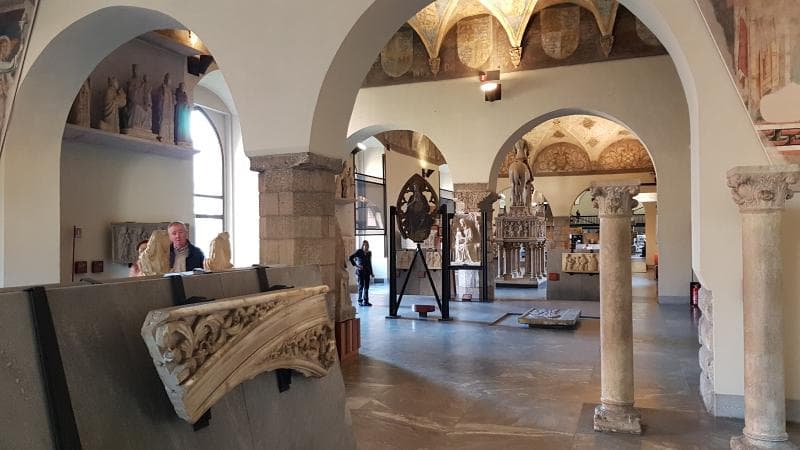
Explore the Museo d’Arte Antica at Castello Sforzesco in Milan, Italy. Discover ancient sculptures, Renaissance masterpieces like Michelangelo’s Pietà Rondanini, and Leonardo da Vinci's Sala delle Asse.
Overview
Nestled within the magnificent Castello Sforzesco in Milan, Italy, the Museo d’Arte Antica, or Museum of Ancient Art, offers a profound journey through centuries of artistic and historical heritage. This significant museum is a cornerstone of the castle’s extensive cultural offerings, presenting a rich collection of sculpture, architectural fragments, and artifacts spanning from late antiquity through the medieval and Renaissance periods. It serves as a vital repository of Lombard art, showcasing masterpieces that tell the story of Milan’s past through stone, wood, and intricate craftsmanship.
Among its most celebrated treasures are Michelangelo’s poignant, unfinished *Pietà Rondanini* and the ethereal *Sala delle Asse*, a room adorned with a unique botanical fresco by Leonardo da Vinci. The museum's diverse exhibits extend across various frescoed halls, including a notable armory and a room dedicated to tapestries, providing visitors with a comprehensive view of artistic expression and historical context within the grand setting of the ducal apartments.
History & Cultural Background
The Castello Sforzesco itself boasts a rich and complex history, beginning as a fortress in the 14th century under the Visconti family. It was later transformed into a lavish ducal residence by Francesco Sforza in the 15th century, and subsequently by his nephew, Ludovico il Moro, who famously commissioned works from artists like Leonardo da Vinci and Donato Bramante.
Over centuries, the castle endured periods of military use, transforming into a barracks and even a prison under various foreign dominations, leading to partial destruction and neglect. However, a major restoration effort at the end of the 19th century, led by architect Luca Beltrami, revitalized the structure, converting it into a civic cultural institution.
The Museo d’Arte Antica was established within the former ducal apartments, specifically designed to house and display sculptures, architectural elements, and funerary monuments primarily sourced from Milanese buildings, excavations, and religious sites. This collection, documenting styles and tastes from the 5th to the 16th centuries, became a testament to the region’s enduring artistic legacy.
What Makes It Special
What truly sets the Museo d’Arte Antica apart is its unparalleled collection, particularly its two crown jewels. Firstly, Michelangelo’s *Pietà Rondanini*, his last and deeply moving masterpiece, to which he worked until days before his death in 1564. This unfinished sculpture offers an intimate glimpse into the artist’s final creative struggle and is housed in a specially designed, contemplative space within the former Spanish Hospital, enhancing its profound impact.
Secondly, the *Sala delle Asse*, or 'Room of the Wooden Boards,' features a breathtaking trompe l’oeil fresco by Leonardo da Vinci. Commissioned by Ludovico il Moro, the ceiling and walls were painted to depict an intricate pergola of intertwining mulberry branches, creating an immersive natural canopy. While sometimes undergoing restoration, its artistic and historical significance is immense, representing a unique example of Renaissance decorative art.
Beyond these iconic works, the museum’s comprehensive collection of Lombard sculpture, including the monumental tomb of Bernabò Visconti and other celebrated funerary monuments, offers a vivid narrative of the region’s artistic evolution. The Armory section also captivates with its extensive display of European bladed weapons and firearms from the 14th to the 19th century, reflecting the castle’s military past.
Stories, Fun Facts & Local Details
The very existence of the Castello Sforzesco as a cultural hub is a story of transformation. Originally a symbol of power and military might, it was once seen by Milanese citizens as an emblem of foreign occupation. The decision to transform it into a public museum complex at the turn of the 20th century marked a significant shift, reclaiming it as a shared cultural treasure for the city.
A fascinating detail about the *Pietà Rondanini* is its journey. Discovered in Michelangelo’s workshop in Rome after his death, it wasn't always in Milan. Its fragmented and dynamic form, a stark contrast to his earlier, more polished *Pietà* in St. Peter's, reveals a profound spiritual introspection in his final years. The current display ensures it can be viewed 'from all sides,' mirroring Michelangelo's continuous work on the piece.
The name 'Sala delle Asse' ('Room of the Wooden Boards') itself alludes to the wooden panels that once adorned its walls, before Leonardo’s magical transformation. Ludovico il Moro, who commissioned this work, was a great patron of the arts, and his court in Milan was a vibrant center of Renaissance creativity, drawing luminaries like Leonardo. These details bring to life the rich artistic patronage that shaped the museum's collections.
Visitor Perspective
Visiting the Museo d’Arte Antica is an immersive experience that allows a curious traveler to delve deep into Milanese and Italian art history. As it’s located within the sprawling Castello Sforzesco, the museum is part of a larger complex offering numerous other museums with a single ticket, including the Pinacoteca and collections of musical instruments and decorative arts.
Walking through its halls, you encounter impressive stone sculptures, ancient sarcophagi, and intricate architectural fragments that piece together a visual timeline of Lombardy's past. The carefully curated exhibitions provide clear explanations, helping to contextualize the artworks and their significance. Whether you’re an art historian or a casual visitor, the sheer scale and beauty of the collections, especially the contemplative power of the *Pietà Rondanini* and the grandeur of Leonardo’s fresco, promise a memorable and enriching cultural encounter in the heart of Milan.
Coordinates: 9.17861, 45.47
View on Google Maps💬 How Travelers Describe This Place
Based on community votes
Unique
836Photogenic
795Beautiful
620Interesting
522Must See
83
Traveler Stories
Discover memorable experiences shared by travelers who have visited this place.
No traveler stories yet.
Be the first traveler to share what made this place memorable.

Tour
By
Spot
Discover amazing places around the world. Your journey starts here.
Explore
© 2026 TourBySpot. All rights reserved.