Mount Fløyen
Bergen, Norway
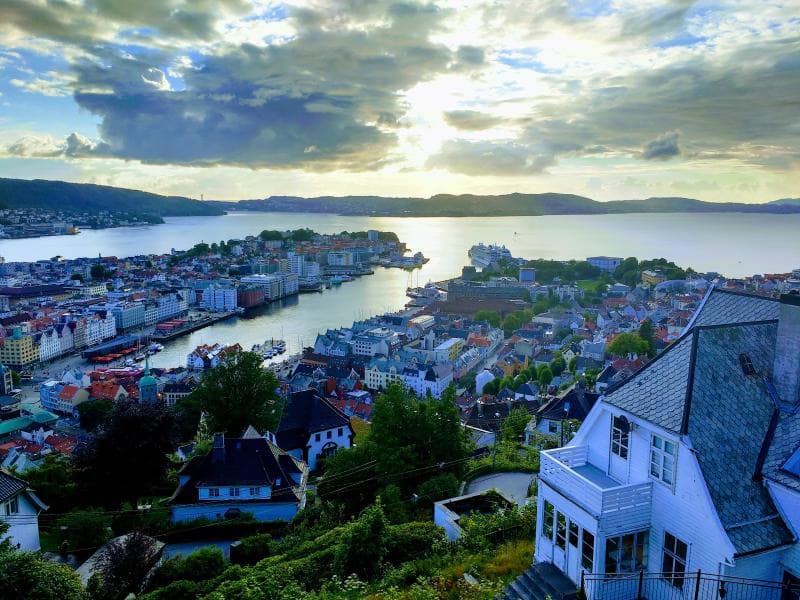
Discover Mount Fløyen in Bergen, Norway, via the historic Fløibanen funicular. Enjoy panoramic views, hiking trails, and family-friendly attractions.
Overview
Mount Fløyen, one of the famous seven mountains encircling Bergen, Norway, offers an accessible and breathtaking escape into nature. Rising 320 meters above sea level at its most visited point, it provides unparalleled panoramic views of the city, its picturesque harbor, the surrounding fjords, and distant islands. This iconic landmark serves as a beloved recreational area for both Bergen residents and curious travelers from around the world. The easiest and most popular way to reach the summit is via the historic Fløibanen funicular, a journey that transforms the urban landscape into a verdant wonderland in mere minutes.
Beyond the magnificent vistas, Fløyen is a hub of activity, inviting visitors to explore its extensive network of walking trails, enjoy local culinary delights, and discover family-friendly attractions. It is a destination that beautifully blends natural splendor with engaging experiences, making it a cornerstone of any visit to Bergen.
History & Cultural Background
The vision for a transport system to Mount Fløyen first emerged in 1895, proposed by local resident and Member of Parliament, John Lund. However, the initial project faced challenges in securing funding and was put on hold. The idea was rekindled in 1907, garnering international attention with European newspapers reporting on the ambitious plans. A/S Fløibanen was officially established in 1912, and construction of the funicular commenced in the autumn of 1914.
Originally slated for completion in about eighteen months, the project was significantly delayed by the onset of World War I and associated material shortages. Finally, on January 15, 1918, the Fløibanen funicular officially opened its doors, quickly becoming a cherished part of Bergen's identity. It provided not only a vital means of transport for those living on the mountainside but also an extraordinary experience for sightseers.
Over its long history, the funicular has seen five generations of cars. A notable cultural detail emerged post-World War II: after the occupation ended, the two cars were painted in contrasting colors – one red, one blue. Together with the white lower station building, these colors intentionally symbolized the Norwegian flag, a powerful expression of national pride during that era.
What Makes It Special
Mount Fløyen's distinctiveness lies in its unique blend of accessibility, stunning natural beauty, and diverse recreational opportunities. The panoramic viewpoint, situated 320 meters up, offers a captivating tableau of Bergen's distinct architecture, the serene expanse of the fjords, and the rugged mountain ranges. This iconic vista is often described as one of Norway's top tourist destinations.
What truly sets Fløyen apart is its seamless integration of urban proximity with wilderness. Within minutes of leaving the city center, visitors are immersed in a landscape perfect for hiking, from gentle strolls around Skomakerdiket lake to more strenuous treks across Vidden to Mount Ulriken. At Skomakerdiket, during the summer months, visitors can even rent canoes or paddleboards free of charge, adding a delightful element of outdoor fun.
The summit also features amenities like Fløirestauranten, offering dining with a view, and Fløistuen Café, perfect for a quick bite. For those seeking an extraordinary experience, it is even possible to spend a night in 'The Cone,' a unique accommodation nestled among the treetops.
Stories, Fun Facts & Local Details
The Fløibanen funicular cars themselves hold a charming local story. They are affectionately named Rødhette (Little Red Riding Hood) and Blåmann (Blue Man), chosen through a public naming competition. These names, along with their distinctive red and blue hues, have become an endearing part of the Fløyen experience.
Children visiting Fløyen are often delighted by the 'Troll Forest,' an area dotted with various troll statues that spark imagination and provide unique photo opportunities. Adding to the whimsical atmosphere are the friendly Fløyen goats, which roam freely and are quite popular among visitors. Their presence adds a touch of rural charm to this mountain park.
Historically, the primary argument for building the funicular emphasized its role in improving accessibility for the public to enjoy Bergen's mountains for recreational purposes. This highlights a deep-rooted cultural appreciation among Norwegians for outdoor activities and connecting with nature, a tradition that Mount Fløyen continues to foster.
Visitor Perspective
A journey on the Fløibanen funicular is an experience in itself. The modern carriages, with their stepped floors, large windows, and glass roofs, ensure excellent visibility throughout the six to eight-minute ascent, offering continuously changing perspectives of Bergen below. Drivers operate the cars from a cabin at the uphill end, ensuring safety and a smooth ride up the 848-meter-long track.
Upon reaching the top, travelers are greeted by the magnificent viewing platform, the perfect spot for capturing postcard-worthy photographs. Beyond the immediate viewpoint, a world of exploration awaits. Clear, well-marked paths cater to all fitness levels; from an easy, stroller-friendly walk to Skomakerdiket lake, complete with picnic spots, to more challenging hikes like the one to Brushytten cabin. For the adventurous, the five-hour trek across Vidden to Mount Ulriken promises truly spectacular scenery.
Whether you choose to hike up (approximately 45-60 minutes from the city center), take the funicular for a quick ascent, or even combine both by walking down, Mount Fløyen offers a memorable day out. Its welcoming atmosphere, combined with diverse activities and stunning natural beauty, makes it an essential stop for any traveler to Bergen, Norway.
Coordinates: 5.3434, 60.3947
View on Google Maps💬 How Travelers Describe This Place
Based on community votes
Interesting
886Photogenic
564Beautiful
443Must See
310Unique
233
Traveler Stories
Discover memorable experiences shared by travelers who have visited this place.
No traveler stories yet.
Be the first traveler to share what made this place memorable.
Things to see at Mount Fløyen



Tour
By
Spot
Discover amazing places around the world. Your journey starts here.
Explore
© 2026 TourBySpot. All rights reserved.