Mount Agung Viewpoints
Bali, Indonesia
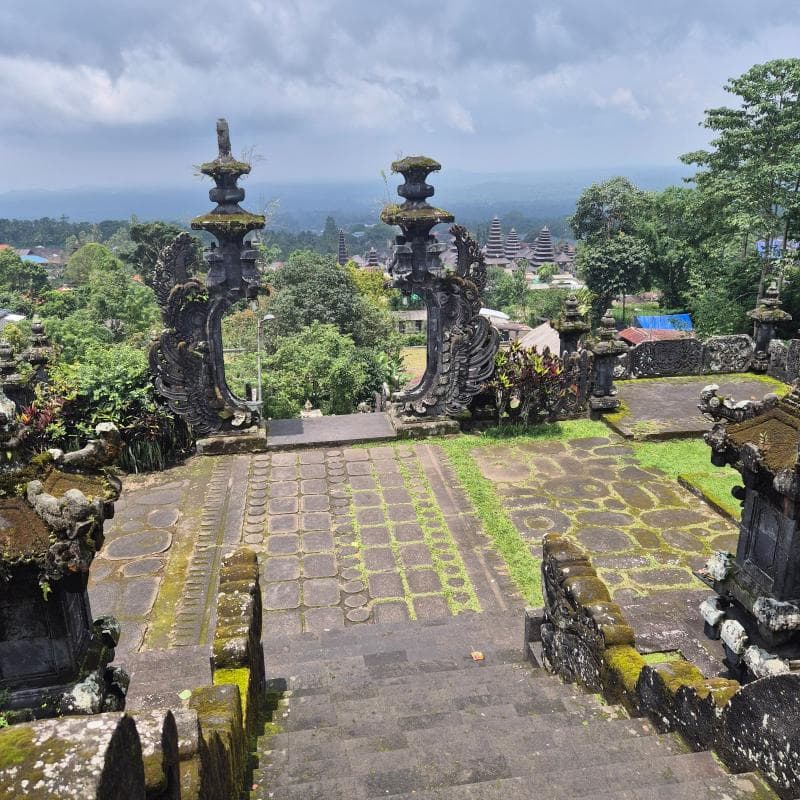
Discover the sacred Mount Agung Viewpoints within Besakih Temple, Bali, Indonesia. Explore its rich history, spiritual significance, and breathtaking vistas.
Overview
Nestled high on the southwestern slopes of Bali's sacred Mount Agung, the Mount Agung Viewpoints within the majestic Besakih Temple complex offer an unparalleled experience for any traveler seeking both spiritual depth and breathtaking natural beauty. Known affectionately as the 'Mother Temple' of Bali, Pura Besakih is not merely a single structure but an extensive and awe-inspiring sanctuary composed of at least 23 interconnected temples, each with its own significance. From its elevated position, approximately 1,000 meters above sea level, visitors are treated to panoramic vistas that encompass not only the towering peak of Mount Agung itself but also the verdant terraced landscapes and, on clear days, even glimpses of the Indian Ocean in the distance. It is a place where the earthly and the divine seamlessly intertwine, inviting quiet contemplation amidst a dramatic backdrop.
History & Cultural Background
The origins of Pura Besakih are deeply rooted in Bali's ancient past, with evidence suggesting that its foundations predate the arrival of Hinduism on the island, possibly stemming from prehistoric megalithic stepped pyramids built over 2,000 years ago. Historical records indicate the temple complex was established around the 8th century AD, with the sage Rsi Markandeya credited with its initial development, guided by divine forces to build on the sacred slopes of Mount Agung. By the 15th century, Besakih had solidified its status, becoming the state temple of the powerful Gelgel dynasty, underscoring its central role in Balinese spiritual and political life. This revered site honors the Balinese Hindu trinity of Brahma, Vishnu, and Shiva, with the main temple, Pura Penataran Agung, serving as the spiritual heart. The temple's construction adheres to the 'Tri Hita Karana' concept, promoting harmony between humans, nature, and the Creator, with its terraced layout symbolizing a spiritual ascent towards the sacred mountain. A testament to its divine protection, Pura Besakih famously survived the catastrophic 1963 eruption of Mount Agung, with lava flows miraculously stopping just meters from the main complex, a phenomenon interpreted by Balinese Hindus as a powerful message from the gods.
What Makes It Special
What truly distinguishes the Mount Agung Viewpoints within Besakih Temple is the profound sense of connection to the cosmos they offer. The multi-tiered temple structures, with their iconic thatched Meru roofs, are meticulously aligned along a single sacred axis, designed to physically draw devotees upwards and spiritually closer to the mountain, which is considered the abode of the gods. From various points within the complex, particularly the higher terraces and specific vantage points like the main split gate (candi bentar) and Pura Pangubengan, visitors can frame the majestic Mount Agung with the intricate temple architecture. This creates a visually stunning and spiritually charged experience. The cool mountain air provides a refreshing contrast to Bali's coastal areas, enhancing the tranquil atmosphere. The design, with its 23 separate yet related temples spread across six terraced levels, means every turn offers a new perspective, whether it is of the expansive temple grounds or the powerful volcano looming behind.
Stories, Fun Facts & Local Details
Local legends enrich the experience of Besakih. One captivating story speaks of Naga Besukian, a mythical dragon believed to reside deep within Mount Agung, acting as a sacred guardian spirit of Pura Besakih. This connection symbolizes the potent energies channeled from the earth's core to the temple. The miraculous sparing of the temple during the 1963 eruption is perhaps the most widely cited local detail, reinforcing the belief in the temple's divine protection and its role as a spiritual warning from the gods. Another unique aspect is Besakih's inclusivity; it is one of the few temples in Bali where people of all Hindu castes are welcome to worship together, a reflection of its status as the 'Mother Temple' for the entire island. Major ceremonies, such as the annual Bhatara Turun Kabeh, involve thousands of devotees and showcase vibrant Balinese spiritual life, with 21 days of continuous prayers performed by the island's Hindu community.
Visitor Perspective
Experiencing the Mount Agung Viewpoints at Besakih Temple is a journey that engages all senses. Arriving early in the morning, ideally before 9:00 AM, is highly recommended to avoid crowds and increase the chances of clear views of Mount Agung before clouds typically obscure its peak. The cool, crisp mountain air and the scent of incense create an immediate sense of peace and reverence. As you ascend the ancient, often steep, stone staircases connecting the terraced levels, you'll feel a physical and spiritual climb. Respectful attire, including covered shoulders and a sarong and waist sash (often included in the entrance fee), is mandatory for all visitors. While wandering through the open-air structures, observe the intricate carvings and the devout Balinese engaged in prayer. Remember that certain inner sanctums are reserved for worshipers. The sheer scale and sacred atmosphere leave a lasting impression, offering a deep insight into Balinese Hinduism and a memorable encounter with Bali's powerful natural and spiritual landscape.
Coordinates: 115.450936, -8.374368
View on Google Maps💬 How Travelers Describe This Place
Based on community votes
Beautiful
996Interesting
673Must See
585Unique
143Photogenic
80
Traveler Stories
Discover memorable experiences shared by travelers who have visited this place.
No traveler stories yet.
Be the first traveler to share what made this place memorable.

Tour
By
Spot
Discover amazing places around the world. Your journey starts here.
Explore
© 2026 TourBySpot. All rights reserved.