Moulin de la Galette
Paris, France

Discover the Moulin de la Galette in Montmartre, Paris, France. Explore its rich history as a windmill, artistic muse, and iconic cultural landmark.
Overview
Perched atop the enchanting Butte Montmartre in Paris, France, the Moulin de la Galette stands as a timeless emblem of the city's rich history and artistic legacy. More than just a picturesque windmill, it embodies the spirit of a bygone era when Montmartre was a charming village on the outskirts of Paris. Today, it serves as a restaurant, preserving a piece of the past while offering a unique dining experience. It is a legendary spot, instantly recognizable to many as a central figure in iconic Impressionist paintings.
Originally, Montmartre was home to numerous windmills, serving practical purposes like grinding flour. The Moulin de la Galette, comprising two mills named Blute-fin and Radet, evolved from a humble agricultural utility to a vibrant social hub, attracting artists, writers, and Parisians seeking entertainment and a taste of rural charm.
History & Cultural Background
The story of Moulin de la Galette begins in 1622 with the construction of the Blute-fin windmill. The Debray family, who acquired it in 1809 along with the Radet mill (built in 1717), initially used these structures for grinding flour and pressing crops.
The mill's distinctive name, 'Moulin de la Galette,' emerged in the 19th century. The Debray family began producing and selling a popular brown bread, a 'galette,' made from their freshly ground flour, often served with milk. This simple, rustic bread became so renowned that it lent its name to the entire establishment.
As Montmartre transformed, so did the Moulin de la Galette. In the 1830s, the Debray family transitioned from selling bread with milk to offering it with local wine, turning the mill into a lively 'guinguette'—an open-air tavern and dance hall. This marked its rise as a significant entertainment venue where Parisians could escape the city bustle for simple pleasures like music, dancing, and freshly baked bread.
The mill also witnessed periods of conflict. During the Napoleonic Wars in 1814 and the Franco-Prussian War in 1870, members of the Debray family bravely defended the mill, with some tragically losing their lives, reportedly even being nailed to the mill's wings.
Saved from destruction in 1915 by the 'Friends of Old Montmartre,' the mill was relocated in 1924 to its current spot at the corner of Girardon and Lepic streets. It was later restored in 1978 and classified as a historic monument in 1958.
What Makes It Special
The Moulin de la Galette holds a unique place in Parisian culture, primarily due to its enduring presence and its profound connection to art. It is one of the last two surviving windmills in Montmartre, a poignant reminder of the area's rural past, which once boasted over a dozen such structures.
Its fame was cemented by the numerous celebrated artists who frequented and immortalized it. Pierre-Auguste Renoir's iconic 1876 masterpiece, 'Bal du moulin de la Galette,' vividly captures the joyous atmosphere of a Sunday afternoon dance at the mill, becoming one of Impressionism's most beloved works.
Beyond Renoir, artists like Vincent van Gogh, Henri de Toulouse-Lautrec, and Pablo Picasso also found inspiration in the mill and its surroundings, depicting it in their works and contributing to its legendary status as a hub of bohemian life in Montmartre.
Stories, Fun Facts & Local Details
- The term 'galette' refers to the small, brown bread that the Debray family sold, which became so popular that it gave the windmill its current name. Initially served with milk, the family later cleverly swapped milk for wine, transforming the mill into a bustling cabaret.
- Imagine the scene: during its heyday as a dance hall, women wanting to attend the parties had to be transported up the steep Montmartre hill by donkeys, as horse-drawn carriages struggled with the incline.
- While there were once many windmills on Montmartre, the Moulin de la Galette represents the 'Blute-fin' mill, which is now on private property and not open to the public. The 'Radet' mill, the other surviving structure, famously sits atop the restaurant Le Moulin de la Galette and acts as an iconic landmark.
- The mill became a symbol of resistance when members of the Debray family fought to defend it during sieges, demonstrating their deep connection to this Montmartre landmark.
Visitor Perspective
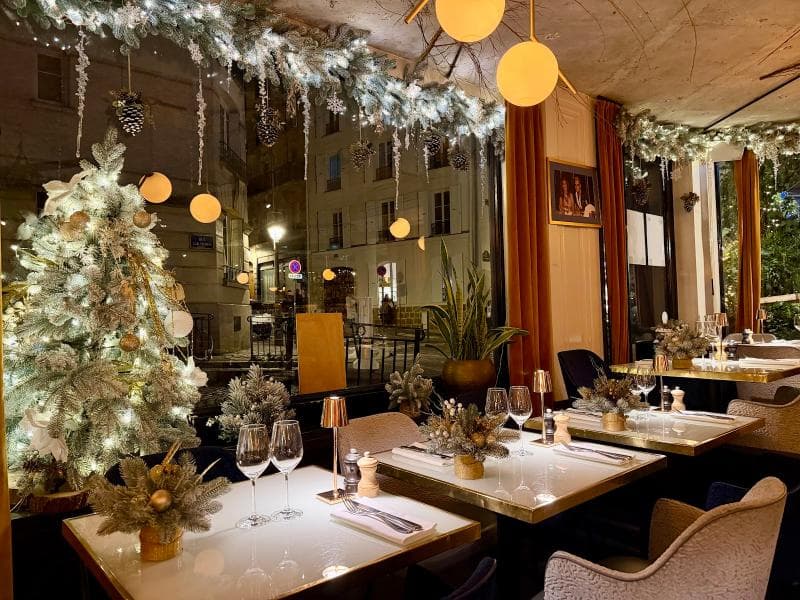
Today, the spirit of the Moulin de la Galette lives on as a chic restaurant, offering visitors a chance to connect with Montmartre's artistic and historical essence. While you cannot enter the original Blute-fin mill, the Radet mill, prominently displayed on the restaurant's roof, serves as a charming visual testament to its heritage.
The restaurant has undergone modern renovations, blending traditional charm with contemporary elegance, offering delicious French cuisine and a delightful ambiance. Many visitors enjoy dining on one of its charming outdoor terraces, which evoke the countryside feel that once attracted Parisians centuries ago. It's a place where one can savor a meal in the shadow of history, imagining the lively scenes captured by Renoir. The Moulin de la Galette remains a popular stop for those exploring the charming, cobbled streets of Montmartre, a true living vestige of old Paris.
Coordinates: 2.3370444, 48.8873972
View on Google Maps💬 How Travelers Describe This Place
Based on community votes
Beautiful
931Photogenic
670Interesting
655Must See
491Unique
266
Traveler Stories
Discover memorable experiences shared by travelers who have visited this place.
No traveler stories yet.
Be the first traveler to share what made this place memorable.

Tour
By
Spot
Discover amazing places around the world. Your journey starts here.
Explore
© 2026 TourBySpot. All rights reserved.