Motherland Monument
Kiev, Ukraine
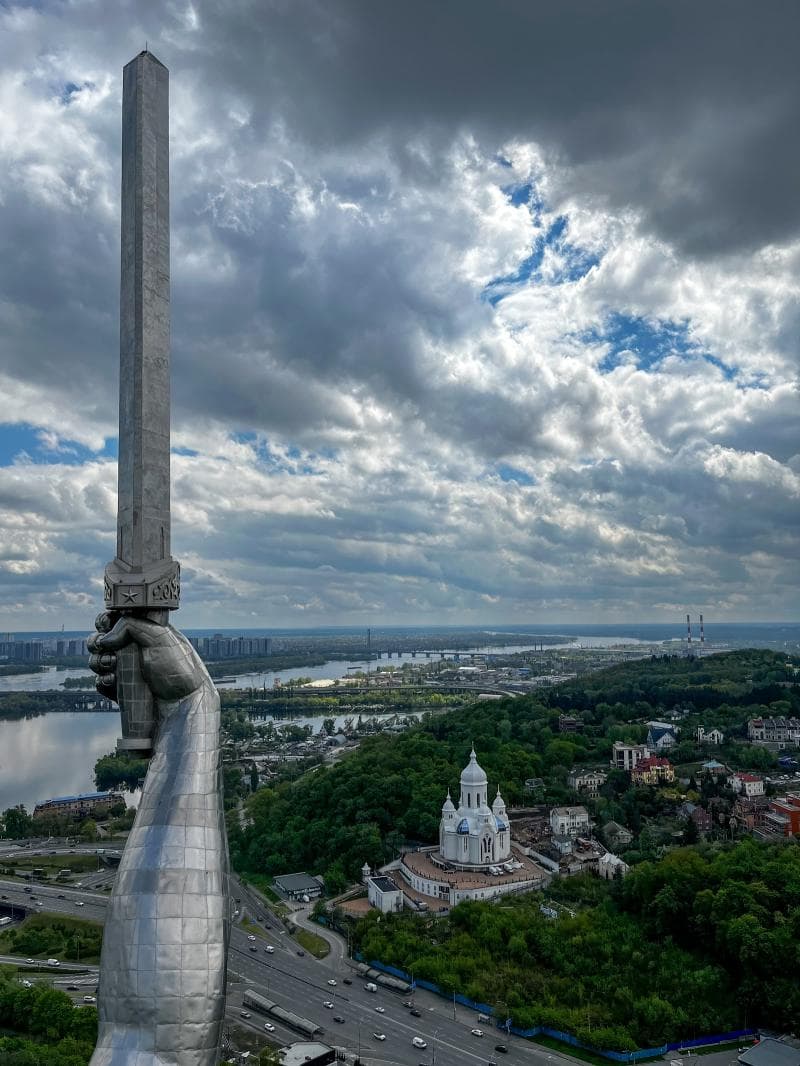
Discover the iconic Motherland Monument in Kyiv, Ukraine. Explore its impressive history, colossal scale, and the National Museum of the History of Ukraine in the Second World War.
Overview
Towering majestically over the historic city of Kyiv, Ukraine, the Motherland Monument, known locally as ‘Batkivshchyna-Maty’, is an unforgettable landmark. This colossal stainless steel statue depicts a female warrior, standing proudly with a sword in one hand and a shield in the other, embodying strength and resilience. At an impressive 102 meters tall, including its substantial pedestal, it is one of the tallest statues in Europe and a dominant feature of the capital’s skyline. More than just a statue, the Motherland Monument is an integral part of the National Museum of the History of Ukraine in the Second World War complex, offering visitors a deep dive into the nation's past.
History & Cultural Background
The Motherland Monument’s origins trace back to the Soviet era, conceived as a grand tribute to the Soviet victory in World War II. The initial vision for the monument came from Soviet sculptor Yevgeny Vuchetich, who imagined a golden, gleaming figure. However, after Vuchetich's death in 1974, Ukrainian sculptor Vasyl Borodai took over the project, significantly modifying the design to the steel form seen today. The monument was officially unveiled on May 9, 1981, a date commemorating Victory Day, with then-Soviet leader Leonid Brezhnev in attendance.
While initially known as the 'Victory Monument', the name 'Motherland' or 'Mother Ukraine' quickly gained popular usage. Over time, as Ukraine asserted its independence, the monument's symbolism evolved. A significant cultural and historical shift occurred in 2023, when the Soviet coat of arms, previously emblazoned on the statue's shield, was replaced with the Ukrainian national symbol, the trident. This act of decommunization marked a powerful statement of Ukraine's identity and its departure from its Soviet past.
What Makes It Special
The Motherland Monument is an extraordinary feat of engineering. Constructed from 27 multi-tonne blocks of stainless steel, sourced from Zaporizhzhia, it is recognized as the world's first all-welded metal sculpture of its kind. The statue itself measures 62 meters, with its sword reaching 16 meters in length and weighing 9 tons, while the shield is 13 by 8 meters. Its total height of 102 meters places it higher than even the Statue of Liberty in New York.
Beyond its sheer scale, the monument is built for enduring strength. Designed to withstand a magnitude-nine earthquake and powerful winds, it incorporates a 9-tonne pendulum inside the sword to dampen vibrations. Engineers predict the structure will stand for over 150 years, a testament to its robust construction.
Stories, Fun Facts & Local Details
- A Tale of Two Heights: The monument's original planned height was even taller, at 108 meters. However, it was reduced to 102 meters to ensure it did not exceed the height of the Great Lavra Bell Tower, a significant religious site in Kyiv. The sword was also shortened by three meters for similar reasons.
- The Face of Motherland: The face of the statue is said to have been modeled after Ukrainian artist Nina Yatsenko.
- 'Big Mama' and Beyond: Affectionately known by some as 'Big Mama', the monument's commanding presence makes it visible from many points across Kyiv.
- Symbol of Resilience: The 2023 replacement of the Soviet emblem with the Ukrainian trident was a monumental undertaking, involving specialized engineering to modify the shield and costing 28 million hryvnias. This act transformed the monument into an even more potent symbol of Ukrainian national identity and defiance.
Visitor Perspective
The Motherland Monument is more than just an external spectacle; it serves as the centerpiece for the National Museum of the History of Ukraine in the Second World War. The museum, located within the pedestal and surrounding complex, offers extensive exhibitions detailing Ukraine's experience during WWII and, more recently, has expanded to cover the ongoing Russian-Ukrainian conflict.
For those seeking panoramic vistas, the monument features observation decks. The 'Pedestal' deck, at 36.6 meters, offers a 360-degree view of Kyiv. For a more adventurous experience, the 'Shield' deck, at 91 meters, provides an approximately 180-degree view. Access to the higher deck requires good physical condition and comfortable attire, including sports shoes, as it involves navigating an internal route with a 55cm diameter opening. Outside, visitors can explore an open-air display of military equipment, adding another layer to the historical narrative of the complex.
Coordinates: 30.5636, 50.426634
View on Google Maps💬 How Travelers Describe This Place
Based on community votes
Beautiful
897Photogenic
657Must See
605Unique
498Interesting
481
Traveler Stories
Discover memorable experiences shared by travelers who have visited this place.
No traveler stories yet.
Be the first traveler to share what made this place memorable.
Things to see at Motherland Monument



Tour
By
Spot
Discover amazing places around the world. Your journey starts here.
Explore
© 2026 TourBySpot. All rights reserved.