Mosaic Displays
Nice, France
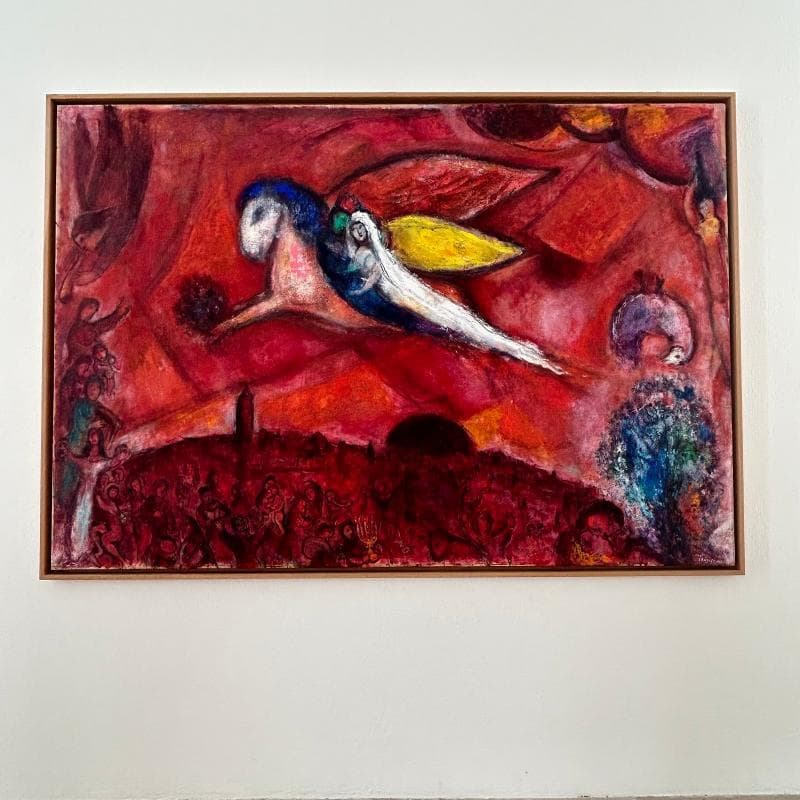
Discover the vibrant mosaic displays at Musée Marc Chagall in Nice, France. Explore the monumental 'Prophet Elijah' mosaic, reflecting biblical themes and Chagall's unique artistic vision.
Overview
Nestled in the picturesque city of Nice, France, the Musée Marc Chagall offers visitors an intimate journey into the spiritual world of one of the 20th century's most iconic artists. While the museum is celebrated for its profound collection of biblical message paintings, a standout artistic expression within its grounds is the captivating mosaic display. Foremost among these is the monumental 'Le Prophète Élie' (The Prophet Elijah) mosaic, a vibrant and deeply symbolic artwork that commands attention both for its scale and its intricate beauty. This piece, along with other works by Chagall, showcases his profound engagement with diverse artistic mediums beyond canvas, particularly in how they interact with architectural spaces.
History & Cultural Background
Marc Chagall's exploration of mosaic art blossomed after his return to France in 1949, following his exile in the United States during World War II. He was deeply inspired by the ancient Byzantine mosaics he encountered during a visit to Ravenna, Italy, recognizing in this age-old technique a fresh avenue for artistic expression. Chagall saw mosaics as a powerful means to delve into the interplay of light, matter, and color, allowing him to create monumental works that harmonized seamlessly with their architectural surroundings.
His vision for the Musée Marc Chagall, which opened in 1973, was not merely to house his 'Biblical Message' paintings but to create a holistic artistic experience. Chagall himself was intimately involved in the museum's design, personally requesting the inclusion of both stained-glass windows and a significant mosaic. This decision underscores his belief that these mediums were essential to enriching the building's spiritual ambiance and its dialogue with visitors. To bring his mosaic visions to life, Chagall collaborated closely with skilled mosaicists, notably Lino Melano and later Michel Tharin, bridging his artistic genius with their technical mastery. The 'Prophet Elijah' mosaic, specifically designed for the museum, was created in 1972, just a year before the museum's inauguration.
What Makes It Special
The 'Prophet Elijah' mosaic is a truly remarkable piece, measuring an impressive 715 by 570 centimeters. It vividly portrays the ascension of the Prophet Elijah, a powerful biblical narrative rendered with Chagall's characteristic dreamlike imagery and vibrant color palette. Surrounding the central figure are the twelve zodiac signs, creating a cosmic backdrop that intertwines with a lush Mediterranean landscape. This fusion of celestial and earthly elements speaks to Chagall's universal themes and his deep connection to both spirituality and nature.
Perhaps its most enchanting feature is its thoughtful placement on an outer wall of the museum, where it is designed to be completely reflected in a tranquil pool. This unique arrangement transforms the mosaic into a dynamic, living artwork. The shimmering water's surface doubles the image, adds movement, and plays with the natural light, making the mosaic seem to breathe and shift with the changing moments of the day. This reflection is not merely a visual effect; it deepens the artwork's symbolic resonance, suggesting a mirrored world, a bridge between the spiritual and the physical. Chagall's innovative use of the mosaic medium here transcends mere decoration, becoming an integral part of the museum's architectural and emotional landscape.
Stories, Fun Facts & Local Details
Chagall's personal investment in the Musée Marc Chagall was profound; he envisioned it as a 'home' for his biblical message, a place where his spiritual artworks could reside and inspire. The inclusion of the mosaic was a direct result of his personal request, demonstrating his commitment to integrating art with its environment in a meaningful way.
The 'Prophet Elijah' mosaic, with its portrayal of Provençal vegetation alongside celestial symbols, illustrates Chagall's poetic dialogue between the earthly and the cosmic. It hints at a cyclical understanding of time and existence, a recurring motif in his work. While the museum's mosaic is a centerpiece, it is also part of a larger legacy; Chagall created several other significant mosaics across the South of France and indeed around the world, solidifying his status as a versatile artist who constantly pushed the boundaries of his chosen mediums. His ability to infuse traditional techniques with his distinct modernist and deeply personal narrative makes each mosaic a unique narrative in itself.
Visitor Perspective
For the curious traveler, encountering the 'Prophet Elijah' mosaic at the Musée Marc Chagall is an immersive and deeply moving experience. As you approach, the mosaic's vibrant colors and intricate details draw you in, and then the complete reflection in the adjacent pool unveils a breathtaking double image. This play of light and water creates a serene and contemplative atmosphere, inviting a moment of pause and reflection before or after exploring the museum's interior collections. The spiritual resonance of the mosaic, set within the lush Mediterranean garden, provides a harmonious introduction to the profound biblical narratives found within Chagall's paintings. It's a testament to an artist's vision to create a space where art, architecture, and spirituality converge, leaving a lasting impression of beauty and introspection.
Coordinates: 7.26951, 43.70914
View on Google Maps💬 How Travelers Describe This Place
Based on community votes
Must See
950Beautiful
287Photogenic
255Unique
231Interesting
86
Traveler Stories
Discover memorable experiences shared by travelers who have visited this place.
No traveler stories yet.
Be the first traveler to share what made this place memorable.

Tour
By
Spot
Discover amazing places around the world. Your journey starts here.
Explore
© 2026 TourBySpot. All rights reserved.