Montmartre Vineyard
Paris, France
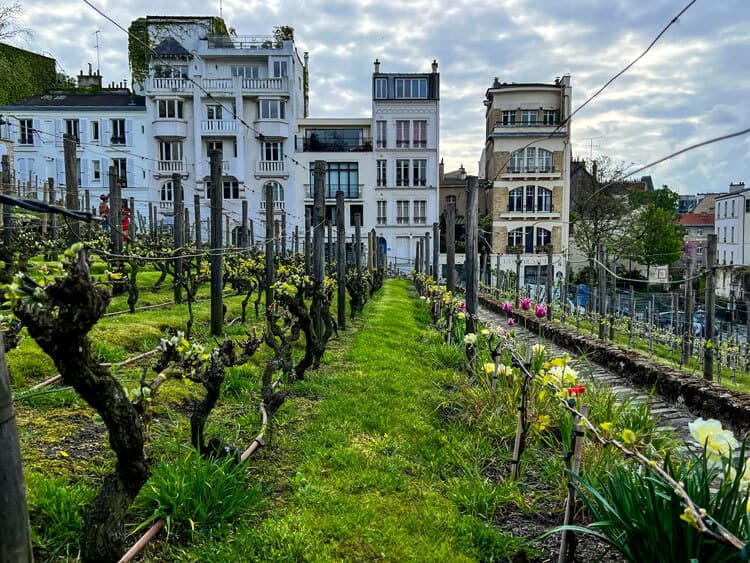
Discover Le Clos Montmartre, Paris's last active vineyard. Explore its rich history, unique culture, and the vibrant Fête des Vendanges in Montmartre, France.
Overview
Tucked away on the northern slope of the Butte Montmartre in Paris, France, lies the captivating Montmartre Vineyard, officially known as Le Clos Montmartre. This unassuming patch of green is far more than just a vineyard; it represents a living piece of Parisian history and a testament to community spirit. As the last active vineyard within the city limits, it stands as a unique cultural landmark, preserving a rural heritage amidst the bustling urban landscape of the 18th arrondissement. While its annual wine production is modest, generating around 1,000 to 1,700 bottles, the vineyard's significance lies not in commercial output but in its historical roots and its role as a symbol of Montmartre's enduring identity. It's a place where tradition, art, and the love for local culture intertwine, offering a glimpse into a lesser-known side of the French capital.
History & Cultural Background
The story of winemaking on the Montmartre hill stretches back millennia, even to the Gallo-Roman era, with significant viticulture present by the 12th century when nuns of a Benedictine abbey cultivated vines on the slopes. Montmartre, once a 'commun libre' outside Paris's city limits until 1860, benefited from tax exemptions that made its wine popular. However, the expansion of Paris, coupled with property speculation and the devastating phylloxera blight in the late 19th and early 20th centuries, led to the near disappearance of these historic vineyards.
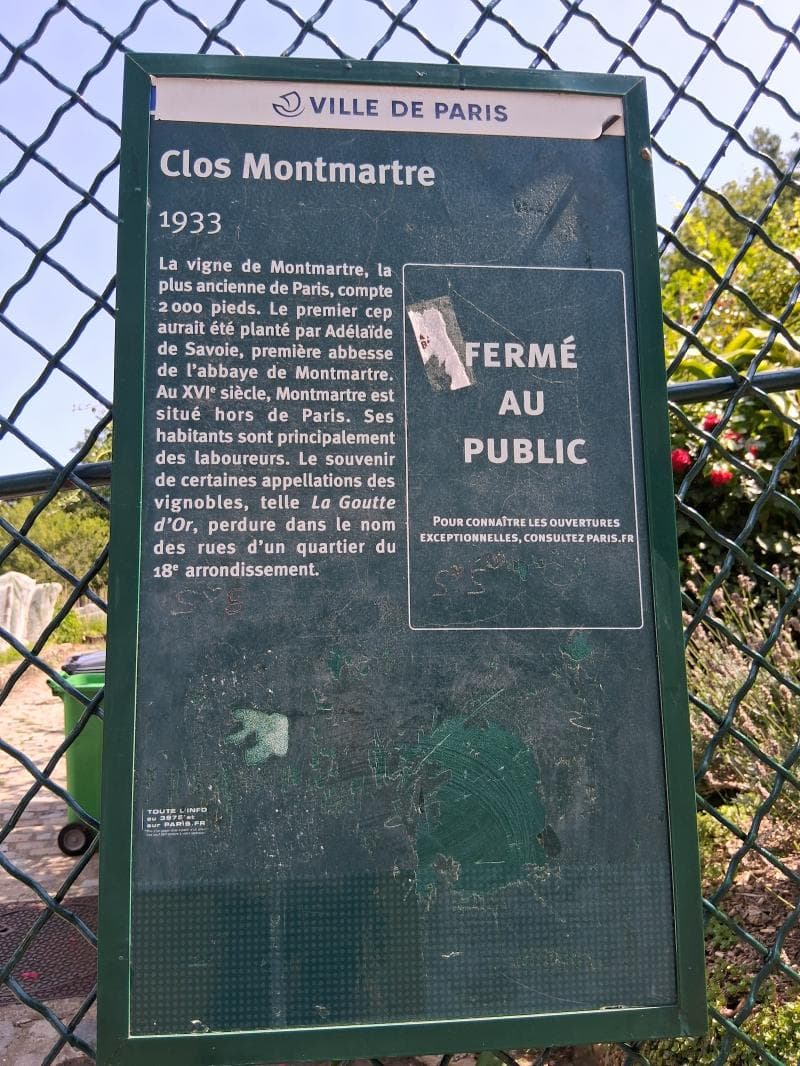
The current Clos Montmartre owes its existence to a remarkable act of preservation in the 1930s. Faced with a municipal plan to build housing on the land, local artists, writers, and residents, led by caricaturist Francisque Poulbot, rallied to save this last vestige of Montmartre's viticultural past. Their efforts were successful, and in 1933, new vines were planted, encompassing a diverse collection of grape varieties. This collective endeavor secured the vineyard's future, transforming it into a cherished community asset rather than a commercial enterprise. The first harvest of the revived vineyard was celebrated in 1934, marking the beginning of a vibrant annual tradition.
What Makes It Special
Le Clos Montmartre is truly special because it defies expectations, existing as a verdant vineyard on a Parisian hillside, a stark contrast to the surrounding urbanity. It is not merely an agricultural plot but a cultural monument, lovingly maintained by the City of Paris and managed by local associations. The vineyard spans about 1,500 to 1,674 square meters and includes a rich tapestry of around 30 different grape varieties, including Pinot Noir and Gamay, alongside other fruit trees and flowers that enrich the soil. This blend of varietals results in a unique, albeit non-commercial, wine that is considered more a collector's item than a fine vintage.
Its most significant feature is perhaps the annual Fête des Vendanges de Montmartre, or Montmartre Grape Harvest Festival, held each October. This five-day event transforms the entire neighborhood into a lively celebration of wine, food, art, and community spirit. It is Paris's third-largest event, drawing hundreds of thousands of visitors to parades, concerts, tastings, and a gourmet market featuring products from across France. The festival underscores the vineyard's role not just in winemaking, but as a focal point for Montmartre's vibrant cultural life and its enduring village-like charm.
Stories, Fun Facts & Local Details
- A Symbol of Resistance: The vineyard's very existence is a testament to the passionate resistance of Montmartre's community against urban development in the early 20th century, securing its place through a unique interpretation of land use law.
- Charity Wine: The approximately 1,000 to 1,700 bottles produced annually are not sold commercially but are auctioned off during the Fête des Vendanges, with all proceeds dedicated to local social initiatives and charitable causes in the 18th arrondissement. This practice highlights its community-oriented purpose.
- Diverse Harvest: Unlike typical French vineyards focusing on specific regional grapes, Clos Montmartre boasts a diverse collection of some 30 grape varieties, resulting in a blended wine that is distinctive to this urban plot. Some historical varietals that originally grew here are still planted today.
- More Than Just Grapes: Beyond its grapevines, the Clos Montmartre also cultivates flowers and fruit trees, such as kiwis, olives, and strawberries, contributing to the vineyard's rich ecosystem and offering a glimpse into its fertile urban garden.
- The Oldest Vineyard: While the current vines were planted in the 1930s, the tradition of winemaking on this hill is ancient, making it a symbolic continuation of Paris's oldest winemaking heritage.
Visitor Perspective
For the curious traveler, visiting Le Clos Montmartre offers a truly unique Parisian experience, though it's important to set expectations. The vineyard itself is generally fenced off and not open for casual public access or drop-in tastings. However, its beauty can be admired from the outside, particularly from Rue des Saules, where you can peer through the wrought-iron fence at the rows of vines climbing the hillside.
The best opportunity to experience the vineyard up close, and even taste its unique wine, is during the annual Fête des Vendanges de Montmartre in October. During this vibrant festival, guided tours of the vineyard are sometimes available, often organized by the Musée de Montmartre, though tickets can be limited and highly sought after. Some specialized tour operators also offer exclusive access for small groups, sometimes including tastings of the local wine. This allows visitors to not only see the vines but also to participate in a deep-rooted community celebration that brings Montmartre's history and spirit to life. While not a conventional wine-tasting destination like those in rural France, the Montmartre Vineyard offers a rich, historical, and emotionally resonant experience in the heart of Paris.
Coordinates: 2.3402394, 48.8883248
View on Google Maps💬 How Travelers Describe This Place
Based on community votes
Beautiful
958Interesting
728Must See
719Photogenic
481Unique
382
Traveler Stories
Discover memorable experiences shared by travelers who have visited this place.
No traveler stories yet.
Be the first traveler to share what made this place memorable.

Tour
By
Spot
Discover amazing places around the world. Your journey starts here.
Explore
© 2026 TourBySpot. All rights reserved.