Montjuïc Castle
Barcelona, Spain
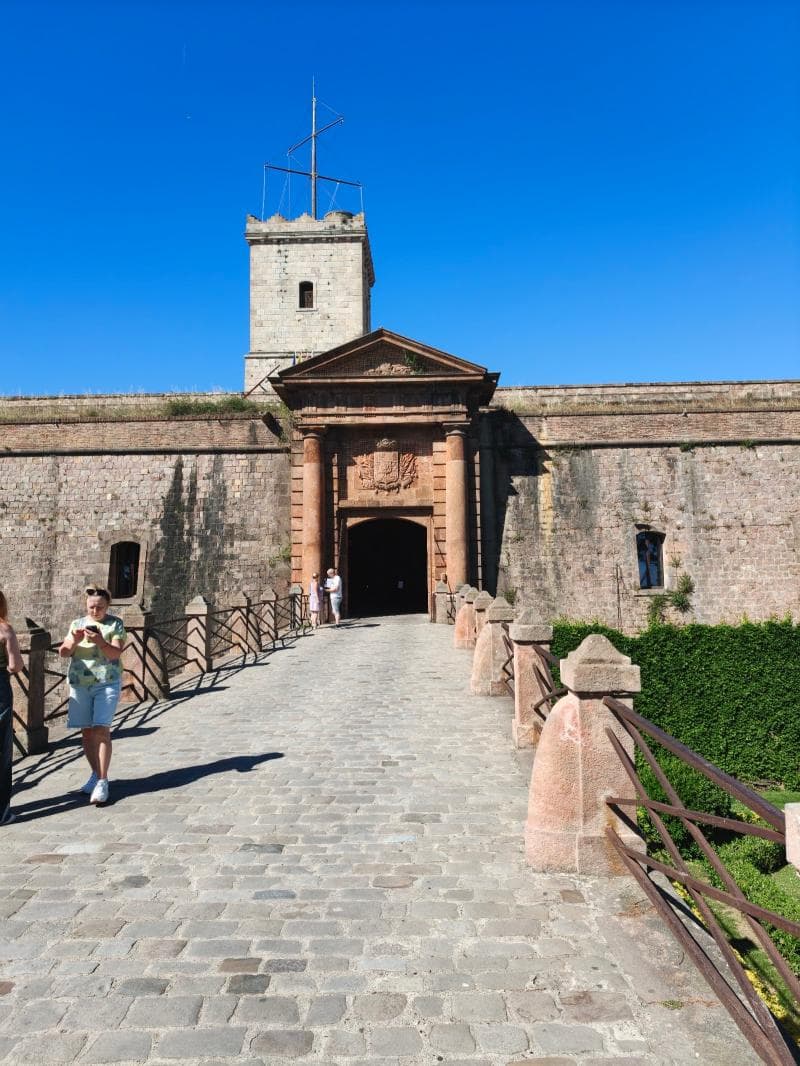
Explore Montjuïc Castle in Barcelona, Spain: a historic military fortress with panoramic city views, cultural insights, and a complex past.
Overview
Perched majestically atop Montjuïc Hill in Barcelona, Spain, Montjuïc Castle, or Castell de Montjuïc as it's known locally, is more than just a historical landmark; it's a testament to the city's enduring spirit and complex past. This imposing 17th-century military fortress, rising 173 meters above sea level, offers breathtaking panoramic views of Barcelona, its bustling port, and the glistening Mediterranean Sea. Today, it serves as a municipal facility and cultural center, inviting visitors to explore centuries of history etched into its stone walls and delve into its layered narratives.
Originally conceived as a defensive outpost, the castle's role evolved significantly over time, becoming a key player in various conflicts and a symbol of both protection and repression for Barcelona's citizens. Its strategic location made it invaluable for controlling the city and monitoring maritime activity. From its origins as a small fort during the Catalan Revolt to its current incarnation as a cultural hub, Montjuïc Castle stands as a silent observer to Barcelona's tumultuous journey.
History & Cultural Background
The origins of Montjuïc Castle trace back to 1640, during the Catalan Revolt (also known as the Reapers' War), when an initial, modest fort was rapidly constructed in just 30 days around an ancient watchtower. This swift construction highlighted the urgent need for defense against the Spanish Crown. The first battle fought here occurred in January 1641, where Catalan forces successfully defeated the Castilian troops.
Over the centuries, the fortress underwent significant transformations. In 1694, it was strengthened with new bastions and battlements, officially becoming a castle. However, its current star-shaped layout, a textbook example of 17th-century bastion fortification designed for maximum defense, largely took shape between 1751 and 1779 under the direction of military engineer Juan Martín Cermeño. This modernization included the addition of thick stone walls, dry moats, and drawbridges.
Montjuïc Castle's history is inextricably linked with Barcelona's struggles. Following the War of the Spanish Succession and Barcelona's defeat in 1714, the castle became a symbol of submission, serving as a military stronghold to control the city rather than defend it. Throughout the 19th century, it was used to suppress uprisings and became a prison for political dissidents, anarchists, and revolutionaries, even being used to bombard the city itself on several occasions. Its darkest chapter unfolded during the Spanish Civil War (1936-1939) and the subsequent Franco dictatorship, when it became an execution site, notably for Catalan president Lluís Companys in 1940.
In 2007, the Spanish government transferred ownership of the castle to the Barcelona City Council, marking a new era for the historic site as a public municipal facility and cultural center.
What Makes It Special
What truly distinguishes Montjuïc Castle is its dual identity as both a formidable military structure and a poignant historical narrative. The castle's architecture itself is a marvel, designed with advanced military engineering of its time, featuring a pentagonal shape, robust bastions, and a deep moat that is now beautifully landscaped. These defensive elements once made it nearly impenetrable.
Beyond its physical attributes, the castle offers unparalleled 360-degree views. From its ramparts and watchtower, visitors can gaze upon the sprawling cityscape, the dynamic port, and the endless expanse of the Mediterranean. This commanding perspective highlights its strategic importance throughout history and provides a serene backdrop for contemplation today.
Its transformation from a place of conflict to a cultural space is also a unique aspect. The Montjuïc Castle Interpretation Centre within its grounds uses audiovisual materials and historical objects to present the monument's evolution, allowing visitors to connect deeply with its past.
Stories, Fun Facts & Local Details
- The Original 30-Day Build: The very first fortification on Montjuïc Hill was built in a remarkably short period of just 30 days in 1640, a testament to the urgency of the Catalan Revolt.
- A Bombarded City: Ironically, the castle, initially built to defend Barcelona, was later used to bombard its own citizens during conflicts in the 18th and 19th centuries, highlighting its role in controlling the city.
- Metric System Connection: French scientist Pierre-André Méchain made observations from the castle in 1794, contributing to the establishment of the metric system. The fortress on Montjuïc was chosen as a key reference point for these measurements.
- Symbol of Oppression, Then Culture: After decades as a military prison and execution site, particularly during the Franco regime, the castle has been reclaimed by the city of Barcelona as a symbol of peace and culture, hosting exhibitions, concerts, and various events.
- 'Jewish Mountain': The name Montjuïc is thought to derive from 'Mont dels Jueus' or 'Jewish Mountain' in medieval Catalan, due to the presence of a medieval Jewish cemetery on the hill.
Visitor Perspective
Visiting Montjuïc Castle is an enriching experience that combines history, culture, and stunning natural beauty. The journey to the castle itself can be an adventure; the Montjuïc Cable Car offers a scenic and effortless ride from Parc de Montjuïc, providing spectacular views during the ascent. Alternatively, bus line 150 drops you directly at the entrance, or you can enjoy a pleasant uphill walk through landscaped gardens.
Upon arrival, visitors can explore the castle's vast courtyards, walk along its formidable ramparts, and delve into the permanent and temporary exhibitions within the Interpretation Centre. Guided tours are often available, offering deeper insights into the castle's complex history and its relationship with Barcelona. Don't miss the opportunity to visit the watchtower and the sea wall for the most impressive panoramic views of the city, port, and coastline.
For those interested in a free visit, entry is often complimentary on Sundays after 3:00 PM, and sometimes on the first Sunday of every month. The castle grounds also include beautiful gardens in the former moat, providing peaceful green spaces for relaxation. Allow ample time to explore, as the castle covers a large area, and comfortable shoes are highly recommended. Combining your visit with other Montjuïc attractions like the Joan Miró Foundation or the Olympic Stadium can make for a full day of exploration.
Coordinates: 2.16611, 41.36333
View on Google Maps💬 How Travelers Describe This Place
Based on community votes
Beautiful
806Photogenic
546Must See
111Unique
92Interesting
66
Traveler Stories
Discover memorable experiences shared by travelers who have visited this place.
No traveler stories yet.
Be the first traveler to share what made this place memorable.

Tour
By
Spot
Discover amazing places around the world. Your journey starts here.
Explore
© 2026 TourBySpot. All rights reserved.