Montée De La Grande Côte
Lyon, France
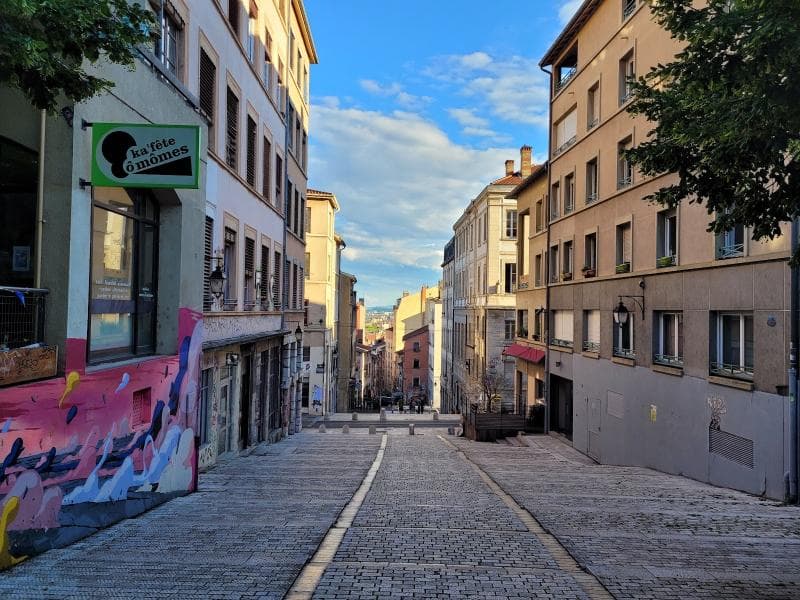
Discover Montée De La Grande Côte, a historic, steep street in Lyon's La Croix-Rousse district. Explore its silk-weaving past, unique traboules, and panoramic city views.
Overview
Nestled within Lyon's vibrant La Croix-Rousse district, the Montée De La Grande Côte is much more than just a street; it is a steep, historic artery that dramatically connects the lower Terreaux quarter with the plateau above. Recognized for its significance as part of a UNESCO World Heritage site, this inclined thoroughfare offers a journey through centuries of Lyonnaise history and culture. Known for its challenging slope and picturesque charm, it presents a unique fusion of the city's past and present, providing breathtaking panoramic views across Lyon.
Its name, meaning 'Great Slope,' aptly describes its topography, reflecting the considerable elevation change it navigates. Walking its length, whether ascending or descending, reveals layers of stories embedded in its stone, from ancient pathways to the heart of the city's once-booming silk industry. It is an emblematic passage, symbolizing the spirit and resilience of La Croix-Rousse.
History & Cultural Background
The Montée De La Grande Côte boasts a rich history dating back to the Middle Ages when it was merely a country path lined with agricultural land, including vineyards. Its urbanization began in the 16th century, quickly establishing it as a crucial axis for entering and exiting Lyon from the north. However, its most defining period came in the 19th century with the rise of Lyon's silk weaving industry. La Croix-Rousse became the bustling hub for the 'Canuts,' the skilled silk weavers, earning it the moniker 'the hill that works,' a stark contrast to Fourvière, 'the hill that prays.'
The unique architecture of the district, particularly along the Montée, reflects the Canuts' needs. Buildings were constructed with exceptionally high ceilings and large windows to accommodate the tall looms used for weaving silk. This era was also marked by the significant Canut uprisings in the 1830s, protests by the weavers against harsh working conditions, which left an indelible mark on the area's identity. The preservation of this rich heritage was solidified in 1998 when the Montée De La Grande Côte, as part of La Croix-Rousse, was classified as a UNESCO World Heritage site, protecting its unique character for future generations.
What Makes It Special
What truly sets the Montée De La Grande Côte apart is its dramatic and distinctive urban landscape. Its steep incline, at times almost vertical, is a defining feature, making it a memorable experience for anyone traversing it. Along this ascent, you'll discover a captivating blend of residential and historic buildings, with some vibrant, colorful structures dating back to the 16th and 17th centuries, adding immense charm to the passage.
Beyond its visible architecture, the Montée is home to several 'traboules,' Lyon's famous secret passageways. These covered shortcuts wind through buildings and courtyards, linking streets and offering a glimpse into the clandestine routes once used by silk weavers to transport their precious goods, protected from the elements. Notable examples, like the traboule at 118 Montée de la Grande Côte, invite curious explorers to discover hidden corners. From its upper reaches, particularly the Esplanade de la Grande-Côte, visitors are rewarded with expansive, uninterrupted views of Lyon's rooftops and beyond, creating a truly spectacular vista.
Stories, Fun Facts & Local Details
The very name 'Montée De La Grande Côte' is a direct nod to its defining characteristic – the 'great slope' it embodies. An interesting local detail is the numbering of the houses, which in some sections runs downhill, contrary to the usual French street numbering convention, guiding you on a natural descent. This street, and indeed the entire La Croix-Rousse district, exudes a palpable 'village spirit,' offering a close-knit community feel within a major city.
The Montée was a stage for the Canut workers' daily lives and their revolutionary struggles, embodying the fighting spirit of Lyon's working class. The area's artistic flair is also evident, with street art and local events often animating the surroundings, reflecting the blend of history and contemporary bohemian culture. Exploring here offers a tangible connection to the ingenuity of the silk weavers and the enduring legacy of their craft and activism.
Visitor Perspective
For the best experience, many seasoned travelers recommend beginning your journey at the top of the Montée De La Grande Côte, in La Croix-Rousse, and walking downhill towards the city center. This approach not only makes the physical exertion more manageable but also allows for the continuous unfolding of increasingly impressive panoramic views of Lyon. Comfortable shoes are an absolute must, given the significant incline and cobblestone surfaces you'll encounter.
As you descend, take your time to appreciate the visual details: the colorful, historic building facades, the unique doorways, and the architectural arches that frame stunning photo opportunities. Exploring the traboules is a highlight, but remember that these are often integrated into private residential buildings, so a respectful and quiet demeanor is essential. After your walk, the charming street offers various bars and restaurants, especially lively in the evening, providing a perfect spot to relax and soak in the local atmosphere. The Montée De La Grande Côte is an adventure, a history lesson, and a scenic promenade, all rolled into one unforgettable Lyonnaise experience.
Coordinates: 4.8316, 45.7716
View on Google Maps💬 How Travelers Describe This Place
Based on community votes
Photogenic
847Must See
831Interesting
685Unique
433Beautiful
211
Traveler Stories
Discover memorable experiences shared by travelers who have visited this place.
No traveler stories yet.
Be the first traveler to share what made this place memorable.

Tour
By
Spot
Discover amazing places around the world. Your journey starts here.
Explore
© 2026 TourBySpot. All rights reserved.