Mongol Empire Gallery
Ulaanbaatar, Mongolia
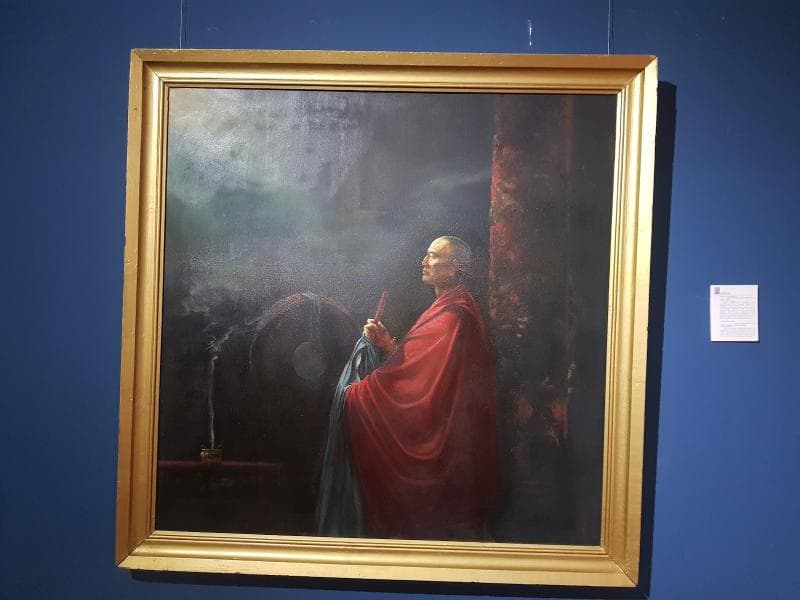
Explore the Mongol Empire Gallery at the National Museum of Mongolia in Ulaanbaatar, delving into Genghis Khan's legacy and the vast empire's history.
Overview
Step into the grandeur of a bygone era at the Mongol Empire Gallery, a compelling highlight within the esteemed National Museum of Mongolia in Ulaanbaatar. This dedicated exhibition serves as a profound journey into the heart of the world's largest contiguous land empire, offering visitors an unparalleled glimpse into the nomadic power that reshaped global history. It is one of the museum's nine thematic halls, focusing specifically on the period of the Great Mongol State (1206-1260) and the subsequent Mongol Empire.
The National Museum of Mongolia itself stands as the nation's premier institution for preserving its rich history and traditional life, housing over 57,000 exhibits that span from prehistoric times to the 20th century. The Mongol Empire Gallery, often referred to as Hall 4, provides a central and comprehensive understanding of this pivotal era.
History & Cultural Background
The story of the Mongol Empire begins in 1206 when the legendary Genghis Khan (Temüjin) successfully united the fragmented Mongol tribes, establishing a formidable force that would expand across vast territories. From its heartland in the Central Asian steppe, the empire grew rapidly under Genghis Khan and his descendants, eventually stretching from the Pacific Ocean to the Danube River by the late 13th century.
This colossal empire, at its peak covering approximately 9 million square miles, fundamentally connected the Eastern and Western worlds through expanded trade routes and diplomatic exchanges. The gallery meticulously chronicles this period of immense power and influence, demonstrating how the Mongols, through superior military tactics and highly mobile cavalry, forged an empire that left an indelible mark on numerous civilizations.
What Makes It Special
The Mongol Empire Gallery stands out through its remarkable collection of artifacts that bring the history of the 13th and 14th centuries to life. Visitors can explore approximately 300 historical and cultural objects, including impressive battle equipment such as armor and ceremonial banners, alongside illustrations of significant figures.
Among the treasures are portraits of key leaders like Genghis Khan, Ögedei Khan, and Kublai Khan, offering visual connections to these pivotal historical figures. The exhibition also features items from the ancient capital of Karakorum and highlights the various successor states of the empire, including the Golden Horde State, the Chagatai Khanate, the Ilkhanate, and the Yuan Dynasty.
A particularly intriguing aspect of the gallery is the presence of 12th-century armor and precious correspondence exchanged between the Mongol Khans and the Pope, showcasing the empire's vast diplomatic reach and its interactions with distant cultures. These exhibits provide tangible proof of the Mongols' widespread influence, which extended across more than fifty countries from Siberia to South Asia and from the Korean Peninsula to Bulgaria.
Stories, Fun Facts & Local Details
Imagine the sheer scale of an empire so vast that it remains the largest contiguous land empire in recorded history. The gallery effectively conveys this epic narrative, allowing visitors to appreciate the strategic brilliance and organizational prowess of Genghis Khan, who promoted individuals based on merit and reorganized defeated foes into disciplined units.
One might discover the fascinating details of how Mongol armies utilized not only their famed cavalry and archery skills but also adopted siege expertise from conquered peoples, alongside employing spies and propaganda. The exhibition also subtly reveals the cultural exchanges that occurred within the empire, such as the later adoption of Tibetan Buddhism or Islam by some Mongols, moving away from their traditional shamanism.
The meticulous displays, with English descriptions, make the complex history accessible, allowing for a deeper appreciation of the heritage. The museum's overall mission to foster an understanding of how Mongolians lived through historical times resonates strongly within this specific gallery.
Visitor Perspective
Visiting the Mongol Empire Gallery is an essential experience for anyone seeking to understand the foundational history of Mongolia and its profound impact on global civilization. The exhibits are thoughtfully arranged in chronological order, providing a coherent narrative from the empire's inception to its eventual fragmentation.
English labels accompany most exhibits, making the historical context and significance readily understandable for international visitors. While the entire National Museum of Mongolia offers a rich, comprehensive overview of the country's past, dedicating ample time to the Mongol Empire Gallery is highly recommended to fully absorb the depth and breadth of this monumental period. The insights gained here serve as an excellent foundation for further exploration of Mongolia's historical sites and cultural landscapes.
Coordinates: 106.9154, 47.9208
View on Google Maps💬 How Travelers Describe This Place
Based on community votes
Beautiful
961Photogenic
897Unique
695Interesting
605Must See
336
Traveler Stories
Discover memorable experiences shared by travelers who have visited this place.
No traveler stories yet.
Be the first traveler to share what made this place memorable.

Tour
By
Spot
Discover amazing places around the world. Your journey starts here.
Explore
© 2026 TourBySpot. All rights reserved.