Moat
Copenhagen, Denmark
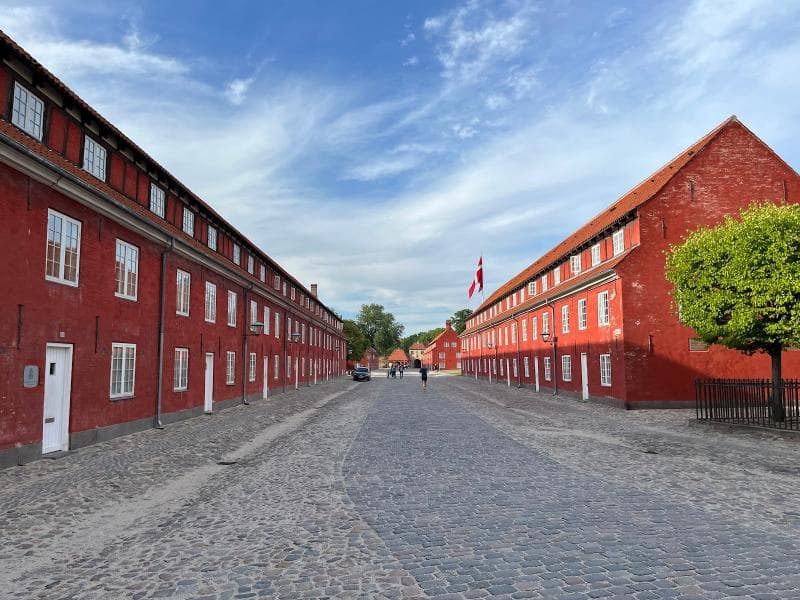
Explore Kastellet's historic moat in Copenhagen, Denmark. Discover this 17th-century star fortress, its rich history, and peaceful beauty.
Overview
Nestled in Copenhagen, Denmark, Kastellet stands as one of Northern Europe's most remarkably preserved star-shaped fortresses, a testament to 17th-century military engineering. At its heart, or rather, surrounding its distinctive pentagonal shape, lies a historic moat system, an integral feature that has guarded this citadel for centuries. Today, Kastellet gracefully balances its roles as an active military area and a tranquil public park, offering visitors a unique blend of history, nature, and peaceful contemplation. Its impressive ramparts and the serene waters of the moat create a picturesque setting, inviting travelers to step back in time and explore a significant piece of Danish heritage.
As you approach Kastellet, the striking star shape becomes apparent, reinforced by the presence of its wide, water-filled moats. These moats are not merely decorative but were a crucial defensive element in its original design. Walking across the bridges that span these historical waters, one immediately feels a connection to the past, appreciating the ingenuity required to construct such a formidable stronghold. The area is freely accessible to the public, providing a wonderful escape from the city's hustle, where the historic moat serves as a captivating natural border to this living monument.
History & Cultural Background
The origins of Kastellet trace back to 1626, when King Christian IV initiated the construction of a fortification to safeguard Copenhagen's vital port entrance. However, the citadel we see today largely took shape between 1662 and 1665 under King Frederik III, after the city endured a Swedish siege between 1658 and 1660. The design was entrusted to the skilled Dutch military engineer Henrik Rüse, who conceived the impregnable star-shaped layout, complete with its formidable moat system.
Originally christened 'Citadellet Frederikshavn,' Kastellet quickly became a cornerstone of Copenhagen's defenses. The surrounding moat, combined with the earthen ramparts and five arrow-shaped bastions, was meticulously designed to withstand cannon fire, making the fortress nearly impervious to attack. Throughout its history, Kastellet played a pivotal role in various conflicts, notably aiding in the defense of Copenhagen during the Battle of Copenhagen in 1807. Its strategic importance continued into the 20th century, even serving as a base for German forces during their occupation of Denmark in World War II, a stark reminder of its enduring military significance.
What Makes It Special
Kastellet's uniqueness stems from its extraordinary preservation and its multi-faceted existence. The most visually striking feature is its perfectly symmetrical pentagonal star shape, defined by robust earthen ramparts and, critically, a double ring of water-filled moats. This architectural marvel, best appreciated from an aerial view or when crossing its entry bridges, showcases an advanced understanding of 17th-century fortification design.
The moats are more than just a historical defense mechanism; they are now an integral part of the site's tranquil beauty. They reflect the sky and the historic buildings, creating a serene environment that draws both locals and tourists. This impressive water barrier contributes significantly to the feeling of stepping into a secluded, historical sanctuary. The combination of its active military status with its public park accessibility allows visitors to experience a living piece of history, where the past is palpably present amidst the quiet, green spaces.
Stories, Fun Facts & Local Details
The moat at Kastellet isn't just about defense; it's also a vibrant part of the local ecosystem and a source of captivating details. You'll often spot graceful swans and various waterfowl gliding across its calm waters, adding to the picturesque scenery and making it a favored spot for peaceful strolls.
Within Kastellet's walls, you'll discover other intriguing elements, like the historic windmill, Kastelsmøllen. Built in 1847 to replace an earlier version destroyed by a storm, this Dutch-style windmill once ensured a steady supply of flour for the garrison during sieges, highlighting the fortress's self-sufficient design. It's the last working windmill of its kind that once dotted Copenhagen's ramparts. Another poignant site is the Citadel Church, adjacent to which was a prison where inmates could listen to sermons through cleverly placed holes in the wall. The King's Gate, an imposing entrance featuring a drawbridge and the Danish royal coat of arms, stands as a grand portal to this historical domain. A Monument for Denmark's International Efforts after 1948 also honors those who served the nation.
Visitor Perspective
For any curious traveler, Kastellet offers an exceptionally immersive and tranquil experience. The free entry allows everyone to wander its extensive grounds, making it a popular spot for leisurely walks, reflective moments, and even jogging along the ramparts. The journey across the bridges and over the deep moats provides an immediate sense of transition into a different era, a feeling of exploration within a fortified city.
From the ramparts, you can enjoy panoramic views of Copenhagen and its bustling harbor. While the moats are beautiful to behold, visitors are generally encouraged to stick to the designated paths, respecting the integrity of the historic site. Its proximity to other Copenhagen landmarks, such as The Little Mermaid, Churchill Park, and the Gefion Fountain, makes Kastellet an ideal stop in a broader exploration of the city's historical and cultural treasures. It's a place where history feels alive, not just displayed, inviting personal reflection amidst its enduring beauty and strategic brilliance.
Coordinates: 12.594236625477544, 55.691348767621434
View on Google Maps💬 How Travelers Describe This Place
Based on community votes
Photogenic
981Must See
958Unique
565Beautiful
157Interesting
28
Traveler Stories
Discover memorable experiences shared by travelers who have visited this place.
No traveler stories yet.
Be the first traveler to share what made this place memorable.

Tour
By
Spot
Discover amazing places around the world. Your journey starts here.
Explore
© 2026 TourBySpot. All rights reserved.