Miniature Collections
Yerevan, Armenia
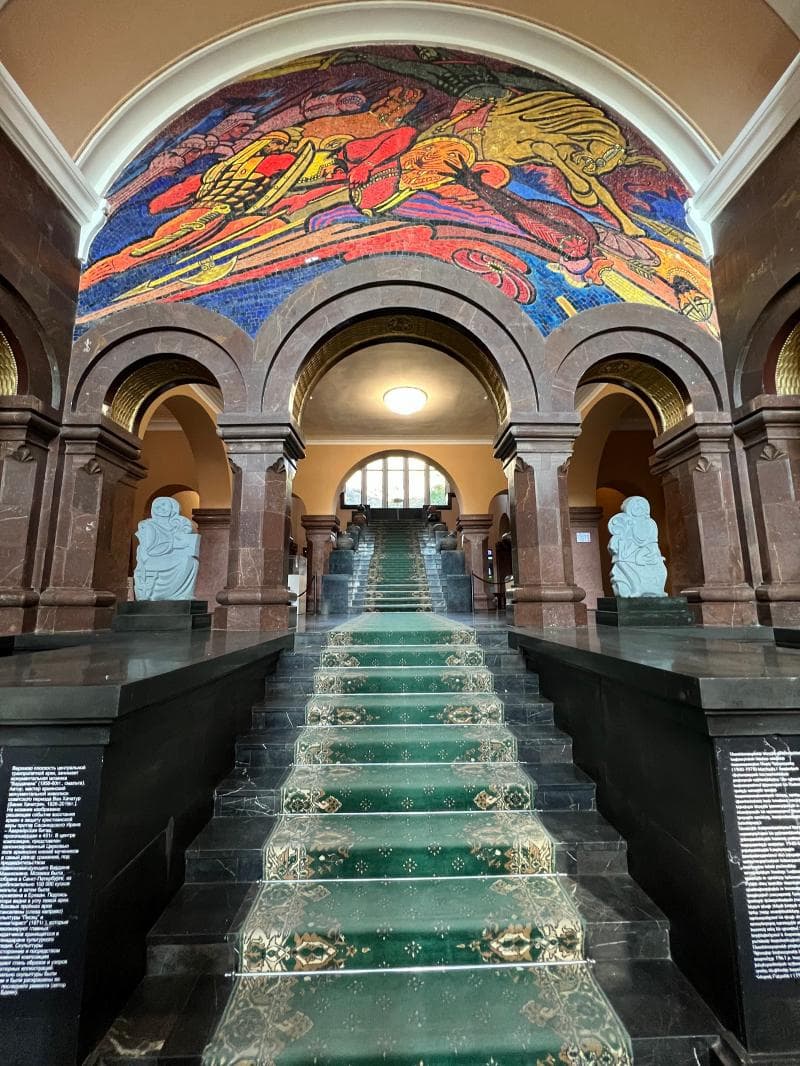
Explore the vibrant Miniature Collections at Matenadaran in Yerevan, Armenia, showcasing centuries of Armenian illuminated manuscript art and history.
Overview
Deep within the heart of Yerevan, Armenia, lies a treasure trove of ancient wisdom and artistic brilliance: the Matenadaran. Officially known as the Mesrop Mashtots Institute of Ancient Manuscripts, this remarkable institution serves not only as a repository but also as a museum and research center. While the Matenadaran houses an extensive collection of some 23,000 manuscripts and half a million archival documents, its 'Miniature Collections' truly captivate the imagination. These exquisite illustrations, woven into the very fabric of Armenian history, offer a vibrant window into the past, illuminating religious texts, historical chronicles, and scientific treatises with unparalleled artistry. Recognized by UNESCO in its Memory of the World Register, Matenadaran's miniatures are a profound expression of Armenian culture and identity.
History & Cultural Background
The story of Armenian miniature painting is intrinsically linked to the nation's enduring legacy of written culture. The art form's origins can be traced back to the creation of the Armenian alphabet by Mesrop Mashtots in 405 AD, which sparked a literary and cultural revolution. Initially, modest ornamentations adorned title pages, gradually evolving into elaborate borders, 'khorans,' and detailed miniature illustrations. The tradition of collecting and preserving these precious manuscripts dates back centuries, with significant repositories existing in medieval monasteries like Etchmiadzin. The modern Matenadaran was established in 1959, built upon the nationalized collection from the Armenian Church, and was later named after Mesrop Mashtots in 1962. Throughout Armenia's often turbulent history, these manuscripts, often crafted in active scriptoriums across various regions, served as vital carriers of knowledge, faith, and national identity, carefully guarded and passed down through generations, embodying the spirit of Armenian resilience.
What Makes It Special
The miniature collections at Matenadaran are distinguished by their exceptional beauty, intricate detail, and deep cultural significance. These aren't merely decorative elements; they were integral to conveying narratives and ideas, especially for those unable to read. Artists employed vibrant natural pigments, some famously derived from local sources like 'Vordan Karmir' – a rich red dye obtained from a specific insect. Many royal manuscripts glitter with real gold leaf, its brilliance undiminished by centuries. Diverse artistic schools emerged over time, each with its unique style, including those from Syunik, Vaspurakan, Cilicia, Artsakh, and even communities in Crimea and Constantinople. Among the most celebrated works are the Echmiadzin Gospels, featuring 6th-century ivory carvings and some of the oldest surviving miniatures. The collection also boasts the Lazarian Gospel from 887 AD, one of the oldest complete Armenian manuscripts, and the revered works of master miniaturists like Toros Roslin from the 13th century.
Stories, Fun Facts & Local Details
The Matenadaran's miniature collections are rich with compelling stories. One of the most famous tales surrounds the 'Msho Charentir' (Homilies of Mush), the largest Armenian manuscript ever created. Weighing nearly 28 kilograms and requiring the skins of over 600 calves, this colossal book was tragically divided into two parts during the Armenian Genocide in 1915 to save it from destruction. Through incredible acts of heroism, refugees carried one half to Yerevan, while the other was later recovered by a Russian officer. At the opposite end of the spectrum is a tiny calendar manuscript from 1434, measuring just 4x3 centimeters and weighing a mere 19 grams. These extremes highlight the vast range of manuscript production. Visitors can also marvel at the ingenuity behind the vibrant colors; for instance, the intense red found in many miniatures came from 'Vordan Karmir', an ancient dye with a history almost as rich as the manuscripts themselves. The Matenadaran also has a 'Laboratory: Skills, Crafts, and Art of Medieval Armenia' exhibition, offering insights into the meticulous processes of parchment preparation, pigment creation, and the art of miniature painting.
Visitor Perspective
A visit to the Matenadaran offers a profound journey through Armenian heritage. The institute is perched majestically on a hill overlooking Yerevan, its facade adorned with statues of influential Armenian scholars and thinkers, including Mesrop Mashtots and his student Koryun, symbolizing the birth of Armenian writing. Inside, the exhibition halls showcase the chronological development of Armenian manuscript art, featuring not only religious texts but also historiographical, medical, and philosophical works. For those interested in the intricate craft of illumination, the museum provides a unique opportunity to explore the evolution of miniature painting across different historical schools. Tactile displays are even available for visually impaired visitors, ensuring a more inclusive experience. Whether you're drawn to the sheer artistry, the historical narratives, or the profound cultural significance, the Miniature Collections at Matenadaran provide an unforgettable encounter with Armenia's enduring spirit and its unparalleled contributions to global literary and artistic heritage. The museum is generally open from Tuesday to Saturday.
Coordinates: 44.52113, 40.19207
View on Google Maps💬 How Travelers Describe This Place
Based on community votes
Photogenic
951Unique
748Beautiful
499Interesting
427Must See
94
Traveler Stories
Discover memorable experiences shared by travelers who have visited this place.
No traveler stories yet.
Be the first traveler to share what made this place memorable.

Tour
By
Spot
Discover amazing places around the world. Your journey starts here.
Explore
© 2026 TourBySpot. All rights reserved.