Minarets
Ashgabat, Turkmenistan
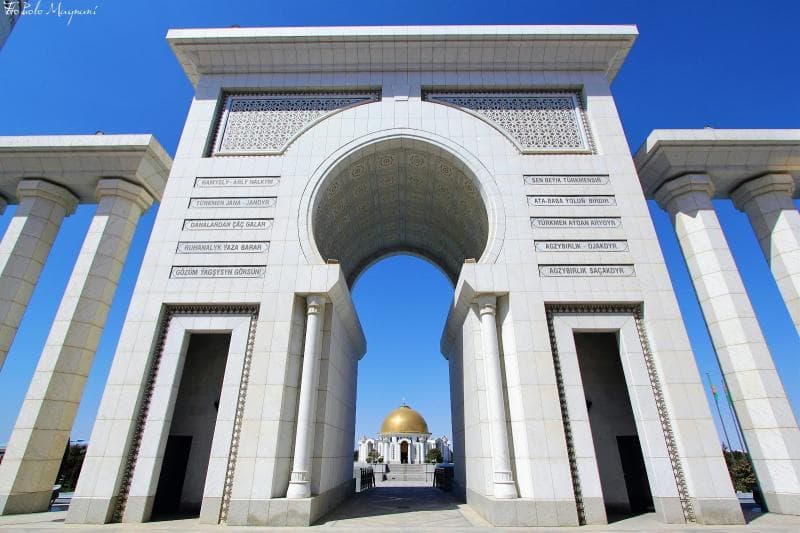
Explore the soaring 91-meter Minarets of Türkmenbaşy Ruhy Mosque in Ashgabat, Turkmenistan, symbols of national independence and unique architecture.
Overview
The Minarets of the Türkmenbaşy Ruhy Mosque, standing majestically in Gypjak, near Ashgabat, Turkmenistan, are more than just architectural marvels; they are profound symbols of a nation's history and identity. These four towering structures are an integral part of the largest mosque in Central Asia, a sprawling complex that captivates visitors with its pristine white marble and grand scale. Built between 2002 and 2004 by the French company Bouygues, the entire mosque complex, including its striking minarets, cost an estimated $100 million.
Situated approximately 7 to 11 kilometers west of Turkmenistan's capital, Ashgabat, the mosque and its minarets rise impressively from the surrounding landscape. The name 'Türkmenbaşy Ruhy Mosque' translates to 'Mosque of Turkmenbashi spirituality' or 'Mosque of the spirit of Turkmenbashi,' reflecting its dedication to the nation's first president, Saparmurat Niyazov, who also initiated its construction.
As you approach, the gleaming white marble facade, sourced from Italy, reflects the Central Asian sun, creating a breathtaking vista. The minarets, symmetrical around the mosque's central dome, draw the eye upwards, promising a deeper story within the complex.
History & Cultural Background
The construction of the Türkmenbaşy Ruhy Mosque and its prominent minarets was a monumental undertaking commissioned by Saparmurat Niyazov, the then-president of Turkmenistan. Completed in 2004, the mosque holds immense significance as it is located in Niyazov's home village of Gypjak. Beyond its function as a place of worship, the complex also houses the mausoleum of Saparmurat Niyazov and his family members, making it a pivotal site for national memory and identity.
Minarets, historically, serve a dual purpose in Islamic architecture: providing a high vantage point for the muezzin to deliver the call to prayer (adhan) and acting as visible landmarks, signifying the presence of Islam. The minarets of the Türkmenbaşy Ruhy Mosque fulfill these traditional roles while also embedding a unique cultural narrative specific to Turkmenistan. The mosque's walls and its minarets are famously inscribed not only with verses from the Holy Quran but also with passages from the 'Ruhnama' (The Book of the Soul), a spiritual and moral guide written by President Niyazov himself. This unusual inclusion has been a subject of discussion, as it intertwines religious scripture with a text of national ideology, offering a distinct reflection of Turkmenistan's cultural journey.
What Makes It Special
What truly sets the Minarets of Türkmenbaşy Ruhy Mosque apart is their remarkable height and the symbolism embedded within their very dimensions. Each of the four minarets stands at an impressive 91 meters (299 feet) tall. This specific height is not arbitrary; it was chosen to symbolize the year 1991, when Turkmenistan proudly declared its independence from the Soviet Union. This makes them not just architectural features but towering monuments to a pivotal moment in the nation's history.
Furthermore, the minarets' pristine white marble, like the rest of the mosque complex, contributes to Ashgabat's reputation as a city adorned in white. The elegant design, combining traditional Islamic architectural elements with modern Turkmen influences, creates a harmonious and visually stunning ensemble. The grandeur extends inside the mosque, which can accommodate an astonishing 10,000 worshippers, featuring a vast prayer hall, white columns, a richly painted celestial blue dome, and a huge hand-made Turkmen carpet covering a heated floor.
Stories, Fun Facts & Local Details
The Minarets of Türkmenbaşy Ruhy Mosque tell a story of ambition and national pride. The decision to inscribe both Quranic verses and passages from the 'Ruhnama' on the minarets and mosque walls generated considerable attention and reflects the distinctive political and cultural landscape of Turkmenistan during Niyazov's presidency. For many, this blending of sacred religious text with a national philosophical work was unprecedented, highlighting the former president's significant influence on the country's spiritual and national narrative.
Another fascinating detail is the sheer scale of the complex. The surrounding area features numerous fountains, creating the illusion that the mosque is floating on water, adding to its ethereal beauty. The underground garage, capable of parking over 400 cars, is another testament to the grand vision behind this immense project. While the mosque can house a vast congregation, visitors often note the relatively few worshippers present, a contrast that adds to the mosque's contemplative atmosphere.
Visitor Perspective
For a curious traveler, visiting the Minarets of Türkmenbaşy Ruhy Mosque offers a unique opportunity to witness a spectacular blend of religious devotion, national identity, and architectural splendor. Standing beneath these 91-meter-tall towers, you can appreciate the intricate craftsmanship of the white marble and the symbolic messages etched into their surfaces. It's an experience that transcends mere sightseeing, inviting reflection on the cultural complexities and the aspirations of a young nation.
The grandeur of the mosque, framed by its imposing minarets, is particularly striking from a distance, where the entire complex appears like a gleaming beacon in the desert landscape. Once inside, the vastness of the prayer hall and the intricate details, from the colossal Turkmen carpet to the celestial dome, provide a sense of awe. While traditional minarets often facilitate the muezzin's call to prayer, here they also serve as a profound historical marker, continually reminding all who gaze upon them of Turkmenistan's declaration of independence.
Coordinates: 58.2517, 38.0173
View on Google Maps💬 How Travelers Describe This Place
Based on community votes
Unique
931Must See
692Photogenic
655Beautiful
491Interesting
266
Traveler Stories
Discover memorable experiences shared by travelers who have visited this place.
No traveler stories yet.
Be the first traveler to share what made this place memorable.

Tour
By
Spot
Discover amazing places around the world. Your journey starts here.
Explore
© 2026 TourBySpot. All rights reserved.