Minaret
Pristina, Kosovo
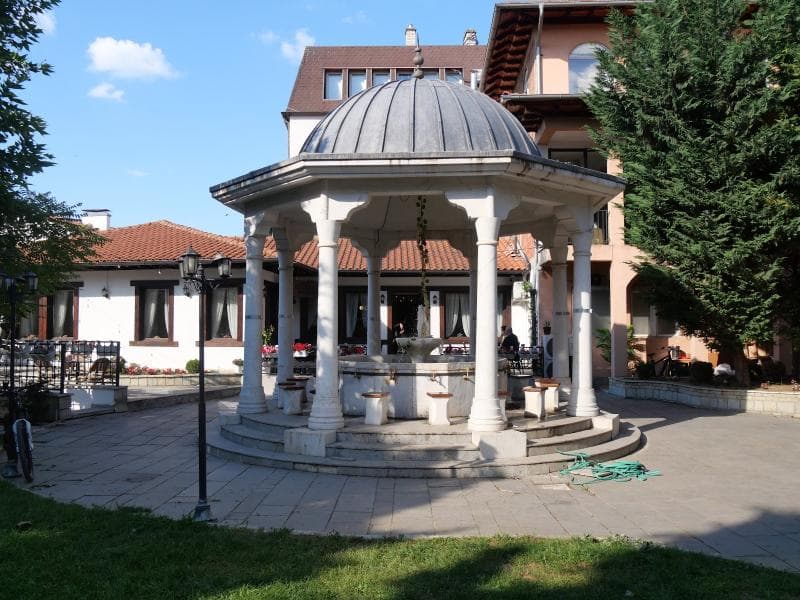
Explore the historic Minaret of the Imperial Mosque in Pristina, Kosovo. Discover 15th-century Ottoman architecture and rich cultural heritage.
Overview
In the vibrant heart of Pristina, Kosovo, stands the magnificent Imperial Mosque, a profound testament to the city's rich Ottoman heritage. Also known by locals as the King's Mosque or the Fatih Mosque, this architectural marvel was established in 1461 by Sultan Mehmed II the Conqueror. It proudly ranks among the oldest and most significant Islamic monuments in Kosovo, considered a true masterpiece of Ottoman Islamic architecture in Eastern Europe.
A striking feature that defines the Imperial Mosque's silhouette against Pristina's skyline is its slender and prominent minaret. This elegant tower is not merely a structural element but a vital part of the mosque's compositional plan, accentuating its beauty and historical value. With its polygonal shape, the minaret contributes significantly to the classic Ottoman architectural style that characterizes the entire complex.
History & Cultural Background
The Imperial Mosque's foundation dates back to 1461, a period when Sultan Mehmed II the Conqueror ordered its construction. An Arabic inscription on its entry portal precisely records this date, marking it as a cornerstone of Ottoman presence in the region. The mosque played a pivotal role in emphasizing Pristina's burgeoning status as a trade hub within the vast Ottoman Empire.
Throughout its long history, the mosque has witnessed significant transformations. During the Austro-Turkish Wars in the late 17th century, it was temporarily converted into a Catholic church. Notably, the prominent Albanian writer Pjetër Bogdani was briefly interred here, though his remains were later exhumed by Ottoman soldiers when control was regained. The structure has undergone several restorations, including major interventions between 1682 and 1683 during the reign of Sultan Mehmed IV, and crucially, after a devastating earthquake in 1955. It was during this 1955 earthquake that the original minaret collapsed, leading to its reconstruction to the elegant form we see today.
Recognizing its immense historical and architectural value, the Imperial Mosque was officially declared a Monument of Culture of Exceptional Importance in 1990. Today, it continues to serve as an active spiritual center and a vibrant cultural hub, hosting community events and religious observances that weave it deeply into Pristina's social fabric.
What Makes It Special
The minaret of the Imperial Mosque is a quintessential example of Ottoman architectural design. Standing approximately 17 meters high and featuring 120 internal steps, it showcases a distinct polygonal shape. Its structure comprises several classical elements: a sturdy footing, a pulpit, a transition segment, a slender shaft, a balcony for the muezzin, an upper shaft, and a spire adorned with an ornament. This towering feature not only serves its functional purpose of calling to prayer but also enhances the mosque's aesthetic appeal, making it a prominent landmark.
Beyond its minaret, the Imperial Mosque is celebrated for its comprehensive Ottoman style. Its interior is a feast for the eyes, adorned with beautiful decorative paintings, intricate geometric patterns, and delicate plant motifs, many applied using the traditional 'al Seko' technique. Visitors can also admire a remarkable wooden pew within the prayer hall, intricately decorated with geometric ornaments. The portal itself is renowned for its rich constructive, architectonic, and decorative elements, setting it apart from other mosques in Kosovo. Furthermore, the mosque's dome is one of the largest constructed in Eastern Europe during the 15th century, adding to its architectural grandeur and significance.
Stories, Fun Facts & Local Details
The enduring legacy of the Imperial Mosque is reflected in its multiple endearing names given by the locals, such as the 'King's Mosque' or 'Fatih Mosque', underscoring its revered status in Pristina. An intriguing anecdote connects the mosque to the nearby Great Hammam, built shortly after the mosque. Local lore suggests that Sultan Mehmed II was so dedicated to cleanliness that he mandated builders perform ritual ablutions in the hammam twice daily, ensuring both their physical and spiritual purity during the construction process.
Despite the evolving urban landscape of Pristina, the Imperial Mosque has steadfastly remained the 'heart' of the city. Its presence has helped preserve the authentic, often irregular, network of surrounding streets, offering visitors a tangible link to Kosovo's past etched in stone and domes. When the call to prayer echoes from its minaret, it serves as a melodic reminder of centuries of tradition and faith, marking the rhythm of daily life for the community.
Visitor Perspective
Visiting the Minaret of the Imperial Mosque, and indeed the entire mosque complex, offers a truly unique opportunity to step back in time and connect with living history in Pristina. Travelers can immerse themselves in the serene atmosphere, marveling at the detailed interior decorations and elegant stone carvings. The peaceful courtyard surrounding the mosque provides an ideal spot for quiet reflection or simply observing local life.
For those planning a visit, modest dress is kindly requested; women are encouraged to cover their heads, arms, and legs, and men should wear long pants. Often, scarves are available to borrow at the entrance if needed. To fully appreciate the tranquil ambiance, it is recommended to visit outside of prayer times, with early mornings or late afternoons often being the least crowded and most contemplative. The mosque's central location also makes it an excellent starting point for exploring other historical gems in Pristina, such as the Great Hammam or the Ottoman-era Clock Tower, which are often visited in conjunction with the mosque.
Coordinates: 21.1670097, 42.6669856
View on Google Maps💬 How Travelers Describe This Place
Based on community votes
Photogenic
896Beautiful
102Unique
102Interesting
95Must See
87
Traveler Stories
Discover memorable experiences shared by travelers who have visited this place.
No traveler stories yet.
Be the first traveler to share what made this place memorable.

Tour
By
Spot
Discover amazing places around the world. Your journey starts here.
Explore
© 2026 TourBySpot. All rights reserved.