Mihrab and Minbar
Istanbul, Turkey
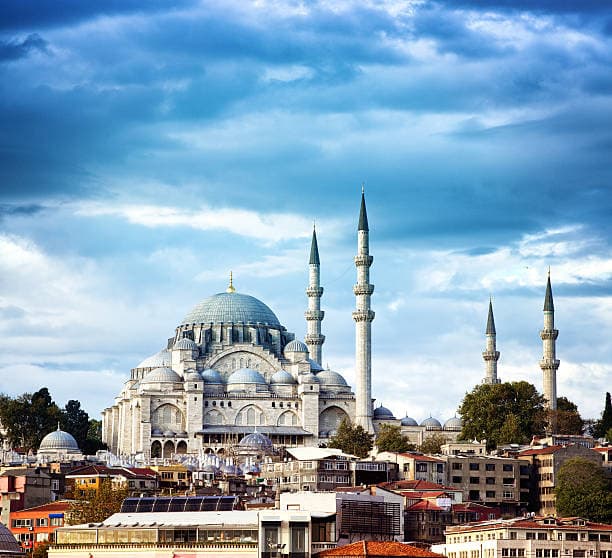
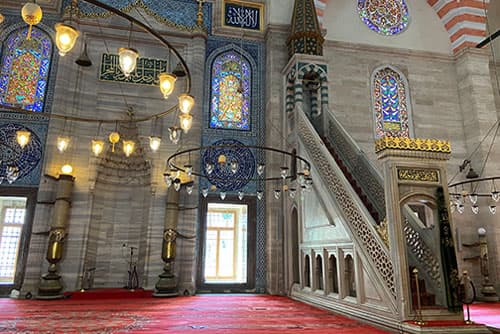
Explore the exquisite Mihrab and Minbar in Istanbul's Süleymaniye Mosque, discover their history, artistry, and cultural significance in Turkey.
Overview
Nestled within the majestic Süleymaniye Mosque in Istanbul, Turkey, the Mihrab and Minbar stand as profound symbols of Islamic faith and artistic mastery. These two essential elements are not merely decorative but represent the spiritual heart of the mosque, guiding the faithful and facilitating the delivery of sermons. Meticulously crafted and rich in symbolism, they draw the eye and soul of every visitor entering the grand prayer hall. They embody centuries of Islamic tradition, reflecting the Ottoman Empire's artistic prowess and the architectural genius of Mimar Sinan.
History & Cultural Background
The Süleymaniye Mosque, a crowning achievement of Ottoman architecture, was commissioned by Sultan Süleyman the Magnificent and designed by the celebrated architect Mimar Sinan. Construction spanned from 1550 to 1557, marking a golden age for the Ottoman Empire. The mosque was intended to symbolize the Sultan's immense power and religious legitimacy, with Süleyman often presenting himself as a 'second Solomon'. Within this grand structure, the Mihrab and Minbar carry a rich historical lineage. The mihrab, a niche indicating the qibla – the direction of the Kaaba in Mecca – is a fundamental element in mosque architecture. While a simple demarcation for prayer direction existed from early Islam, the ornate, recessed mihrab we see today evolved significantly during the Umayyad period. Similarly, the minbar, the pulpit from which the imam delivers the khutbah (sermon), has roots dating back to the time of Prophet Muhammad, evolving from a simple stepped seat into the more elaborate structures characteristic of later mosques.
What Makes It Special
The Mihrab and Minbar of the Süleymaniye Mosque are celebrated for their exquisite craftsmanship and material opulence. Both are fashioned from pristine white marble, intricately carved with 'stalactites' (muqarnas) – an ornamental vaulting that creates a beautiful, cascading, three-dimensional effect. This artistry is further enhanced by delicate gold gilding, adding a touch of splendor to their sacred function. The mihrab, in particular, is framed by striking calligraphic panels. These feature large rosettes of glazed tiles with white Arabic script set against a royal blue background, bordered by vibrant turquoise foliage, presenting sacred verses from the Qur'an. The minbar, likewise made of exquisite marble, contributes to the mosque's overall aesthetic and spiritual harmony. Mimar Sinan's design integrates these elements seamlessly, making them integral to the vast prayer hall's grandeur and its balanced composition. The interior decoration was purposefully restrained, yet elegant, a hallmark of Sinan's architectural philosophy.
Stories, Fun Facts & Local Details
Beyond their religious duties, the Mihrab and Minbar hold fascinating stories and cultural significance. The minbar, for instance, served as a powerful symbol of the Sultan's authority and his role as the protector of Islam, reinforcing the majestic image of Süleyman. The intricate calligraphic decorations that adorn the mosque, including those around the mihrab, were executed by the renowned calligrapher Hasan Çelebi, adding another layer of artistic heritage to these features. Furthermore, tradition attributes the beautiful stained-glass windows surrounding the mihrab wall to an artist known as Sarhoş Ibrahim, or 'Ibrahim the Drunk'. The use of precious materials like marble and porphyry throughout the mosque, particularly for significant elements like the Mihrab and Minbar, was a deliberate display of imperial power and wealth during the Ottoman era. These details underscore the Süleymaniye Mosque not just as a place of worship, but as a monumental statement of an empire at its zenith.
Visitor Perspective
For the curious traveler, visiting the Mihrab and Minbar within the Süleymaniye Mosque offers a profound cultural and spiritual experience. The mosque is generally open to visitors daily, though access to the main prayer hall is temporarily restricted during the five daily prayer times to ensure peace for worshippers. Entry to this magnificent site is free of charge, welcoming all who wish to explore its beauty and history. Visitors are kindly asked to observe a modest dress code: women should cover their heads, shoulders, and legs, and men should wear long trousers. Headscarves are sometimes provided at the entrance, but it is advisable to bring your own. Photography is permitted outside of prayer times, allowing you to capture the serene atmosphere and intricate details of the Mihrab and Minbar. Many visitors find the Süleymaniye Mosque to be a more peaceful and spacious alternative to some of Istanbul's more crowded religious sites, offering breathtaking panoramic views of the city and the Golden Horn from its vantage point on the Third Hill.
Coordinates: 28.963844, 41.016099
View on Google Maps💬 How Travelers Describe This Place
Based on community votes
Photogenic
836Interesting
620Beautiful
594Must See
166Unique
83
Traveler Stories
Discover memorable experiences shared by travelers who have visited this place.
No traveler stories yet.
Be the first traveler to share what made this place memorable.

Tour
By
Spot
Discover amazing places around the world. Your journey starts here.
Explore
© 2026 TourBySpot. All rights reserved.