Michelangelo’s Pietà
Rome, Italy
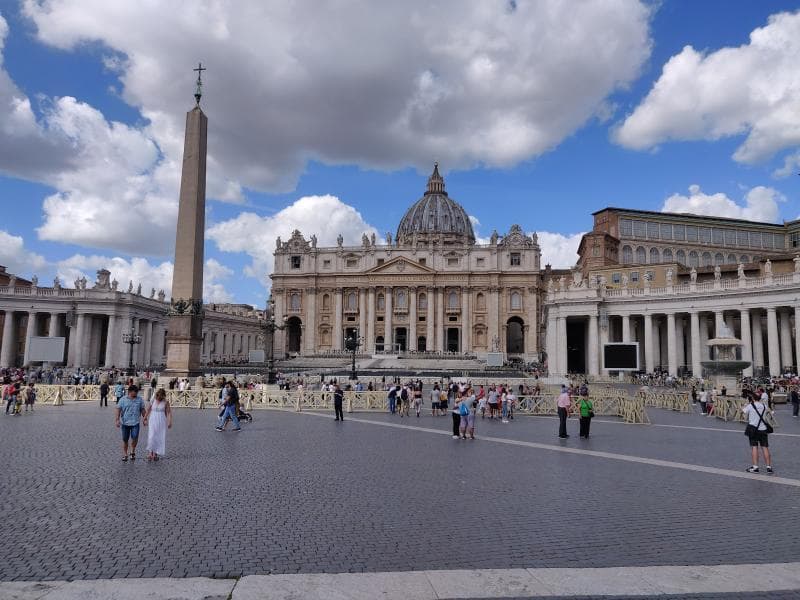
Discover Michelangelo's 'Pietà' in St. Peter's Basilica, Rome, Italy. Explore its history, artistic genius, and emotional impact.
Overview
Nestled within the grandeur of St. Peter's Basilica in Vatican City, Rome, lies Michelangelo's 'Pietà', a masterpiece of Renaissance sculpture that continues to captivate visitors with its profound beauty and emotional depth. This iconic work depicts the Virgin Mary cradling the body of her deceased son, Jesus Christ, after his crucifixion. Carved from a single block of exquisite Carrara marble, the 'Pietà' is celebrated for its masterful artistry and the tender, yet sorrowful, expression it conveys. It stands as a testament to Michelangelo's genius, created when he was remarkably young, and is an essential pilgrimage for art lovers and spiritual seekers alike.
History & Cultural Background
Michelangelo Buonarroti sculpted the 'Pietà' between 1498 and 1499, at the age of just 23 or 24, a period marking the dawn of the High Renaissance. It was commissioned by French Cardinal Jean Bilhères de Lagraulas, who intended it for his funerary monument in the old St. Peter's Basilica. The theme of the 'Pietà', or 'Pity', showing Mary mourning Christ, was more common in Northern European art forms known as 'Vesperbilder' at the time, making Michelangelo's monumental Italian interpretation quite unique. His ability to infuse such a deeply emotional subject with classical grace and anatomical precision instantly established his reputation as a master sculptor. The sculpture’s original location was the chapel of Santa Petronilla in the Vatican.
What Makes It Special
The 'Pietà' is renowned for several elements that set it apart. Firstly, Michelangelo's selection of a flawless block of Carrara marble from the quarries of Tuscany, which he personally chose, allowed him to achieve an unparalleled smoothness and luminosity in the figures' skin and drapery. Critics often describe how the marble appears to transform into flesh, breathing life into the cold stone. Secondly, the composition is a triumph of balance and harmony, forming a stable pyramidal structure, with Mary's head at the apex and her flowing drapery providing a wide, grounding base. This compositional choice allows the viewer's eye to gently follow the contours of the figures. Furthermore, the youthful portrayal of the Virgin Mary, which initially drew some criticism, was deliberately chosen by Michelangelo to symbolize her eternal purity and incorruptible beauty, unmarred by time and sin. The subtle marks of Christ's crucifixion, such as the small nail marks and the wound in his side, are present but not overly graphic, emphasizing serenity over suffering.
Stories, Fun Facts & Local Details
- The Only Signed Work: In a moment of youthful pride, Michelangelo famously carved his name onto the sash across Mary's chest: 'MICHAEL. ANGELUS. BONAROTUS. FLORENT. FACIEBAT' (Michelangelo Buonarroti of Florence Made This). This was reportedly done after he overheard bystanders attributing the work to another sculptor. It remains the only work he ever signed.
- A Journey Across the Ocean: In 1964, the 'Pietà' made a remarkable journey to the New York World's Fair. Transported with extreme care, it was viewed by millions, marking its only time leaving the Vatican.
- Vandalism and Restoration: Sadly, in 1972, the sculpture suffered a severe act of vandalism when a mentally unstable man attacked it with a hammer, damaging Mary's arm, nose, and eyelid. The 'Pietà' underwent a meticulous restoration over 10 months and is now protected by bulletproof glass, ensuring its preservation for future generations.
- Michelangelo's Vision: It is said that Michelangelo viewed the sculpture as already existing within the marble block, and his task was simply to 'free' it.
Visitor Perspective
Today, visitors to St. Peter's Basilica in Rome can find Michelangelo's 'Pietà' in the first chapel on the right-hand side as they enter the basilica. Due to the 1972 incident, the sculpture is now encased behind a thick panel of bulletproof glass, which necessitates viewing it from a slight distance. Despite this, the 'Pietà' retains its powerful presence. The soft lighting within the chapel enhances the marble's polished surface, making the figures appear almost ethereal. Observing the intricate details of Mary's flowing robes and the serene expression on both her and Christ's faces evokes a profound sense of awe and contemplation. Many visitors pause here for quiet reflection and prayer, recognizing the universal themes of sorrow, love, and sacrifice that the masterpiece so eloquently portrays. It's an experience that transcends mere artistic appreciation, touching the spirit of all who stand before it.
Coordinates: 12.4533, 41.9022
View on Google Maps💬 How Travelers Describe This Place
Based on community votes
Photogenic
886Unique
443Beautiful
310Must See
277Interesting
233
Traveler Stories
Discover memorable experiences shared by travelers who have visited this place.
No traveler stories yet.
Be the first traveler to share what made this place memorable.

Tour
By
Spot
Discover amazing places around the world. Your journey starts here.
Explore
© 2026 TourBySpot. All rights reserved.