Michaelerplatz
Vienna, Austria
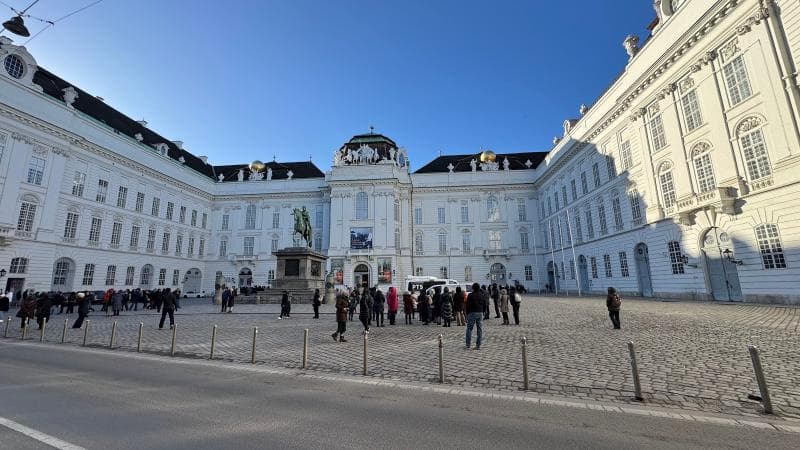
Explore Michaelerplatz in Vienna, Austria, where Roman ruins meet imperial grandeur and modernist architecture. Discover its rich history and unique cultural blend.
Overview
Michaelerplatz, nestled in the vibrant heart of Vienna, Austria, serves as a magnificent historical crossroads and a primary gateway to the illustrious Hofburg Palace. This iconic square is a captivating blend of various architectural eras, where ancient Roman foundations meet imperial Baroque grandeur and daring modernist design. It's a place where every cobblestone whispers tales of emperors, artists, and everyday life spanning two millennia. From the imposing Michaelertrakt of the Hofburg to the stark simplicity of the Looshaus and the venerable St. Michael's Church, Michaelerplatz offers an unparalleled journey through Vienna's layered past. As you stand in this bustling square, you are literally surrounded by visible history, a testament to the city's enduring legacy and continuous evolution.
History & Cultural Background
The story of Michaelerplatz reaches back to the 1st century AD, when it was part of Vindobona, a Roman military settlement. The area then lay just outside the camp walls, functioning as a civilian suburb and an important intersection for ancient trade routes. By the Middle Ages, the square was known as part of the Witmarkt, or Wood Market. Its current name derives from St. Michael's Church, an edifice whose earliest parts date to the 13th century.
As the Habsburg dynasty rose to prominence, Michaelerplatz transformed into a ceremonial forecourt for the Hofburg Palace. Plans for a grand Baroque facade were conceived in the 18th century by Josef Emanuel Fischer von Erlach, but the ambitious Michaelertrakt, with its iconic Michaelertor, wasn't fully realized until 1893. This prolonged construction period resulted in a structure that appears much older than its late 19th-century completion suggests, adhering to the original Baroque designs. This imperial gateway was designed to impress, featuring colossal statues of Hercules and elaborate fountains symbolizing the 'Mastery of the Land' and 'Mastery of the Sea'.
What Makes It Special
What truly sets Michaelerplatz apart is its remarkable juxtaposition of architectural styles and historical periods within a single, dynamic space. Nowhere else in Vienna can one so clearly witness Roman ruins, medieval church spires, Baroque imperial splendor, and early 20th-century modernism in such close proximity.
- Roman Excavations: Beneath transparent glass panels embedded in the cobblestones, visitors can gaze upon the excavated remains of Roman Vindobona. These fragments of ancient walls, house foundations, and street grids offer a tangible link to Vienna's earliest days as a frontier outpost.
- The Michaelertrakt and Michaelertor: This grand, domed entrance to the Hofburg Palace is a masterpiece of Neo-Baroque design. It features heroic statues of Hercules depicting his labors, such as capturing Cerberus, and impressive allegorical fountains.
- St. Michael's Church (Michaelerkirche): One of Vienna's oldest churches, dating back to 1221, it showcases a mix of Romanesque, Gothic, and Neo-Classical elements. Its interior boasts Renaissance frescoes, and its crypt holds a unique and somber collection of mummified remains from past centuries, offering a chilling glimpse into historical burial practices.
- The Looshaus: Designed by Adolf Loos and completed in 1912, this minimalist building stands in stark contrast to its ornate neighbors. Its unadorned facade caused a scandal at the time, even reportedly leading Emperor Franz Joseph I to dislike it intensely. Today, it is celebrated as a pioneering work of modernist architecture.
Stories, Fun Facts & Local Details
The Looshaus, with its radical simplicity, famously irked Emperor Franz Joseph I so much that he allegedly refused to use the Michaelertor entrance to the Hofburg Palace, sometimes even ordering the palace windows facing it to be shuttered. He reputedly called it 'the house without eyebrows'. This architectural defiance creates a unique 'dialogue' across the square: imperial power versus modernist rebellion. St. Michael's Church is not only architecturally significant but also historically poignant, as parts of Wolfgang Amadeus Mozart's Requiem were first performed there during his funeral service in 1791. The crypt of St. Michael's is particularly fascinating; due to unique environmental conditions, some of the bodies interred there between the 16th and 18th centuries have naturally mummified, offering a rare and eerie historical spectacle. Horse-drawn carriages, known as 'Fiaker', frequently clip-clop across the square, adding a timeless charm and a sense of old-world Vienna to the scene.
Visitor Perspective
Michaelerplatz is a must-visit destination for any curious traveler in Vienna. It is freely accessible and open at all times, making it an easy and rewarding stop within the city's historic center. To truly appreciate its beauty and intricate details, consider visiting early in the morning or later in the afternoon to avoid peak crowds and enjoy the softer light, ideal for photography. Take a moment to stand in the center and slowly turn, absorbing the panoramic view of Roman ruins beneath your feet, the medieval church, the towering imperial gate, and the modernist facade all at once. It's an experience that encourages contemplation on the layers of history that have shaped this incredible city. While the square itself is free, access to attractions within the Hofburg Palace and tours of St. Michael's Church crypt typically require tickets. Michaelerplatz is well-connected and easily reached on foot from many other major Viennese attractions.
Coordinates: 16.3666, 48.2078
View on Google Maps💬 How Travelers Describe This Place
Based on community votes
Beautiful
910Must See
755Interesting
658Photogenic
589Unique
374
Traveler Stories
Discover memorable experiences shared by travelers who have visited this place.
No traveler stories yet.
Be the first traveler to share what made this place memorable.

Tour
By
Spot
Discover amazing places around the world. Your journey starts here.
Explore
© 2026 TourBySpot. All rights reserved.