Meridian Gate
Beijing, China
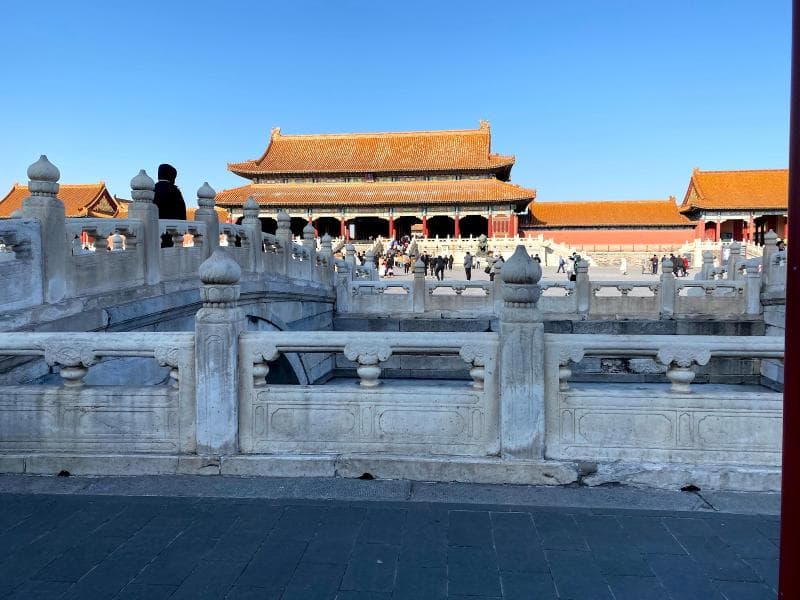
Discover Beijing's Meridian Gate, the grand southern entrance to the Forbidden City. Explore its imperial history, unique architecture, and cultural significance.
Overview
Stepping into the Meridian Gate, or Wumen as it is known in Chinese, is to cross a threshold not just into a physical space, but into centuries of imperial history. This colossal structure serves as the main southern entrance to the Forbidden City in Beijing, China, and for many, it is the grand initiation into the imperial palace complex. It is the largest and most imposing of the Forbidden City's gates, setting a majestic tone for the wonders that lie within. Known also as the 'Five-Phoenix Hall' (Wufenglou) due to its unique architectural silhouette, the Meridian Gate is more than just an entry point; it is a monument embodying power, tradition, and artistry.
Today, visitors enter through its grand archways, but in imperial times, passage through its five gates was governed by strict hierarchy, a vivid reminder of the emperor's supreme authority. This gate, with its sweeping roofs and towering presence, has witnessed countless historical moments, from grand ceremonies to significant pronouncements, and continues to captivate travelers with its profound story.
History & Cultural Background
The Meridian Gate was first completed in 1420 during the Ming Dynasty, establishing its foundational role in the imperial city's design. While the original structure saw a major reconstruction in 1647 after significant damage, its historical essence as the emperor's gateway remained intact.
Its name, Meridian Gate, carries deep cultural significance. Ancient Chinese emperors believed themselves to be the 'Sons of Heaven' and considered their residence, the Forbidden City, to be the center of the universe. The Meridian Gate was strategically built so that the celestial meridian line was perceived to pass directly through its center, aligning the entire Forbidden City symmetrically along this axis and thus underscoring the emperor's divine connection and central role in the cosmos.
Throughout the Ming and Qing Dynasties, the Meridian Gate was the primary entry for the emperor, symbolizing his unparalleled status. Its design and strict protocols for entry reinforced the rigid class system and the emperor's ultimate power, making it a powerful symbol of imperial authority and tradition for over 500 years.
What Makes It Special
What truly distinguishes the Meridian Gate is its remarkable architecture and its historical functions. Standing at an impressive height of 37.95 meters (124.5 feet), it is the tallest building in the Palace Museum complex.
Its distinctive 'concave' layout features a central tower with double roofs and two protruding arms extending southward, culminating in two smaller towers at their ends. This shape gives it the appearance of a majestic phoenix spreading its wings, hence its moniker, 'Five-Phoenix Hall'. The central tower itself is 60.05 meters (198 feet) long and 25 meters (82 feet) wide, resting on a 12-meter (39-feet) high red abutment.
The gate boasts five archways. Historically, the central archway was exclusively for the emperor. Exceptions were made only once for an empress, on her wedding day, and for the top three scholars of the triennial civil service examinations when they departed after achieving success. All other officials and servants were relegated to the four side arches. This strict protocol dramatically emphasized the emperor's divine status and the stratified nature of imperial society.
Beyond its architectural grandeur, the Meridian Gate served as a stage for pivotal imperial ceremonies. Emperors would issue imperial edicts, promulgate almanacs, and sometimes receive prisoners of war here, reinforcing the gate's role as a symbol of national prestige and power.
Stories, Fun Facts & Local Details
The Meridian Gate holds many fascinating tales and details that bring its history to life. For instance, the two ends of the central tower once housed bells and drums. The bells would ring when the emperor departed for the Temple of Heaven, while the drums sounded for his departure to the Ancestral Temple. Both instruments were struck together for grand ceremonies held in the Hall of Supreme Harmony.
A well-known urban myth suggests that high-ranking officials faced execution at the Meridian Gate. However, historical records clarify that only corporal punishment, known as the 'Tingchang Penalty', was carried out here, typically for ministers who had displeased the emperor. Mass decapitations, though sometimes associated with the gate, were not a regular practice at this symbolic imperial entrance.
In a rare display of access, foreign royals and envoys were permitted to enter through the central door of the Meridian Gate in the late Qing Dynasty, such as a German prince and envoy in 1903, marking a departure from strict imperial traditions. Today, the gate's tower and corridor buildings serve as a 3,000 square meter (32,292 square foot) exhibition space, hosting three to five major exhibitions annually, offering visitors a deeper dive into Chinese culture and history.
Visitor Perspective
For today's traveler, the Meridian Gate serves as the singular entry point into the Forbidden City, transforming it from a symbol of exclusion to one of invitation. As you approach this immense structure, it immediately conveys a sense of quiet grandeur and monumental scale.
The architects ingeniously designed the gate to control the visitor's perspective. It masterfully withholds the full panorama of the Forbidden City until you have passed through its imposing archways, building anticipation. This intentional restraint creates a powerful sense of revelation as the vast courtyards and halls of the Outer Court suddenly unfold before you.
Visitors pass through what were once strictly segregated passages, now unified as the main thoroughfare. Before entering the gate itself, you'll go through ticket checking and security screening, a modern addition to this ancient pathway. As you walk through, imagine the centuries of imperial processions, dignitaries, and scholars who once tread these very stones, each step resonating with the echoes of a bygone era. The Meridian Gate is not just an entrance; it is a powerful introduction to the majesty and mystery of the Forbidden City.
Coordinates: 116.39111, 39.9125
View on Google Maps💬 How Travelers Describe This Place
Based on community votes
Interesting
886Photogenic
564Beautiful
443Must See
310Unique
233
Traveler Stories
Discover memorable experiences shared by travelers who have visited this place.
No traveler stories yet.
Be the first traveler to share what made this place memorable.

Tour
By
Spot
Discover amazing places around the world. Your journey starts here.
Explore
© 2026 TourBySpot. All rights reserved.