Memorials
Berlin, Germany
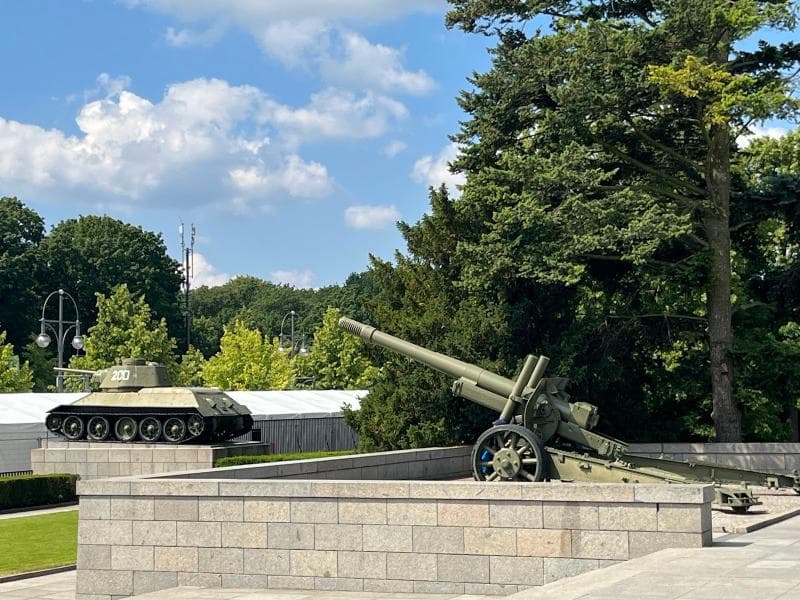
Explore Berlin's Tiergarten memorials, including the Soviet War Memorial, Holocaust Memorial, and tributes to Sinti, Roma, and homosexual victims.
Overview
Berlin's Tiergarten, a sprawling urban park, is more than just a green oasis; it serves as a profound landscape of memory, hosting several significant memorials. These sites commemorate pivotal moments and dark chapters in German history, inviting visitors to reflect on the past and its enduring lessons. From solemn tributes to victims of Nazi persecution to a grand monument honoring fallen Soviet soldiers, the 'Memorials' sub-spot within Tiergarten offers a powerful and poignant journey through remembrance in the heart of Berlin, Germany.
The memorials are strategically placed, often near key governmental and historical landmarks, making them integral to the city's narrative. They range in design from abstract art installations to monumental sculptures, each designed to evoke contemplation and understanding rather than simply presenting facts. While the park itself invites relaxation and recreation, these dedicated spaces stand as quiet reminders of sacrifices, resilience, and the ongoing commitment to human rights.
History & Cultural Background
The presence of so many significant memorials in and around Tiergarten reflects Germany's extensive efforts to confront its tumultuous 20th-century history. Following the devastation of World War II and the Holocaust, Berlin embarked on a journey of remembrance, acknowledging its past through the establishment of numerous sites of commemoration. The memorials in Tiergarten primarily address the atrocities of the Nazi regime and the immense cost of war.
For instance, the Soviet War Memorial, unveiled in November 1945, was one of the first major monuments erected after the Battle of Berlin. It commemorates the estimated 80,000 Soviet soldiers who died securing the city, serving as a powerful symbol of the Red Army's role in ending Nazi tyranny. Its construction was ordered by the Red Army immediately after the war, with materials like marble reportedly sourced from Hitler's Chancellery, adding a layer of symbolic retribution.
Later memorials, such as those dedicated to the murdered Jews, Sinti and Roma, and homosexuals, emerged from a recognition of previously overlooked or suppressed victim groups, marking a broader societal reckoning with the full scope of Nazi persecution. These were often the result of decades of advocacy by survivor groups and human rights organizations, underscoring a commitment to ensure that all victims are remembered and their stories are heard.
What Makes It Special
What makes the memorials in Tiergarten particularly special is their diverse approaches to remembrance, combining monumental scale with intimate, reflective experiences. The Soviet War Memorial, with its imposing statue of a Red Army soldier and flanking T-34 tanks, offers a traditional, heroic narrative of victory and sacrifice. Its location was deliberately chosen to interrupt the 'Victory Avenue' planned by the National Socialists, a symbolic reclaiming of space.
In stark contrast, the nearby Memorial to the Murdered Jews of Europe, an abstract field of 2,711 concrete stelae of varying heights, is designed to evoke a sense of disorientation and unease, inviting personal interpretation rather than explicit instruction. The uneven ground and labyrinthine pathways create a profound, almost visceral experience for visitors.
The Memorial to Homosexuals Persecuted Under Nazism, a concrete cube with a small window displaying a film of two kissing men, is both understated and deeply moving. This artistic choice directly challenges the historical persecution of same-sex love, making a powerful statement about identity and acceptance. The Memorial to the Sinti and Roma Victims of National Socialism features a circular water basin with a constantly replenished fresh flower on a central stone, symbolizing life amidst genocide and the ongoing fight for recognition.
Stories, Fun Facts & Local Details
Beyond their solemn purpose, some memorials carry fascinating local stories. The Soviet War Memorial, for example, stood in the British sector of West Berlin during the Cold War. Despite its Soviet origins, British forces were responsible for its protection, a peculiar arrangement born of post-war agreements.
The Memorial to the Murdered Jews of Europe sparked considerable debate during its planning, reflecting diverse opinions on how best to commemorate the Holocaust. The abstract design by Peter Eisenman ultimately prevailed, offering a unique, non-didactic space for reflection. The underground 'Place of Information' beneath the stelae provides crucial historical context, featuring names of victims and personal stories, creating a link between the abstract art and individual tragedies.
A poignant detail at the Memorial to the Sinti and Roma is the poem 'Auschwitz' by Santino Spinelli inscribed around the water basin, which changes with the daily fresh flower. This continuous, subtle act of remembrance ensures that the memorial remains a living tribute, constantly renewed. The design of the memorial also incorporates a triangular stone, referencing the badges prisoners were forced to wear in concentration camps.
Visitor Perspective
Visiting the memorials in Tiergarten is a profoundly moving and educational experience. While many visitors are drawn to the grandeur of the Brandenburg Gate or the historical significance of the Reichstag, these adjacent and nearby memorials offer a deeper engagement with Germany's past. They encourage a quiet, contemplative approach, allowing individuals to connect with the gravity of historical events on a personal level.
Walking among the stelae of the Holocaust Memorial, for instance, can evoke feelings of isolation or reflection, depending on one's perspective. The sheer scale and repetitive nature of the blocks can be overwhelming, a deliberate design choice to convey the enormity of the loss. Similarly, the powerful imagery at the Memorial to Homosexuals or the symbolic gestures at the Sinti and Roma Memorial offer unique insights into the specific persecutions suffered. It is important for visitors to approach these sites with respect and a willingness to engage with the complex histories they represent, allowing for a truly impactful and memorable journey through Berlin's landscape of remembrance.
Coordinates: 13.37222, 52.51667
View on Google Maps💬 How Travelers Describe This Place
Based on community votes
Interesting
848Unique
830Photogenic
797Beautiful
410Must See
136
Traveler Stories
Discover memorable experiences shared by travelers who have visited this place.
No traveler stories yet.
Be the first traveler to share what made this place memorable.

Tour
By
Spot
Discover amazing places around the world. Your journey starts here.
Explore
© 2026 TourBySpot. All rights reserved.