Memorial Stupas
Phnom Penh, Cambodia
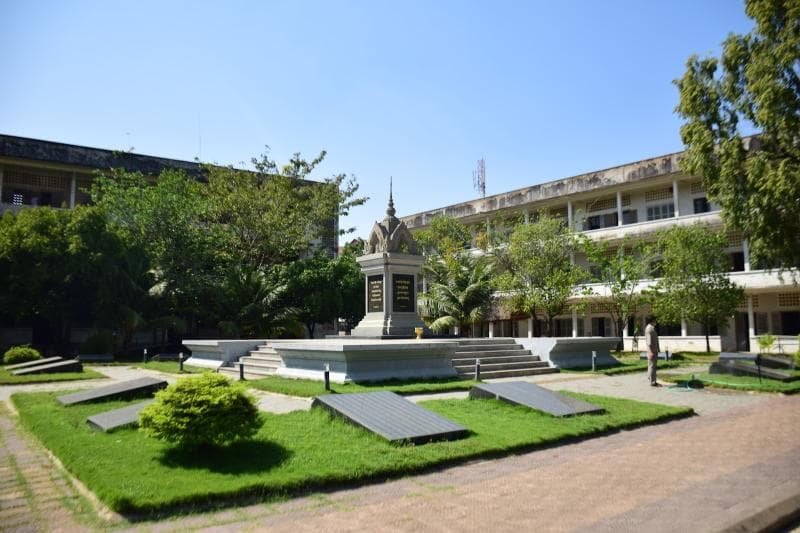
Explore the Memorial Stupas at Tuol Sleng Genocide Museum in Phnom Penh, Cambodia, a powerful tribute to Khmer Rouge victims. Discover its history and significance.
Overview
The Memorial Stupas, situated within the solemn grounds of the Tuol Sleng Genocide Museum in Phnom Penh, Cambodia, serve as a poignant and enduring tribute to the victims of the brutal Khmer Rouge regime. This significant sub-spot within the larger museum complex is a place of profound remembrance, offering visitors a space for quiet reflection and an opportunity to confront a tragic chapter in human history. It stands as a powerful symbol of the immense loss and suffering endured by those imprisoned and tortured at Security Prison 21 (S-21).
As part of the Tuol Sleng Genocide Museum, the Memorial Stupas are an integral component of Cambodia's ongoing efforts to preserve the memory of the genocide, foster peace, and educate future generations. The museum, officially known as the Tuol Sleng Genocide Museum, was established on the site of the former S-21, a secret facility where an estimated 20,000 people were detained, interrogated, tortured, and ultimately sent for execution. The stupas encapsulate the museum's mission to prevent the recurrence of such atrocities by ensuring that the past is never forgotten.
History & Cultural Background
The site that now houses the Tuol Sleng Genocide Museum and its Memorial Stupas was once the peaceful Preah Ponhea Yat High School, built in 1962. However, with the rise to power of the Khmer Rouge in 1975, the school was transformed into Security Prison 21 (S-21), becoming the regime's central hub for the detention and extermination of perceived 'enemies' of the state. Between 1975 and 1979, the classrooms were converted into tiny prison cells and torture chambers, and the entire compound was enclosed in electrified barbed wire.
The museum itself was inaugurated on April 17, 1980, shortly after the Vietnamese forces liberated Phnom Penh and uncovered the horrors of S-21. The first memorial stupa, a wooden structure, was erected in 1987 in one of the backyards, serving as a focal point for ceremonies. However, this initial structure collapsed in the early 21st century. After subsequent temporary replacements, a new, larger memorial stupa, the fourth iteration, was officially unveiled on March 26, 2015. This significant monument was developed as part of non-judicial reparations by the Extraordinary Chambers in the Courts of Cambodia and received funding from the German government.
What Makes It Special
What distinguishes the Memorial Stupas is their profound symbolism and dedicated function as a collective resting place and honorific monument. The current stupa is notably non-denominational, making it a universal space for mourning and respect for all victims, regardless of their background. It stands at approximately 5 meters (20 feet) tall and is surrounded by 16 marble plaques embedded into the ground. These plaques are meticulously inscribed with the names of over 12,000 known victims who perished at S-21, creating a deeply personal and tangible connection to those who suffered.
The stupa bears a powerful inscription: 'Remember, never forget the crimes committed during the Democratic Kampuchea regime.' This message underscores its primary purpose: to ensure that the atrocities of the past are neither repeated nor erased from collective memory. It serves not only as a monument to the deceased but also as a beacon for human rights and peace.
Stories, Fun Facts & Local Details
The inauguration of the latest Memorial Stupa in 2015 was a significant event, attended by Cambodian government officials, international donors, and members of the Extraordinary Chambers in the Courts of Cambodia. For many, including survivors of S-21, the stupa offered a crucial form of 'psychological' and 'collective compensation'. Khmer Rouge survivor Chum Mey, present at the inauguration, highlighted the memorial's role as a vital 'learning ground for younger generations' to prevent future tragedies.
The museum regularly hosts religious ceremonies throughout the year, especially during the Pchum Ben festival, Cambodia's Ancestors' Day. During these events, Buddhist monks, government officials, and visitors gather to honor the victims, further integrating traditional cultural practices with the site's memorial function. The meticulous records kept by the Khmer Rouge at S-21, including thousands of photographs, are now preserved at the museum, offering chilling insights into the lives and fates of the prisoners. Out of an estimated 20,000 individuals imprisoned at S-21, a mere twelve are known to have survived.
Visitor Perspective
Visiting the Memorial Stupas and the Tuol Sleng Genocide Museum is an intensely moving and often emotionally challenging experience. Many visitors describe it as profoundly depressing, yet essential for understanding Cambodia's recent history. The site is preserved largely as it was found in 1979, allowing visitors to walk through the former classrooms turned cells and torture chambers, offering a stark and unvarnished glimpse into the prison's operations.
The Memorial Stupas provide a quiet sanctuary within the museum grounds, a space where visitors can pause, reflect, and pay their respects. It is common to see people offering incense or flowers at the stupas. Travelers are encouraged to allocate ample time for their visit, allowing for thoughtful contemplation of the exhibits and the memorial itself. As with many religious and commemorative sites in Cambodia, visitors are kindly asked to dress respectfully, ensuring their legs and arms are covered as a sign of reverence.
Coordinates: 104.91778, 11.54944
View on Google Maps💬 How Travelers Describe This Place
Based on community votes
Unique
894Interesting
862Photogenic
443Beautiful
304Must See
35
Traveler Stories
Discover memorable experiences shared by travelers who have visited this place.
No traveler stories yet.
Be the first traveler to share what made this place memorable.

Tour
By
Spot
Discover amazing places around the world. Your journey starts here.
Explore
© 2026 TourBySpot. All rights reserved.