Medusa Heads
Istanbul, Turkey
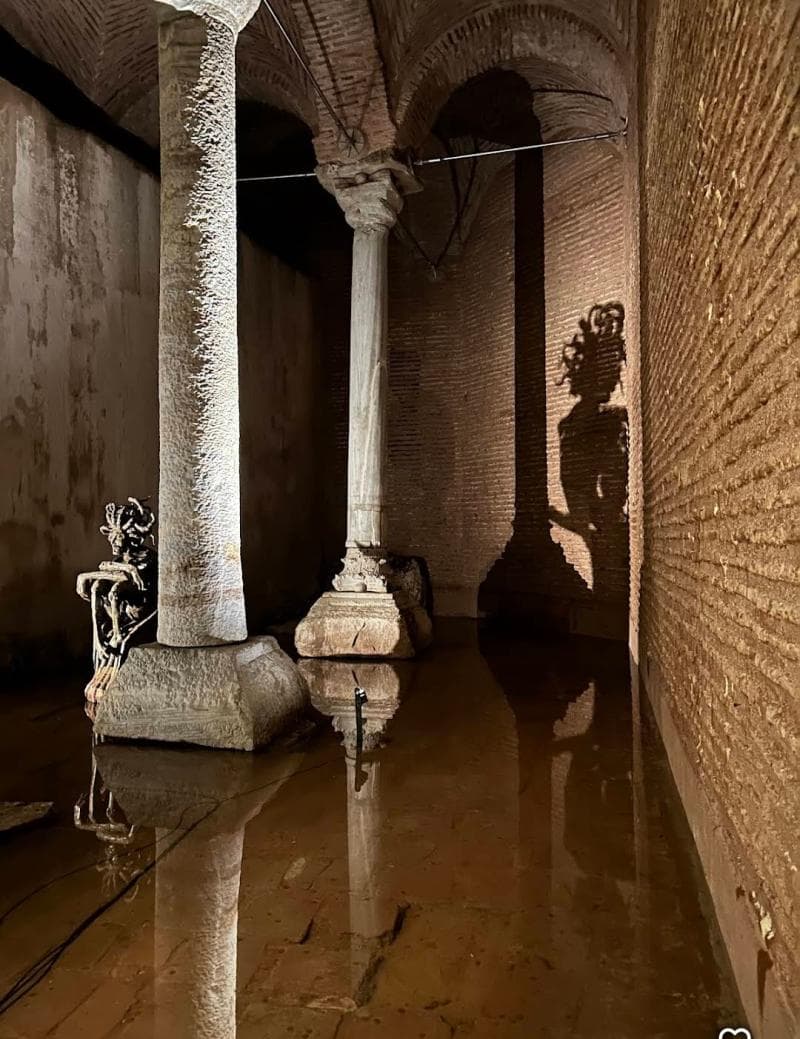

Discover the enigmatic Medusa Heads in Istanbul's Basilica Cistern, ancient Roman sculptures repurposed in the 6th-century Byzantine water reservoir in Turkey. Explore their mystery.
Overview
Deep beneath the bustling streets of Istanbul, Turkey, lies the ancient Basilica Cistern, a remarkable subterranean marvel. Among its 336 ancient columns, two features stand out, captivating visitors with their mystery and historical significance: the Medusa Heads. These are two large, intricately carved stone blocks depicting the mythical Gorgon Medusa, used as bases beneath two columns. One head is notably positioned upside down, while the other rests sideways, creating an enigmatic spectacle.
The Basilica Cistern, known in Turkish as Yerebatan Sarnıcı, or 'Sunken Cistern', is the largest of several hundred ancient cisterns that exist beneath Istanbul. It was constructed in the 6th century during the reign of Byzantine Emperor Justinian I, primarily to store and supply water to the Great Palace and surrounding imperial buildings.
History & Cultural Background
The story of Medusa originates from ancient Greek mythology, where she was one of the three Gorgon sisters. Commonly depicted with venomous snakes for hair, her infamous gaze was said to turn any beholder into stone. According to the most widely known version of the myth, Medusa was once a beautiful priestess who was transformed into a monster by the goddess Athena, often as punishment for a transgression involving the sea god Poseidon in Athena's temple.
The hero Perseus eventually defeated Medusa by using a highly polished shield as a mirror, enabling him to avoid her direct gaze and thus sever her head. Throughout the Greek and Roman worlds, images of Medusa, known as gorgoneions, were frequently used on shields, buildings, and mosaics as apotropaic symbols, believed to ward off evil and protect against harm.
The Medusa Heads within the Basilica Cistern are believed to be Roman sculptures, predating the cistern itself. Historians generally agree that these massive stone blocks were repurposed from an older Roman building during the construction of the cistern in the 6th century AD. The practice of reusing architectural elements, or 'spolia', was common in large Byzantine construction projects, allowing builders access to strong materials and reducing construction time.
What Makes It Special
The Medusa Heads are particularly special due to their unusual and deliberate misplacement within the cistern. Their upside-down and sideways orientations immediately draw attention and spark curiosity, making them a focal point for visitors.
The enduring mystery surrounding their original purpose and the reasons behind their specific positioning further enhances their allure. They offer a unique blend of ancient mythology, Roman sculptural art, and impressive Byzantine engineering, all encapsulated within the atmospheric setting of the underground cistern. Their compelling visual presence, combined with the soft, often dim lighting and water reflections, contributes to the overall mystical ambiance of the Basilica Cistern, ensuring they remain one of its most memorable and photographed features.
Stories, Fun Facts & Local Details
Many theories attempt to explain the enigmatic placement of the Medusa Heads. One popular belief suggests that their inverted or sideways positions were intended to nullify Medusa's legendary petrifying gaze, preventing her power from turning onlookers into stone. This aligns with the ancient apotropaic tradition where Medusa's image was used for protection.
However, more pragmatic theories propose that the heads were simply reused as convenient, heavy bases to achieve the necessary column height during construction, and their orientation was merely a practical decision by the builders. It's also speculated that they might have been placed for symbolic protection of the water supply. Regardless of the truth, these theories add layers of intrigue to the visitor's experience.
A fascinating historical detail is that after the Ottoman conquest of Istanbul, the cistern was largely forgotten by the city's inhabitants for centuries, who preferred flowing water to stagnant reserves. It was only rediscovered in the 16th century by a Dutch traveler, Petrus Gyllius, who learned of locals obtaining water by lowering buckets into subterranean holes. The cistern's 336 columns themselves are a mix of different types, many of them recycled from older structures across the Roman Empire, highlighting the resourcefulness of Byzantine builders.
Visitor Perspective
Visiting the Medusa Heads offers a profoundly atmospheric experience. Located in the northwest corner of the Basilica Cistern, near the end of the designated visitor route, both heads are easily accessible. As travelers navigate the elevated wooden walkways, they eventually reach this captivating section. The low, often dramatic lighting and the quiet echo of dripping water contribute to a sense of ancient mystery, making the sculptures feel even more profound.
Due to the cistern's popularity, it can become crowded, especially during peak hours. To fully appreciate the intricate details and the unique atmosphere surrounding the Medusa Heads, it's often advisable to visit during less busy times, such as early mornings or late afternoons. The underground environment maintains a consistently cool and damp temperature, offering a refreshing escape from Istanbul's heat, making it an appealing destination year-round. Recent restoration efforts have enhanced the visitor experience with improved walkways and dynamic lighting, ensuring the cistern's mystical ambiance is preserved.
Coordinates: 28.97778, 41.00806
View on Google Maps💬 How Travelers Describe This Place
Based on community votes
Interesting
618Unique
449Must See
335Photogenic
308Beautiful
22
Traveler Stories
Discover memorable experiences shared by travelers who have visited this place.
No traveler stories yet.
Be the first traveler to share what made this place memorable.

Tour
By
Spot
Discover amazing places around the world. Your journey starts here.
Explore
© 2026 TourBySpot. All rights reserved.