Mediterranean Gallery
Marseille, France
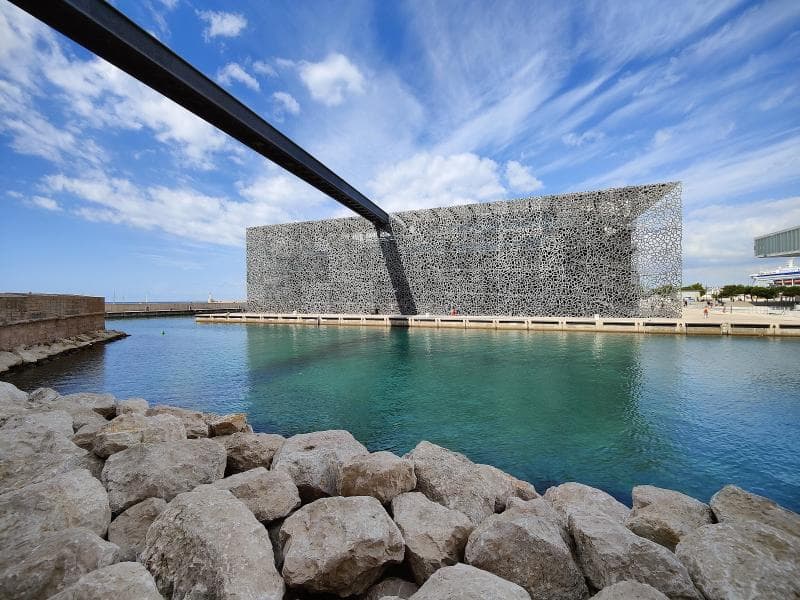
Explore the Mediterranean Gallery at MuCEM in Marseille, France. Discover the rich history, cultures, and unique stories of the Mediterranean world.
Overview
Nestled within the striking architecture of the Museum Of European And Mediterranean Civilisations (MuCEM) in Marseille, France, lies the Mediterranean Gallery, a pivotal permanent exhibition dedicated to unraveling the rich tapestry of Mediterranean cultures. Situated on the first level of the museum's modern J4 building, this gallery serves as a gateway to understanding the profound history, distinctive characteristics, and diverse civilizations that have shaped the Mediterranean world. Since its inauguration in June 2013, coinciding with Marseille's designation as the European Capital of Culture, MuCEM has established itself as a beacon of cultural exploration, and the Mediterranean Gallery is at its core, offering visitors an immersive journey through millennia of human experience.
History & Cultural Background
The Mediterranean Gallery is a direct evolution of MuCEM's foundational mission, which itself grew from the transformation of the 1937 Museum of Popular Arts and Traditions in Paris. This evolution marked a significant shift in focus from national French heritage to a broader, regional emphasis on the Mediterranean basin. The gallery's narrative spans an immense historical arc, from the ancient Greco-Latin civilizations, through the complexities of the colonial period, and extending right up to contemporary times. It delves into the intricate ways in which various perceptions and 'imaginations' of the Mediterranean have been cultivated and spread, critically examining the role museums have played in this process. The exhibition masterfully integrates a vast collection of objects, including historical artifacts inherited from the Musée national des arts et traditions populaires and the European collections of the Musée de l'Homme, alongside more recent acquisitions. This interdisciplinary approach weaves together insights from anthropology, history, archaeology, and art, providing a comprehensive and nuanced understanding of Mediterranean societies across epochs.
What Makes It Special
What truly distinguishes the Mediterranean Gallery is its pioneering role as the first major national museum exhibition devoted entirely to the civilizations of the Mediterranean in the 21st century. Its home, the J4 building, is an architectural marvel designed by Rudy Ricciotti and Roland Carta, famous for its intricate concrete lattice-work that filters the Mediterranean light. The gallery is not static; it is a living exhibition, continuously enriched and renewed with new masterpieces, treasures, and even rarely seen pieces, with its content periodically refreshed and updated, such as the planned renewals until 2030. This dynamic approach allows for a constant re-evaluation of its subject matter. Furthermore, the gallery bravely transcends conventional boundaries between 'artistic' and 'popular' objects, and between fine art and ethnography, offering a uniquely holistic perspective on Mediterranean cultures. By incorporating contemporary artworks, the exhibition also bravely confronts and addresses the pressing challenges facing the Mediterranean region today, making it profoundly relevant to modern visitors.
Stories, Fun Facts & Local Details
The Mediterranean Gallery forms part of the larger MuCEM complex, which is a destination in itself. Beyond the J4 building, visitors can explore the magnificent 12th-century Fort Saint-Jean, a historical monument offering breathtaking panoramic views of Marseille and the sea. These two main sites are ingeniously connected by elegant footbridges, creating a seamless flow for exploration and further enhancing the visitor experience. The museum has quickly become a landmark, drawing millions of visitors each year, a testament to its compelling exhibitions and stunning location. A notable aspect of the gallery's exploration has been past exhibitions like 'Connectivities', which highlighted the pivotal role of major Mediterranean port cities such as Istanbul, Algiers, Venice, Genoa, Seville, and Lisbon in the 16th and 17th centuries, showcasing them as centers of trade and power. This concept was inspired by the influential historian Fernand Braudel. The gallery also provocatively examines how the very idea of the Mediterranean as a shared heritage has been 'invented' through natural, artistic, and ethnological lenses over time. In a commitment to contemporary relevance, the exhibition features the voices of young people, including groups like the Collectif Ascagne, who offer their perspectives on selected objects, adding a fresh and engaged dimension to the historical narrative.
Visitor Perspective
For the curious traveler, the Mediterranean Gallery offers an accessible and deeply enriching experience, conveniently located on level 1 of the architecturally significant J4 building. It provides an unparalleled and comprehensive insight into the vibrant history and diverse cultures of the Mediterranean region, designed to engage and inform. While the entire MuCEM complex is extensive and merits dedicated exploration, the Mediterranean Gallery itself is an essential starting point for anyone wishing to grasp the essence of this storied sea. Planning your visit allows ample time to absorb the wealth of information and connect with the narratives presented. The gallery's seamless integration within MuCEM's three distinct sites—the J4, Fort Saint-Jean, and the Conservation and Resource Center—ensures that a visit here connects you not just to an exhibition, but to a vast cultural landscape.
Coordinates: 5.36097, 43.29671
View on Google Maps💬 How Travelers Describe This Place
Based on community votes
Unique
540Must See
470Beautiful
410Photogenic
147Interesting
114
Traveler Stories
Discover memorable experiences shared by travelers who have visited this place.
No traveler stories yet.
Be the first traveler to share what made this place memorable.

Tour
By
Spot
Discover amazing places around the world. Your journey starts here.
Explore
© 2026 TourBySpot. All rights reserved.