Medieval Palace
London, United Kingdom
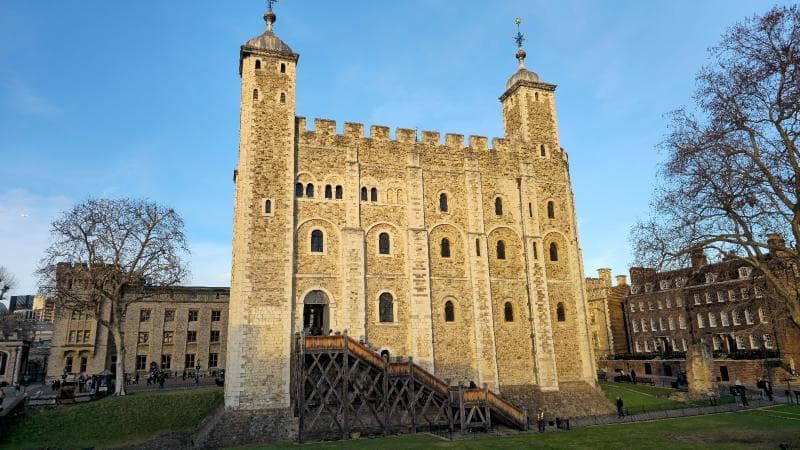

Explore the Medieval Palace at the Tower of London, United Kingdom. Discover the opulent 13th-century royal apartments of Henry III and Edward I.
Overview
The Medieval Palace at the Tower of London offers a unique glimpse into the opulent world of England's medieval monarchs. Far from being solely a formidable fortress or a notorious prison, the Tower once served as a primary royal residence, particularly during the reigns of Kings Henry III and Edward I. This restored section transports visitors back to the 13th century, revealing the lavish living quarters where kings, queens, and their extensive households conducted daily life, held court, and entertained. It comprises key structures such as St Thomas's Tower, the Wakefield Tower, and the Lanthorn Tower, each meticulously re-presented to evoke its historical grandeur.
History & Cultural Background
The Tower of London, a UNESCO World Heritage Site, began its life as a symbol of Norman power, with William the Conqueror initiating the construction of the White Tower in 1078. However, its transformation into a magnificent royal palace largely occurred under the ambitious leadership of Henry III (1216-1272) and his son, Edward I (1272-1307). These monarchs spent vast fortunes expanding the fortress, adding formidable 'curtain' walls and several smaller towers, thus creating the concentric castle design seen today. It was during this period that the Tower became a luxurious seat of royal power. Henry III even ordered the White Tower to be whitewashed in 1240, giving it its iconic name. The royal lodgings, which eventually spread south of the White Tower, included a great hall, chapels, and apartments, becoming comparable to other grand residences like Windsor Castle. The Medieval Palace spaces were specifically built as domestic and diplomatic areas for the kings and their queens, Eleanor of Provence and Eleanor of Castile.
What Makes It Special
What sets the Medieval Palace apart is its meticulous restoration, bringing to life the vibrant and sophisticated royal interiors of the 13th century. Unlike the later grim associations of the Tower as a prison, these rooms showcase a period of royal splendour, complete with lavish textiles, colourful wall paintings, and period furniture. The King's Bedchamber in St Thomas's Tower, for instance, has been re-created to reflect Edward I's vibrant taste, even featuring a Plantagenet lion motif. The Wakefield Tower, once royal lodgings for Henry III, now features a recreation of a throne room. These spaces highlight the stark contrast between the Tower's roles and emphasize its evolution. They reveal that life within these walls wasn't just about defence; it was also about royal prestige, governance, and daily ceremonial life, supported by hundreds of household servants.
Stories, Fun Facts & Local Details
Life in the Medieval Palace was a bustling affair, necessitating enormous royal households. Edward I, for example, commanded a retinue of over 500 people, while Queen Eleanor of Castile had more than 150. These countless individuals, from clerks and stonemasons to messengers and wardrobe staff, enabled the elaborate royal lifestyle, managing finances, running departments, and even clothing the household twice a year. An interesting detail is that the archway now famously known as Traitor's Gate, through which many unfortunates passed on their way to imprisonment, was originally a high-status private river entrance for the monarch and royal family to access their apartments in St Thomas's Tower. The Tower also housed a royal menagerie for over 600 years, beginning with medieval kings who exchanged exotic animals as gifts. Henry III received three leopards from the Holy Roman Emperor, inspiring the three lions on England's coat of arms.
Visitor Perspective
Visiting the Medieval Palace today offers an immersive journey through time. As you walk the Wall Walk and explore St Thomas's Tower, Wakefield Tower, and Lanthorn Tower, you can visualize the grandeur of royal life. The recently refurbished rooms, complete with soundscapes recreating 13th-century music, crackling fires, and Latin prayers, engage multiple senses. You can even interact with replica medieval objects. It provides a powerful counter-narrative to the Tower's reputation for terror, showcasing the site's original purpose as a vibrant royal residence. Allow ample time to fully appreciate the detail and history within these magnificent apartments, gaining a deeper understanding of the monarchs who shaped medieval England from within these very walls.
Coordinates: -0.07611, 51.50806
View on Google Maps💬 How Travelers Describe This Place
Based on community votes
Beautiful
476Unique
465Interesting
276Must See
128Photogenic
126
Traveler Stories
Discover memorable experiences shared by travelers who have visited this place.
No traveler stories yet.
Be the first traveler to share what made this place memorable.

Tour
By
Spot
Discover amazing places around the world. Your journey starts here.
Explore
© 2026 TourBySpot. All rights reserved.