Mechanical Theater
Salzburg, Austria
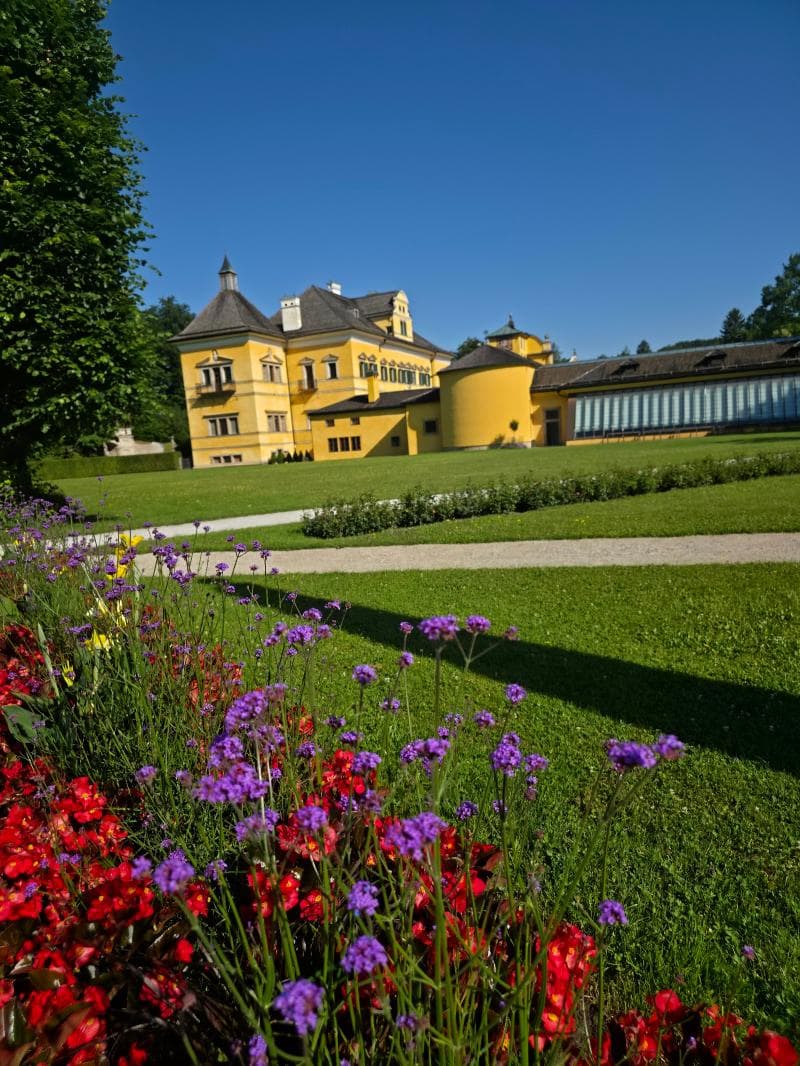
Explore Hellbrunn Palace's Mechanical Theater in Salzburg, Austria. Discover a unique 18th-century water-powered automaton depicting a Baroque city.
Overview
Hidden within the enchanting grounds of Hellbrunn Palace in Salzburg, Austria, lies a captivating marvel of 18th-century engineering: the Mechanical Theater. This unique water-powered automaton offers a fascinating glimpse into Baroque life, showcasing a bustling miniature city brought to life by intricate mechanisms. It stands as a testament to the ingenuity and playful spirit that characterized Hellbrunn, a palace famed for its elaborate trick fountains and artistic displays. Visitors are drawn into a world where over a hundred intricately carved figures perform daily tasks and interact within a miniature urban landscape, all set to the melodious sounds of a water-driven organ.
History & Cultural Background
Hellbrunn Palace itself was conceived as a summer 'pleasure palace' by Prince-Archbishop Markus Sittikus von Hohenems between 1613 and 1619, a place designed purely for entertainment and lavish celebrations, without even bedrooms. While the palace's famous trick fountains were a product of Sittikus's playful mind, the Mechanical Theater was a later addition. It was commissioned by Archbishop Andreas Jakob Graf Dietrichstein and constructed between 1748 and 1752, replacing an earlier water-driven forge. This makes it the most recent, yet one of the most imposing, elements among Hellbrunn's water-powered treasures. The ambitious project was undertaken by Lorenz Rosenegger von Dürrnberg, a salt miner. This detail is particularly intriguing, as salt miners were a vital source of Salzburg's wealth but also known for their rebellious spirit; Rosenegger reportedly conducted his work under armed guard, highlighting the societal tensions of the era and the immense value placed on this technical masterpiece.
The Mechanical Theater emerged during an age fascinated by automata and intricate clockwork. It reflects an 18th-century ideal of an ordered, harmonious society, portraying various strata of the populace engaged in their daily routines within a seemingly perfect miniature city.
What Makes It Special
The Mechanical Theater is extraordinary for several reasons. Foremost is its complete reliance on water power. Utilizing a sophisticated system of water wheels, gears, and copper wiring, the entire panorama of over 140 mobile and 20 immobile figures moves without any electricity, a remarkable feat of 18th-century engineering that remains fully functional today. The figures depict a vibrant Baroque town: butchers slaughtering an ox, builders transporting materials, a barber shaving a man, and even a dancing bear—all performing their actions with precise, clockwork-like motion.
Beyond the visual spectacle, the theater features a water-powered organ, originally tuned by court music director Johann Ernst Eberlin. Today, its mighty wooden roller can play three pieces, including a chorale by Eberlin, a tradesman's song by D.F. Auber, and Wolfgang Amadeus Mozart's 'Là ci darem la mano'. The combination of intricate mechanical movement and authentic Baroque music creates an immersive and historically rich experience, making it a unique example of automated entertainment from its era.
Stories, Fun Facts & Local Details
One compelling story associated with the Mechanical Theater delves into its creation by Lorenz Rosenegger. While the theater itself presented an idyllic vision of an orderly Baroque city, the social context of its construction was far from utopian. Rosenegger, a salt miner, was likely under considerable pressure, reflecting the dependence of Salzburg's wealthy elite on the labor of the salt miners, who themselves faced political and religious suppression. This juxtaposition of an 'obedient automaton' society within the theater and the real-life struggles of its creators adds a poignant layer to its history.
A fun fact is that the number of figures varies slightly in descriptions, but generally ranges from 163 to 200, all diligently at work in their miniature world. Visitors can spend considerable time observing the detailed scenes, repeatedly discovering new humorous or intricate details in the daily lives of these wooden residents. It's a vivid, three-dimensional snapshot of 18th-century occupations and social life, offering a truly 'living' history lesson.
Visitor Perspective
Visiting the Mechanical Theater at Hellbrunn Palace is often considered a highlight of the Trick Fountains tour, offering a captivating conclusion to the series of water-based surprises. It's a truly 'unusual historical curiosity' that appeals not only to history buffs but also to anyone fascinated by early engineering and artistic expression. The loud, whirring noises from the hidden mechanisms behind the scenes offer a clear reminder of the sheer mechanical power at play, even as the charming figures dance and work in front.
The theater's enduring operation in its original form, centuries after its construction, evokes a sense of wonder and appreciation for the ingenuity of its creators. While the entire Hellbrunn experience is designed to delight and surprise, the Mechanical Theater provides a moment of focused observation, allowing travelers to appreciate the intricate details and the historical context of this remarkable water-powered spectacle. It's an unforgettable experience that transports one back to a time when such automata were at the cutting edge of technological entertainment.
Coordinates: 13.045278, 47.8
View on Google Maps💬 How Travelers Describe This Place
Based on community votes
Must See
965Interesting
743Photogenic
719Beautiful
629Unique
176
Traveler Stories
Discover memorable experiences shared by travelers who have visited this place.
No traveler stories yet.
Be the first traveler to share what made this place memorable.

Tour
By
Spot
Discover amazing places around the world. Your journey starts here.
Explore
© 2026 TourBySpot. All rights reserved.