Meat Pavilion
Riga, Latvia
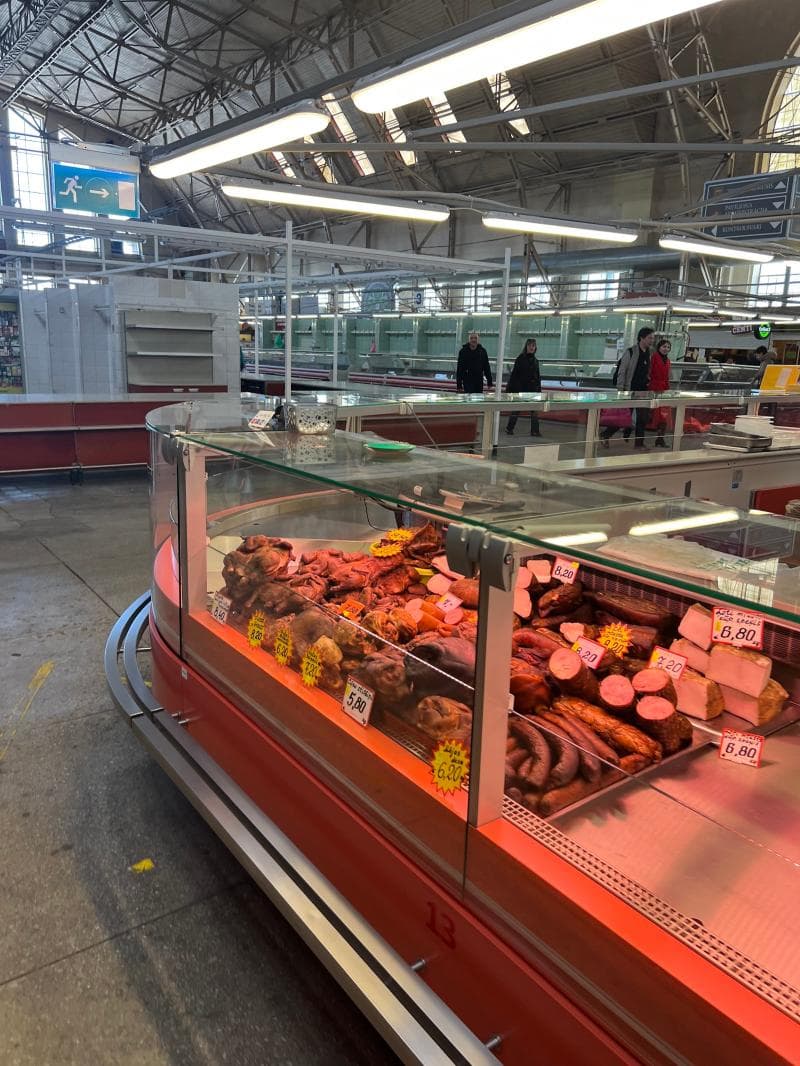
Explore Riga's Meat Pavilion at the Central Market, a UNESCO site in Latvia. Discover its unique history, architecture, and traditional Latvian meat culture.
Overview
Deep within the vibrant expanse of Riga Central Market, a UNESCO World Heritage site, lies the bustling Meat Pavilion. This specific hall is one of the five colossal pavilions that define the market's unique architectural landscape, each repurposed from original German World War I Zeppelin hangars. Stepping into the Meat Pavilion offers a direct encounter with Latvian culinary traditions and the daily rhythm of local life in Riga, Latvia. It serves as a testament to the city's rich history, ingenuity, and enduring connection to its food culture.
History & Cultural Background
The genesis of Riga Central Market dates back to the early 20th century, with the decision to establish a modern, hygienic market made by the Riga City Council in 1922. The ambitious project took shape between 1924 and 1930. The most striking element of its construction involved the innovative reuse of five immense Zeppelin hangars, originally built in Vaiņode, Latvia, during World War I. These gargantuan structures were dismantled, transported, and re-erected on the banks of the Daugava River, transforming into the market pavilions we see today.
Upon its grand opening in 1930, Riga Central Market was heralded as the largest and most advanced marketplace in Europe. The Meat Pavilion, like its counterparts, benefited from state-of-the-art facilities for its time, including central heating and electric lighting, with vast basements providing extensive storage capacity. It quickly became a vital economic and social hub, adapting through various historical periods, including being known as the Central Kolkhoz Market during Soviet times.
What Makes It Special
The Meat Pavilion stands out not only for its impressive scale, occupying one of the largest clear-span interior spaces in Latvia, but also for its profound connection to Latvian gastronomy. The building itself is a marvel, embodying elements of Neoclassicism and Art Deco within the framework of its industrial origins.
Inside, the pavilion is a dynamic tableau of butchery and trade. It offers an extensive array of meats including beef, pork, chicken, and duck. What truly distinguishes it is the traditional presentation, where visitors can observe whole animal parts alongside more conventional cuts. This method of display provides an authentic glimpse into the breadth of local meat consumption and preparation.
Stories, Fun Facts & Local Details
Latvian culinary philosophy, deeply rooted in practicality, is vividly showcased in the Meat Pavilion. A guiding principle is the efficient use of the entire animal, ensuring little to no waste. This means travelers might encounter a variety of cuts and offal, from pigs' feet and tongues to livers and kidneys, reflecting a comprehensive approach to butchery that respects every part.
Historically, the market was a significant draw for tourists, even in the 1930s, with visitors from Germany and England particularly appreciating the quality of local bacon and butter. The pavilion's lively atmosphere is often punctuated by the sight of skilled butchers expertly wielding large cleavers behind their counters, a testament to enduring traditional practices.
As of June 2026, the Meat Pavilion has temporarily suspended operations for safety reasons, due to its technical condition, with plans for reconstruction and future development underway. This reflects ongoing efforts to preserve and modernize this historic landmark while ensuring its long-term viability.
Visitor Perspective
For a curious traveler, the Meat Pavilion offers a rich, sensory experience. The air is filled with the distinct aromas of fresh meat, spices, and cured products, while the visual spectacle of various cuts and preparation methods can be both fascinating and educational. It's a place to witness the direct interaction between producers and consumers, providing genuine insight into everyday Latvian life and food culture. Observing the sheer variety and the traditional methods of display helps one understand the integral role meat plays in the local diet.
While navigating the bustling aisles, one might feel immersed in a timeless marketplace, a vibrant cultural exchange that transcends language. For those interested in culinary exploration, or simply wishing to observe a living piece of Riga's heritage, the Meat Pavilion—and the wider Central Market—is an indispensable stop on any itinerary, offering a tangible connection to the city's soul.
Coordinates: 24.11666, 56.94394
View on Google Maps💬 How Travelers Describe This Place
Based on community votes
Photogenic
989Must See
791Interesting
613Beautiful
514Unique
207
Traveler Stories
Discover memorable experiences shared by travelers who have visited this place.
No traveler stories yet.
Be the first traveler to share what made this place memorable.

Tour
By
Spot
Discover amazing places around the world. Your journey starts here.
Explore
© 2026 TourBySpot. All rights reserved.