Maze & Labyrinth
Vienna, Austria
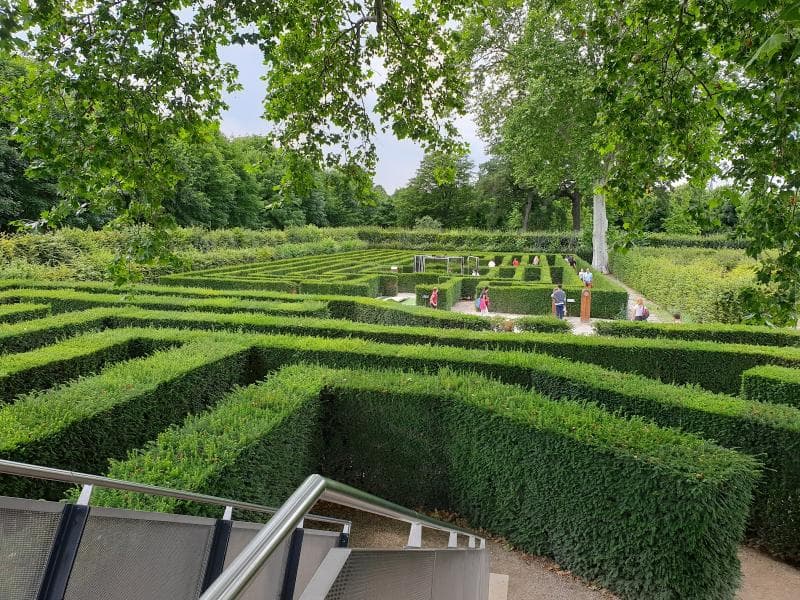
Discover the enchanting Maze & Labyrinth at Schönbrunn Palace in Vienna, Austria. Explore historical hedges, interactive games, and the Labyrinthikon playground for all ages.
Overview
Nestled within the sprawling, magnificent gardens of Schönbrunn Palace in Vienna, Austria, lies the enchanting ensemble known as the Maze & Labyrinth. This unique garden feature is far more than a simple hedge maze; it is an interactive landscape comprised of three distinct elements: the classic Maze, the broader Labyrinth, and the playful Labyrinthikon playground. Together, they offer visitors of all ages a delightful blend of historical charm, engaging challenges, and opportunities for recreation and discovery. It provides a refreshing contrast to the more formal historical tours of the palace, inviting a moment of light-hearted exploration and engagement with nature.
History & Cultural Background
The origins of the Maze at Schönbrunn Palace trace back to the Baroque era, with its initial layout around 1720 as an integral part of the imperial garden design. During this period, mazes were not merely amusements but symbols of cultural sophistication and artistic mastery, reflecting broader European garden trends. They served as places of leisure, reflection, and amusement for the Habsburg imperial household, blending geometric landscaping with elements that encouraged both physical activity and mental challenge. The gardens themselves, opened to the public by Joseph II in 1779, were meticulously composed landscapes, intended to express a particular worldview where architecture and nature intertwined to symbolize imperial power.
Over the course of the 19th century, the original Maze gradually fell into disuse and its hedges were eventually removed by 1892, leaving the space as empty ground for over a century. However, based on extensive historical plans and models, a new Maze was meticulously reconstructed and re-opened in 1999. This modern incarnation thoughtfully integrates the spirit of its Baroque predecessor with contemporary interactive features, ensuring both authenticity and enhanced visitor engagement.
What Makes It Special
The Schönbrunn Maze & Labyrinth distinguishes itself through its multifaceted design and interactive elements. The Maze itself presents winding green pathways, challenging visitors to find their way to a central viewing platform. From this elevated position, one can survey the entire structure, observe others navigating its twists and turns, and gain a sense of accomplishment. Hidden throughout the Maze are the symbols of the twelve zodiac signs, adding an extra layer of discovery for observant explorers. At the center, two 'harmony stones,' activated by Feng Shui masters, invite visitors to place their hands upon them, believed to strengthen energy flow and enhance inner harmony.
Adjacent to the Maze is the Labyrinth, an expansive area covering 2,700 square meters, specifically designed for play and recreation for all ages. Here, guests can engage with various activities: tracing finger labyrinths, mastering hopping games, experiencing distorted reflections in a giant kaleidoscope, or attempting to climb a pole to ring a bell. Intellectual challenges are also present, such as math puzzles embedded in flagstones that dictate one's steps. Further enhancing the experience is the Labyrinthikon Playground, designed by expert Günter Beltzig. This playground offers an experimental and fun space, making the entire area a dynamic hub for families and curious minds alike.
Stories, Fun Facts & Local Details
Interestingly, the original Maze of the 18th century was not a puzzle in the modern sense. It featured no dead ends or confusing turns. Instead, its tall hedges formed private pathways, serving more as 'royal privacy hedges' where emperors and empresses could enjoy quiet conversations and intimate strolls away from prying eyes. It was a space for discretion, rather than disorientation. The very concept of a labyrinth carries ancient roots, echoing mythological tales like that of the Cretan Labyrinth and Theseus' reliance on Ariadne's thread to find his way out. These historical layers add depth to the contemporary experience, as today's visitors navigate paths that once facilitated imperial secrets.
The gardens, shaped by the discerning eye of Empress Maria Theresa, showcase the Baroque principle of integrating architectural grandeur with natural beauty. This imperial legacy is tangible even in the reconstructed maze, which continues to be a vibrant part of the palace's rich history, constantly evolving to delight new generations while honoring its past.
Visitor Perspective
A visit to the Maze & Labyrinth typically takes between 45 and 60 minutes, depending on the pace of exploration and interaction with its various features. It is particularly popular with families, providing a lively and engaging outdoor activity that offers a playful respite from the more traditional sightseeing within the palace itself. The combination of discovery, physical activity, and mental stimulation caters to a wide audience, from young children enjoying the Labyrinthikon playground to adults seeking a charming, light-hearted adventure. While largely an outdoor attraction, visitors are advised to wear comfortable shoes and dress appropriately for the weather. Main paths are partially wheelchair accessible, ensuring that many can enjoy this unique imperial garden experience.
Coordinates: 16.3119, 48.1845
View on Google Maps💬 How Travelers Describe This Place
Based on community votes
Unique
951Must See
748Interesting
491Beautiful
427Photogenic
414
Traveler Stories
Discover memorable experiences shared by travelers who have visited this place.
No traveler stories yet.
Be the first traveler to share what made this place memorable.

Tour
By
Spot
Discover amazing places around the world. Your journey starts here.
Explore
© 2026 TourBySpot. All rights reserved.