Mausoleum
Sarajevo, Bosnia and Herzegovina
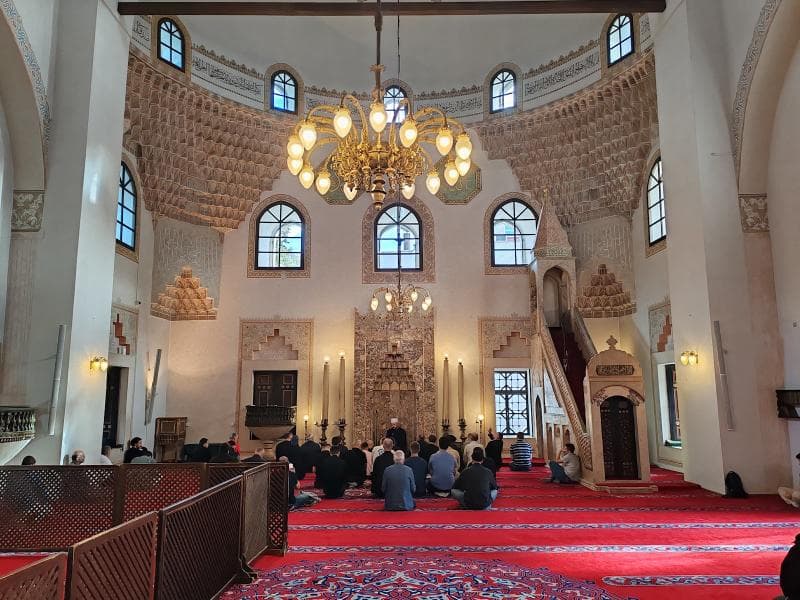
Overview
Tucked peacefully within the expansive courtyard of the Gazi Husrev-beg Mosque complex in the heart of Sarajevo, Bosnia and Herzegovina, lies the solemn Mausoleum. This revered sub-spot, known locally as a 'turbe', serves as the final resting place for Gazi Husrev-beg himself, the visionary Ottoman governor who commissioned the mosque and much of the surrounding urban infrastructure. Adjacent to his tomb rests Gazi Murat-bey Tardić, his devoted administrator and trusted friend. Visiting the mausoleum offers a moment of quiet reflection, connecting travelers with the profound historical and cultural legacy that shaped Sarajevo into the vibrant city it is today.
History & Cultural Background
The story of the Mausoleum is inextricably linked with Gazi Husrev-beg, a pivotal figure in Bosnian history. Born in Serez, Ottoman Empire, Gazi Husrev-beg served multiple terms as the Sanjak-bey (governor) of Bosnia in the early 16th century, specifically between 1521–1525, 1526–1534, and 1536–1541. He is celebrated as Sarajevo's greatest benefactor, responsible for transforming it into a major urban center. His profound impact stems from his extensive waqf, or charitable endowment, which funded the construction of numerous public institutions beyond the iconic mosque, including a madrasa (Islamic school), a library, a bezistan (covered marketplace), a hammam (public bath), and public fountains.
Gazi Husrev-beg passed away in 1541 and was interred in the very turbe (mausoleum) he had commissioned during his lifetime, located to the east of the mosque. An Arabic inscription above his tomb confirms its dating to 1541. Shortly after, his close associate, Gazi Murat-bey Tardić, the first trustee of his endowment, was also laid to rest nearby, having passed away in 1545. These mausoleums symbolize the enduring spirit of philanthropy and leadership that laid the groundwork for Sarajevo's development during the Ottoman era, ensuring the continuity of religious, educational, and commercial life through a self-sustaining system.
What Makes It Special
The Mausoleum distinguishes itself not only as the burial site of eminent historical figures but also through its architectural character and profound symbolic value. Gazi Husrev-beg's tomb is octagonal in plan, while Murat-bey Tardić's is hexagonal, both capped with domes, showcasing classic Ottoman funerary architecture. Inside Gazi Husrev-beg's mausoleum, visitors will observe his sarcophagus often adorned with a green drape, frequently embellished with gold embroidery, set against ornately striped walls. The presence of both founder and administrator side-by-side underscores the collaborative spirit behind Gazi Husrev-beg's monumental achievements.
Beyond the architectural details, what truly makes the Mausoleum special is its role as a tangible link to Sarajevo's foundational narrative. It represents the unwavering commitment of a governor who, through his waqf, ensured that the benefits of his wealth would perpetually serve the community. This foresight enabled the maintenance of the mosque and its associated institutions for centuries, demonstrating a remarkable model of sustainable urban development and charitable giving that continues to resonate today.
Stories, Fun Facts & Local Details
A fascinating aspect of Gazi Husrev-beg's legacy, deeply intertwined with the Mausoleum, is the concept of the waqf. Unlike a simple donation, a waqf is an Islamic charitable endowment designed to be perpetual, with its benefits continuing to flow through generations. Gazi Husrev-beg's waqf funded everything from education and water supply to the very upkeep of the mosque itself, largely through the revenue generated by the bezistan (covered market) he established. This ingenious system ensured the longevity of his charitable projects, proving crucial during challenging times in Sarajevo's history. It's said that the continuity of these institutions, and indeed the mosque's survival through conflicts like the Siege of Sarajevo, is partly attributed to the power of 'dua' – the supplications and good intentions of Gazi Husrev-beg when he established the endowment.
Another local detail involves the symbolic colors and decorations within the mausoleum. The green drape often covering Gazi Husrev-beg's sarcophagus holds significance in Islamic tradition, often associated with paradise and spiritual blessings. The intricate calligraphy adorning the interior walls further immerses visitors in the rich artistic and spiritual heritage of the Ottoman period in Bosnia. These details are not merely decorative but serve as a narrative of faith, respect, and enduring legacy.
Visitor Perspective
Approaching the Mausoleum from the bustling Baščaršija, one steps into a tranquil space, offering a profound sense of history and reverence. It's a place where the grandeur of Gazi Husrev-beg's vision comes into sharp focus. For the curious traveler, visiting the Mausoleum provides an opportunity for quiet contemplation, away from the vibrant energy of the marketplace. Standing before the tombs of these influential figures allows for a deeper appreciation of the roots of Sarajevo's Ottoman heritage and the enduring impact of a single individual's foresight and philanthropy.
Visitors are encouraged to observe the respectful atmosphere. While not an overtly interactive experience, the solemnity and historical weight of the site offer a powerful connection to the past. It’s a chance to reflect on the historical importance of the Gazi Husrev-beg complex as a whole and to understand the continuous thread of Bosnian cultural identity that these figures helped weave. This modest yet deeply significant structure is an essential stop for anyone wishing to grasp the soul of old Sarajevo and the benevolent spirit of its founders.
Coordinates: 18.42903, 43.85917
View on Google Maps💬 How Travelers Describe This Place
Based on community votes
Must See
876Unique
875Photogenic
820Interesting
718Beautiful
648
Traveler Stories
Discover memorable experiences shared by travelers who have visited this place.
No traveler stories yet.
Be the first traveler to share what made this place memorable.

Tour
By
Spot
Discover amazing places around the world. Your journey starts here.
Explore
© 2026 TourBySpot. All rights reserved.