Mausoleum
Berlin, Germany
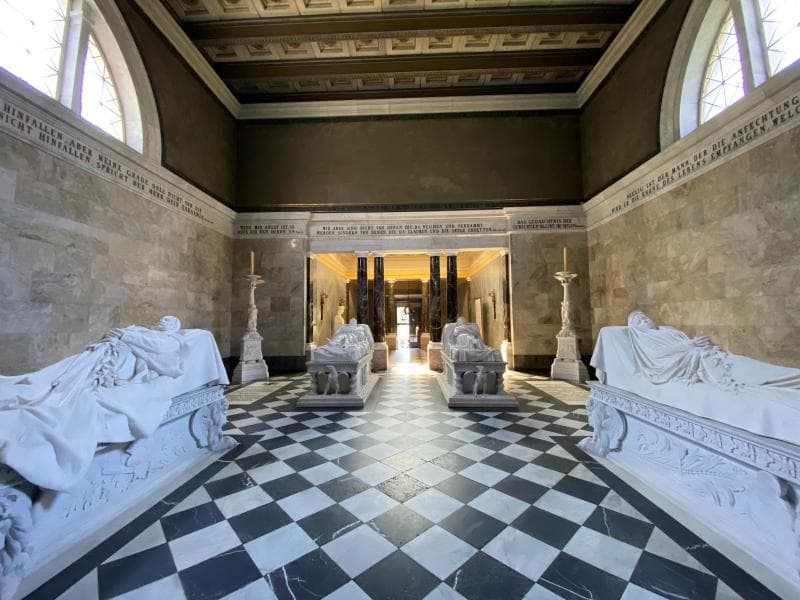
Explore the Charlottenburg Mausoleum in Berlin, Germany, the neoclassical resting place of Queen Luise and Prussian royalty. Discover its history and art.
Overview
Nestled within the serene Charlottenburg Palace Gardens in Berlin, Germany, the Mausoleum stands as a poignant neoclassical monument and the final resting place for several significant members of the Prussian royal family, the Hohenzollerns. Originally conceived as a deeply personal tribute, it has evolved into a site of historical importance, drawing visitors seeking to connect with the legacies of influential figures like Queen Luise and King Friedrich Wilhelm III.
Designed in the style of an ancient temple, the Mausoleum exudes a tranquil dignity, harmoniously blending with the surrounding natural beauty of the palace park. Its primary focus is the exquisite tomb monument of Queen Luise, crafted by the renowned sculptor Christian Daniel Rauch, which is considered a masterpiece of 19th-century German sculpture.
History & Cultural Background
The genesis of the Charlottenburg Mausoleum lies in a profound personal tragedy. Following the untimely death of Queen Luise in 1810 at the age of 34, her grieving husband, King Friedrich Wilhelm III, commissioned this sacred structure. Initial designs for the mausoleum, intended solely for the beloved queen, were by Heinrich Gentz, with construction taking place between 1810 and 1812.
Queen Luise was immensely popular during her lifetime, revered for her beauty, compassion, and resilience, particularly during the Napoleonic Wars. Her death plunged Prussia into mourning, and the mausoleum quickly became a focal point for national grief and remembrance. Over time, the structure was expanded to accommodate other royal burials. After King Friedrich Wilhelm III's own death in 1840, Karl Friedrich Schinkel, a prominent architect of the era, oversaw its extension. Later, further additions by Albert Geyer around 1890-1891 made room for Emperor William I (Luise's son) and his wife Augusta.
What Makes It Special
The Charlottenburg Mausoleum is distinguished by several unique features. Foremost among them is the breathtaking marble effigy of Queen Luise by Christian Daniel Rauch. This reclining sculpture portrays the queen as if in peaceful slumber, a powerful and lifelike representation that deeply moved contemporary observers, including the king himself. Rauch's work was revolutionary for its synthesis of individualizing traits and idealized forms, making it a pivotal piece in Neoclassical sculpture.
Beyond its sculptural artistry, the Mausoleum's architectural style, a serene Neoclassical temple, provides a stark yet fitting contrast to the Baroque extravagance of Charlottenburg Palace. It offers a quiet contemplative space, reflecting the profound sorrow and enduring love that inspired its creation. The integration of the building within the carefully landscaped palace gardens also contributes to its special atmosphere, creating a solemn yet beautiful setting for royal remembrance.
Stories, Fun Facts & Local Details
The story of Queen Luise is central to the Mausoleum's emotional resonance. Her popularity transcended the monarchy, and her unwavering spirit in the face of national adversity made her a national icon. King Friedrich Wilhelm III's deep love for her is evident in the personal nature of the Mausoleum, which he envisioned as a 'temple for eternity' for his young wife.
A particularly moving anecdote recounts King Friedrich Wilhelm III's reaction upon seeing Rauch's finished sculpture of Luise. He reportedly 'broke into a flood of tears' due to how eloquently lifelike he found her image, truly capturing her essence in eternal repose. This powerful depiction influenced funerary art across Europe.
While the main chamber with the sarcophagi of Queen Luise, King Friedrich Wilhelm III, Emperor William I, and Empress Augusta is accessible to the public, a crypt below houses additional royal burials, including the heart of King Friedrich Wilhelm IV, though this lower level is not open to visitors. The Mausoleum sustained damage during World War II but has since been meticulously restored, ensuring its historical and artistic integrity.
Visitor Perspective
Visiting the Mausoleum offers a unique opportunity for quiet reflection and a deeper understanding of Prussian history and the Hohenzollern dynasty. Located in the picturesque Charlottenburg Palace Gardens, it provides a peaceful counterpoint to the more opulent palace interiors.
The Mausoleum is typically open to visitors from April through October, Tuesday to Sunday, allowing for pleasant exploration during the warmer months. Admission is usually included with a 'charlottenburg+' ticket, which grants access to other attractions within the palace grounds. The modest, temple-like structure, with its red granite columns and high-ceilinged chamber, presents the royal sarcophagi in a respectful and impactful manner. It serves as a testament to enduring love, national memory, and exceptional artistic achievement, inviting travelers to pause and appreciate a significant piece of Berlin's cultural heritage.
Coordinates: 13.2918, 52.5242
View on Google Maps💬 How Travelers Describe This Place
Based on community votes
Unique
799Interesting
707Must See
343Photogenic
280Beautiful
257
Traveler Stories
Discover memorable experiences shared by travelers who have visited this place.
No traveler stories yet.
Be the first traveler to share what made this place memorable.

Tour
By
Spot
Discover amazing places around the world. Your journey starts here.
Explore
© 2026 TourBySpot. All rights reserved.