Mataf Area
Mecca, Saudi Arabia
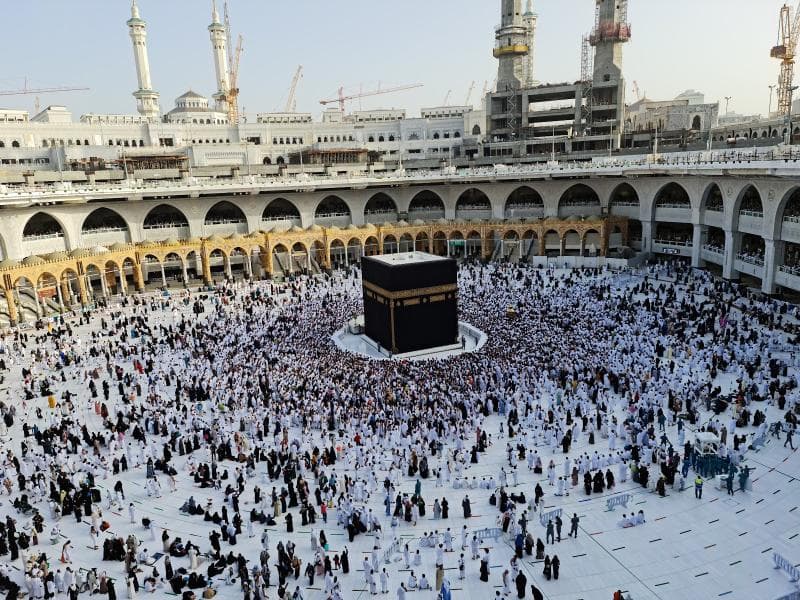
Discover the Mataf Area in Masjid al-Haram, Mecca, Saudi Arabia. Explore its history, spiritual significance, and unique features for pilgrims.
Overview
The Mataf Area, located within the sacred Masjid al-Haram in Mecca, Saudi Arabia, is the open, circular space directly surrounding the Kaaba. It is the spiritual heart of the Grand Mosque and one of the most revered spaces in Islam. The word 'Mataf' originates from the Arabic root 'taafa', meaning 'to circle', which perfectly describes the primary ritual performed here: the Tawaf. Millions of Muslims from around the globe converge upon this area annually to perform Tawaf, walking seven times counter-clockwise around the Kaaba as a central rite of both the Hajj and Umrah pilgrimages. This continuous movement of worshippers day and night symbolizes unity, devotion, and submission to Allah.
Today, the Mataf is a multi-level structure meticulously designed to accommodate a vast number of pilgrims. It includes a ground courtyard closest to the Kaaba, along with first-floor, mezzanine, and roof levels for Tawaf, all connected by ramps, staircases, and escalators. This advanced infrastructure allows for the smooth flow of countless individuals, with the entire system capable of accommodating over 100,000 pilgrims per hour across its various floors.
History & Cultural Background
The Mataf Area boasts a rich history intertwined with the very foundations of Islam. In the time of Prophet Muhammad, the area around the Kaaba was an open space, unadorned by walls or formal structures, with houses surrounding it. The space between these houses and the Kaaba formed the early Mataf. As Islam spread and the number of pilgrims grew, the need for expansion became evident. The first recorded expansion efforts began during the caliphate of Umar ibn al-Khattab around 17 AH (639 CE), who enlarged the area and enclosed the Zamzam well, necessitating the demolition of some surrounding houses.
Abdullah ibn al-Zubayr was the first to pave the Mataf in 64 AH (684 CE) after rebuilding the Kaaba, using leftover stones to create a roughly five-meter-wide paved circular area. Subsequent rulers, including Al-Walid ibn Abdul Malik in 119 AH (737 CE) and Abbasid Caliph Al-Mu'tadid in 284 AH (897 CE), repaved the Mataf with marble, marking continuous efforts to improve the space. During the Ottoman era, significant renovations occurred, including alterations to the Kaaba's ceiling and repaving of the Mataf.
The modern Saudi era has seen the most dramatic expansions. King Abdul Aziz initiated the expansion of Masjid al-Haram in 1955, which included significant work on the Mataf. Pillars within the old Mataf were removed, the Zamzam Well was lowered into the basement, and the ground was covered with heat-resistant marble to ensure comfort for barefoot pilgrims. More recently, the Mataf expansion project, sometimes referred to as the 'Saudi Portico', commenced in 2013 and concluded in 2015, doubling its capacity to 107,000 pilgrims per hour and adding multiple levels.
What Makes It Special
The Mataf's profound spiritual significance lies in its direct connection to the Kaaba, the Qiblah towards which Muslims worldwide face during their daily prayers. Performing Tawaf here is a tangible act of worship, echoing the footsteps of Prophet Ibrahim and Prophet Muhammad. The sight of millions circling in unison is a powerful testament to the unity of the Muslim Ummah.
A notable architectural feature is the special heat-resistant white marble paving the ground Mataf. This unique marble remains relatively cool even under the intense Makkah sun, allowing pilgrims to comfortably perform Tawaf barefoot, as is traditionally done. Several important religious landmarks are within or near the Mataf, including Maqam Ibrahim, which marks the spot where Prophet Ibrahim is believed to have stood while building the Kaaba, and the Hijr Ismail, a semi-circular wall considered part of the original Kaaba structure.
Stories, Fun Facts & Local Details
The continuous, counter-clockwise circling of the Kaaba in the Mataf is a mesmerizing sight, symbolizing the celestial orbits and the endless devotion to Allah. Historically, the Mataf housed several structures like the Zamzam well building, Bab Bani Shaybah (a significant gate), and pulpits, which have been rearranged or integrated into the mosque's larger structure to create more space for circumambulation.
It is said that the Mataf area was originally just sand, and its gradual transformation into the expansive, marble-paved area we see today reflects centuries of dedication to facilitating pilgrimage. The early Mataf was so exposed that historical accounts mention water carriers pouring water onto the black stone paving to cool it for pilgrims' feet before the advent of the special marble.
Visitor Perspective
For visitors, the Mataf offers an unparalleled spiritual experience. Stepping onto its cool marble, joining the sea of pilgrims performing Tawaf, creates a profound sense of connection and awe. The multi-level design ensures accessibility for all, including elderly pilgrims and those with disabilities, with dedicated areas for wheelchairs. Even with the immense crowds, particularly during Hajj and Umrah seasons, the careful design and crowd management systems strive to ensure a safe and smooth experience for all worshippers.
The atmosphere is one of serene devotion, despite the sheer number of people. The rhythmic flow of bodies, the whispers of prayers, and the constant proximity to the Kaaba leave an indelible mark on every pilgrim's heart, making the Mataf not just a physical space, but a spiritual journey unto itself.
Coordinates: 39.82611, 21.4225
View on Google Maps💬 How Travelers Describe This Place
Based on community votes
Interesting
886Photogenic
564Beautiful
443Must See
310Unique
233
Traveler Stories
Discover memorable experiences shared by travelers who have visited this place.
No traveler stories yet.
Be the first traveler to share what made this place memorable.

Tour
By
Spot
Discover amazing places around the world. Your journey starts here.
Explore
© 2026 TourBySpot. All rights reserved.