Masjid al-Haram
Mecca, Saudi Arabia
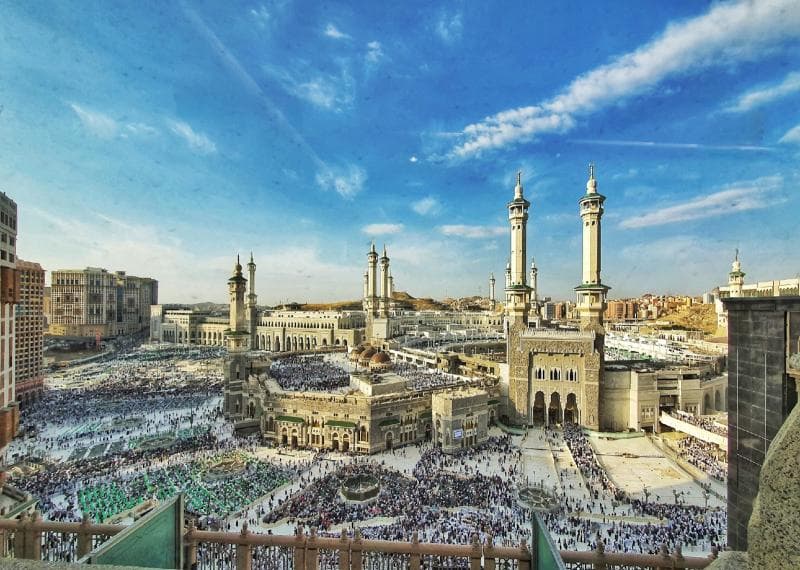
Discover Masjid al-Haram, the world's largest mosque in Mecca, Saudi Arabia, and Islam's holiest site, home to the sacred Kaaba and a beacon of spiritual unity.
Overview
Masjid al-Haram, often known as the Grand Mosque of Mecca, is the largest mosque in the world and the holiest site in Islam, located in Mecca, Saudi Arabia. It serves as the central focal point for millions of Muslims globally, who turn towards it during their daily prayers, a direction known as the Qibla. The mosque encapsulates the sacred Kaaba, the cube-shaped structure at its heart, and is the primary destination for the annual Hajj pilgrimage and the lesser pilgrimage of Umrah. Its immense scale and profound spiritual significance draw worshippers from every corner of the earth, fostering a unique sense of unity and devotion. The mosque operates around the clock, with prayer and worship in continuous flow.
History & Cultural Background
The history of Masjid al-Haram is deeply intertwined with the origins of Islam. According to Islamic tradition, the Kaaba, the central structure, was originally built as a house of worship by Prophet Ibrahim (Abraham) and his son Prophet Ismail (Ishmael). This sacred site was later purified by Prophet Muhammad, who cleared it of idols and re-established it for the worship of one God. Over centuries, as the number of pilgrims grew, the mosque underwent numerous expansions and renovations. The first recorded expansion occurred during the Rashidun Caliphate under Umar ibn al-Khattab in 637 CE, who built a wall around the Kaaba. Subsequent caliphs, including Uthman, the Umayyads, and the Abbasids, further enlarged and embellished the mosque, adding architectural elements such as columns, prayer areas, and minarets. Major modern expansions began in 1955 under Saudi rule, significantly increasing its capacity and integrating facilities like the Sa'i path within the complex.
What Makes It Special
At the core of Masjid al-Haram's uniqueness is the Kaaba, a cuboid building covered in a black silk cloth known as the Kiswah, embroidered with Quranic verses in gold thread. Circling the Kaaba seven times, a ritual called Tawaf, is a fundamental act of worship for pilgrims. Adjacent to the Kaaba is Maqam Ibrahim, a small stone platform believed to bear the footprints of Prophet Ibrahim, where he stood while building the Kaaba. Another vital feature is the Zamzam Well, an ancient water source linked to the story of Hajar and her infant son Ismail, providing blessed water to pilgrims. The mosque also includes the hills of Safa and Marwa, between which pilgrims perform Sa'i, commemorating Hajar's search for water. With an area covering millions of square feet and a capacity for millions of worshippers, especially during Hajj, its architectural design blends traditional Islamic aesthetics with modern functionality, featuring high-quality marble, numerous gates, and extensive prayer spaces.
Stories, Fun Facts & Local Details
One of the most powerful stories associated with Masjid al-Haram is that of Hajar. When Prophet Ibrahim left Hajar and their infant son Ismail in the desert of Mecca, Hajar desperately ran seven times between the hills of Safa and Marwa searching for water. Miraculously, a spring gushed forth beneath Ismail's feet, which became the Zamzam Well. This incredible act of faith and perseverance is reenacted by pilgrims during the Sa'i ritual. A fascinating detail about the Kaaba is the Black Stone (Hajar al-Aswad), set into its eastern corner. Muslims believe this sacred stone was sent from heaven and was placed in the Kaaba by Prophet Ibrahim. Tradition holds that Prophet Ibrahim's footprint was miraculously imprinted on the Maqam Ibrahim stone as it rose to help him build the Kaaba's upper walls. It is also widely believed in Islamic tradition that praying in Masjid al-Haram carries a reward equivalent to 100,000 prayers elsewhere. The Kiswah, the black cloth covering the Kaaba, is replaced annually during the Hajj pilgrimage, a significant event.
Visitor Perspective
Visiting Masjid al-Haram is a deeply spiritual and transformative experience for Muslims. The atmosphere within the mosque is one of profound humility, reflection, and spiritual connection, as believers from diverse backgrounds gather in unity. While the mosque is incredibly vast, equipped with modern amenities like air conditioning and escalators for comfort, navigating during peak times, such as Ramadan and Hajj, requires careful planning due to immense crowds. A crucial detail for first-time visitors is to remember or photograph their gate number upon entry, as there are over 210 gates, making it easy to get disoriented. It is important to note that entry to Masjid al-Haram and the central areas of Mecca is strictly restricted to Muslims only, a Saudi law enforced at checkpoints leading into the city. Wheelchairs and electric carts are available, and dedicated routes on upper levels can provide a less crowded experience for those who need them, though these routes cover longer distances.
Coordinates: 39.8262, 21.4225
View on Google Maps💬 How Travelers Describe This Place
Based on community votes
Photogenic
800Beautiful
658Unique
589Must See
374Interesting
90
Traveler Stories
Discover memorable experiences shared by travelers who have visited this place.
No traveler stories yet.
Be the first traveler to share what made this place memorable.
Things to see at Masjid al-Haram



Tour
By
Spot
Discover amazing places around the world. Your journey starts here.
Explore
© 2026 TourBySpot. All rights reserved.