Mask Of Agamemnon
Athens, Greece
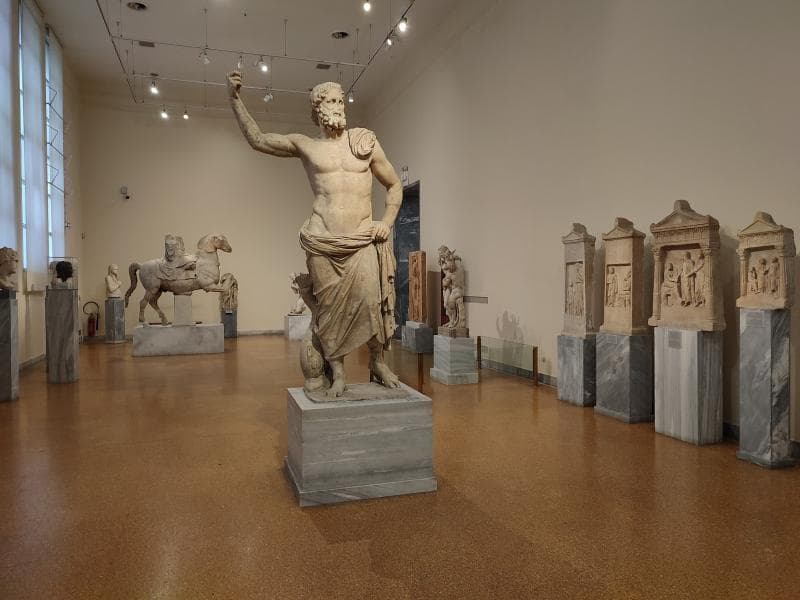
Discover the Mask of Agamemnon, a golden funerary mask from Mycenae, at the National Archaeological Museum in Athens, Greece. Explore its history and mystique.
Overview
Deep within the illustrious National Archaeological Museum in Athens, Greece, rests an artifact that has captivated historians and visitors alike for generations: the Mask of Agamemnon. This iconic golden funerary mask, renowned for its intricate details and enigmatic history, is a cornerstone of the museum's rich Mycenaean collection. Discovered in 1876 by the ambitious German archaeologist Heinrich Schliemann, the mask immediately became a symbol of ancient Greek grandeur and a testament to the advanced craftsmanship of the Bronze Age.
Housed in Room 4 of the National Archaeological Museum, the mask is a potent reminder of a powerful past, drawing countless visitors who seek to glimpse the face that Schliemann famously proclaimed to be that of the legendary King Agamemnon. While modern archaeology has since clarified its true age, positioning it centuries before the mythical king's time, the mask retains its evocative name and continues to spark imagination and debate. It stands as a prime example of the wealth and artistic sophistication of the Mycenaean civilization, inviting travelers to delve into the ancient world.
History & Cultural Background
The Mask of Agamemnon emerged from the earth of Mycenae, an ancient city in southern Greece, during Schliemann's excavations of Grave Circle A. It was found in Shaft Grave V, positioned over the face of a deceased male. The mask is one of five gold masks unearthed in Grave Circle A, but it stands out for its exceptional detail and three-dimensional quality. Created between 1550 and 1500 BCE, it dates back to the early Mycenaean period, making it significantly older than the traditional timeline for the Trojan War and the reign of the legendary Agamemnon, who is thought to have lived around 1200 BCE.
This golden artifact was crafted from a single, thick sheet of gold, meticulously hammered into shape using the repoussé technique, where the metal is pushed out from the reverse side to create a design in relief. The intricate details of the beard, mustache, and facial contours were then chased onto the surface. Such funerary masks were placed on the faces of the highest nobility and wealthiest individuals during their burials, signifying immense status and power within the Mycenaean society. The discovery of this mask, along with an abundance of other gold artifacts in the shaft graves, underscores the immense riches and elaborate burial practices of the Mycenaean elite.
What Makes It Special
What sets the Mask of Agamemnon apart is its striking artistry and the powerful narrative woven into its discovery. While other gold masks were found at Mycenae, this particular mask is notably more three-dimensional and naturalistic, featuring distinct cut-out ears, a full pointed beard, a handlebar mustache, and eyes depicted with both open and closed eyelids. This unique style has sparked both admiration and debate among archaeologists. The mask is not merely an ancient relic; it is a direct, albeit idealized, glimpse into the face of a Bronze Age ruler, conveying regal severity and an almost lifelike presence.
The historian Cathy Gere famously dubbed it the 'Mona Lisa of prehistory,' a testament to its enduring allure and the mystery surrounding the identity of the person it represents. Its significance extends beyond its artistic merit, symbolizing a pivotal moment in archaeology when Schliemann's passion for Homeric epics led him to uncover a thriving Bronze Age civilization that he believed connected directly to the heroic age described in the 'Iliad.' This mask, therefore, is not just a piece of ancient gold; it is a tangible link to ancient legends, sparking both scholarly inquiry and romantic fascination.
Stories, Fun Facts & Local Details
The story of the Mask of Agamemnon is inextricably linked to Heinrich Schliemann's dramatic declaration upon its discovery. Convinced he had found the legendary king, he famously telegraphed the King of Greece, exclaiming, 'I have gazed upon the face of Agamemnon!' This bold claim, though later disproven by archaeological dating, secured the mask's enduring popular name. Schliemann's dedication to the Homeric epics was so profound that he even named his own son Agamemnon.
Another fascinating detail is the ongoing debate regarding the mask's authenticity. Some scholars have questioned whether Schliemann, known for his sometimes controversial methods, might have altered or even fabricated parts of the mask due to its distinct features compared to other Mycenaean masks. However, the prevailing modern archaeological view is that the mask is genuinely Mycenaean, an extraordinary example of early repoussé technique, even if it does not belong to the Homeric king. The two small holes near the mask's ears suggest that it was once secured over the deceased's face with twine, offering a poignant detail about ancient burial rituals. The sheer amount of gold—14 kilograms of gold objects found in the same tombs—highlights the astonishing wealth of the Mycenaean civilization.
Visitor Perspective
Visiting the National Archaeological Museum in Athens is an essential experience for anyone exploring Greece's ancient heritage, and the Mask of Agamemnon is undoubtedly a highlight. The museum itself is the largest in Greece and one of the most important in the world, boasting an unparalleled collection of Greek artifacts spanning from prehistory to late antiquity. Upon entering Room 4, part of the extensive Mycenaean collection, visitors are immediately drawn to the commanding presence of the gold masks, with the Mask of Agamemnon centrally displayed. Its golden sheen and intricate details are even more impressive in person, offering a tangible connection to a civilization thousands of years old. The experience allows travelers to reflect on the mysteries of the past, the power of ancient rulers, and the enduring human quest to understand history. The museum provides ample context through its displays, helping visitors appreciate not only the artifact's beauty but also its profound historical and cultural significance within the broader narrative of ancient Greece. It is a moment of quiet awe, standing before a face that, real or symbolic, represents a powerful era in human history.
Coordinates: 23.73222, 37.98917
View on Google Maps💬 How Travelers Describe This Place
Based on community votes
Beautiful
623Interesting
545Unique
343Must See
302Photogenic
20
Traveler Stories
Discover memorable experiences shared by travelers who have visited this place.
No traveler stories yet.
Be the first traveler to share what made this place memorable.

Tour
By
Spot
Discover amazing places around the world. Your journey starts here.
Explore
© 2026 TourBySpot. All rights reserved.