Marble Seating Tiers
Athens, Greece
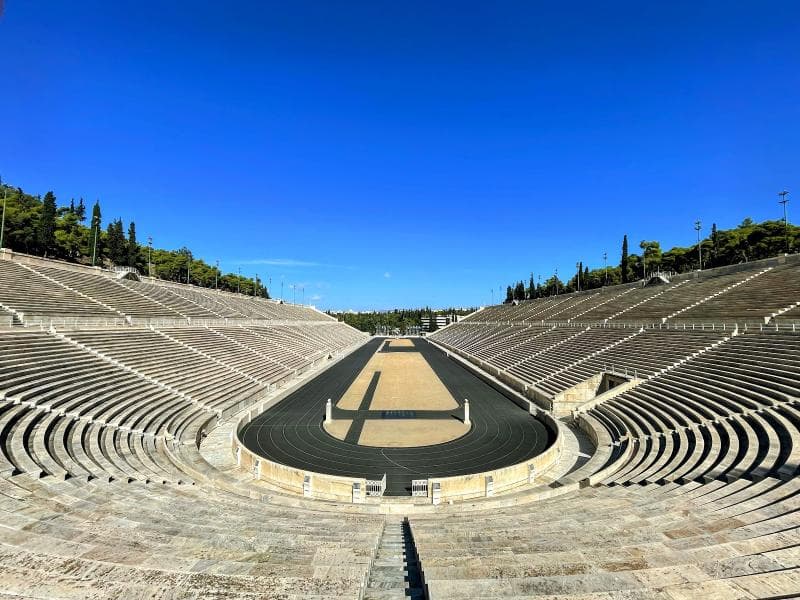
Explore the Panathenaic Stadium's Marble Seating Tiers in Athens, Greece – the world's only stadium built entirely of marble and home to Olympic history.
Overview
Stepping into the Panathenaic Stadium in Athens, Greece, one is immediately struck by the gleaming expanse of its Marble Seating Tiers. Known affectionately as 'Kallimarmaro', meaning 'beautifully marbled', this ancient arena stands as the only stadium in the world constructed entirely from marble. It is a living monument, a place where history resonates from every polished stone, connecting visitors directly to the origins of athletic competition and the revival of the modern Olympic Games.
These impressive tiers are more than just seats; they are a testament to ancient Greek engineering, Roman grandeur, and the enduring spirit of the Olympic ideal. The stadium's horseshoe shape, gracefully carved into a natural valley, guides the eye upwards along row after row of pristine white Pentelic marble, offering a tangible link to the tens of thousands of spectators who once cheered here centuries ago.
History & Cultural Background
The story of the Marble Seating Tiers begins long before the marble itself was introduced. Around 330 BC, the Athenian statesman Lycurgus established the first permanent athletic facility on this site, initially constructed from limestone and earth embankments, to host the Panathenaic Games in honor of the goddess Athena.
The transformation into the all-marble spectacle we see today came during the Roman era. Between 139 and 144 AD, the wealthy Athenian benefactor Herodes Atticus funded a complete reconstruction, replacing the earlier structure with Pentelic marble. This same fine white marble, quarried from Mount Pentelicus 16km northeast of Athens, was famously used in the construction of the Acropolis and the Parthenon.
After centuries of disuse and partial dismantling during Christian and Ottoman rule, the stadium underwent a remarkable revival. For the inaugural modern Olympic Games in 1896, the stadium was extensively renovated and brought back to its former glory, once again utilizing Pentelic marble. This monumental undertaking was made possible through the generous sponsorship of Greek-Egyptian merchant Georgios Averoff, whose statue now stands outside the stadium as a tribute to his contribution.
What Makes It Special
What truly sets the Panathenaic Stadium's Marble Seating Tiers apart is their singular construction. It is unequivocally the only stadium in the entire world built exclusively of marble. This wasn't merely a decorative choice; it was a profound architectural statement and an immense feat of engineering and expenditure in its time. The Pentelic marble itself adds to the stadium's unique allure, known for its exceptional durability, fine crystalline structure, and a distinctive warm golden hue that develops as it weathers under the Athenian sun.
The stadium's design, adhering to the natural contours of the valley between the Agra and Ardettos hills, is also remarkable. Rows of marble terraces rise gradually from the racing track, divided by radial staircases into organized seating sections. This organic integration with the landscape allowed for clear views and a close connection between spectators and the athletic action below.
Stories, Fun Facts & Local Details
Imagine the roar of 50,000 spectators, the estimated capacity of the stadium in Roman times, though some accounts suggest it could accommodate up to 80,000 during pivotal moments, such as when a Greek athlete won the first Olympic marathon. Among these rows, you'll find special throne-like marble seats with backrests in the front rows, reserved for dignitaries and officials – the ancient equivalent of VIP boxes. The Royal Box at the curved southern end marked the position for the Greek royal family during the 1896 Games.
The stadium's nickname, 'Kallimarmaro', is a delightful local detail that perfectly encapsulates the admiration Athenians have for this 'beautiful marble' structure. It's a testament to the material's aesthetic appeal and its symbolic significance. Furthermore, the Panathenaic Stadium holds the prestigious role as the site where the Olympic flame is traditionally handed over to the host nation before each Olympic Games, continuing its unbroken connection to the global sporting event.
Visitor Perspective
As a curious traveler, standing on the historic track and gazing up at the magnificent Marble Seating Tiers is an experience that transcends mere sightseeing. You can walk, or even run, a lap on the track, feeling the echoes of ancient athletes. The steep steps of the marble seats invite you to climb to the upper rows, where you are rewarded with panoramic views of the entire stadium, and even glimpses of Mount Lycabettus and the Acropolis in the distance.
Visitors often comment on the intense whiteness of the marble, especially on sunny days, which can require sunglasses even before entering the stadium. For the most evocative experience, an early morning visit is highly recommended. The soft light, cooler temperatures, and relative quiet allow for a meditative appreciation of the monument, offering a unique quality different from the busier midday experience. It is a place that truly allows you to immerse yourself in the rich tapestry of Greek history and athletic tradition.
Coordinates: 23.74111, 37.96833
View on Google Maps💬 How Travelers Describe This Place
Based on community votes
Interesting
623Photogenic
343Unique
302Must See
250Beautiful
88
Traveler Stories
Discover memorable experiences shared by travelers who have visited this place.
No traveler stories yet.
Be the first traveler to share what made this place memorable.

Tour
By
Spot
Discover amazing places around the world. Your journey starts here.
Explore
© 2026 TourBySpot. All rights reserved.