Marble Corridors
Bucharest, Romania
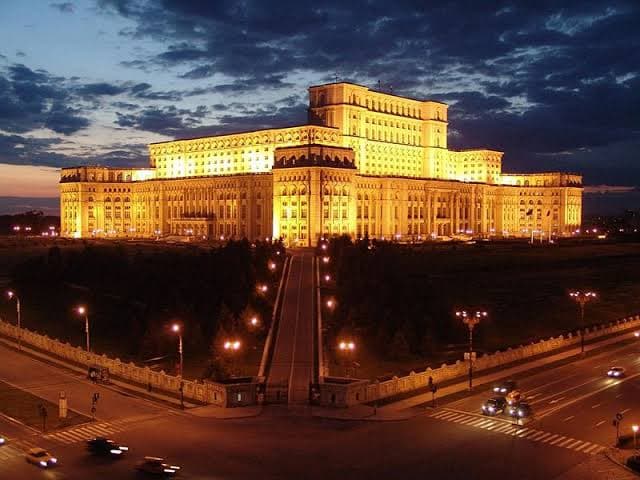
Explore the opulent Marble Corridors within the Palace of the Parliament in Bucharest, Romania. Discover its history, scale, and unique local details.
Overview
Deep within the colossal Palace of the Parliament in Bucharest, Romania, lie the Marble Corridors, a testament to unparalleled scale and architectural ambition. These vast passages are not merely functional walkways but integral components of one of the world's largest and heaviest administrative buildings. Spanning an immense area, the corridors themselves embody the grandeur and opulence that define the entire structure. Visitors navigating these marble-clad thoroughfares are immediately struck by their sheer length and the gleaming surfaces that reflect light from elaborate chandeliers. The Marble Corridors are a central feature in experiencing the Palace's overwhelming presence, connecting its countless halls and rooms.
History & Cultural Background
The story of the Palace of the Parliament, and by extension its Marble Corridors, begins in the early 1980s under the dictatorial rule of Nicolae Ceaușescu. Inspired by monumental architecture he observed during a visit to North Korea, Ceaușescu envisioned a new Civic Center for Bucharest, with the 'People's House' (Casa Poporului), as it was then known, at its heart. Construction began in 1984 and involved an astonishing effort: over 20,000 workers and 700 architects toiled in continuous shifts, day and night, aiming for rapid completion despite Romania's economic hardships. The project necessitated the demolition of a significant portion of historic Bucharest, displacing over 40,000 people and razing numerous churches and homes, marking a controversial chapter in the city's history. A key directive was that all materials used in the building's construction must be of Romanian origin, a nationalist statement of self-sufficiency. This included the vast quantities of marble, wood, crystal, and steel that define its interiors.
What Makes It Special
The Marble Corridors stand out for their extraordinary material composition and breathtaking scale. Approximately one million cubic meters of marble were used throughout the Palace, much of it sourced from Romania's own quarries in Transylvania and Dobrogea, specifically the Ruschita quarry. This dedication to local materials means that each slab and column tells a story of Romanian natural resources and craftsmanship. The corridors are not uniform; they feature various types of marble, including the notable pink Ruschita marble, which adds subtle variations in color and texture to the expansive surfaces. Beyond the material, it is the sheer vastness that impresses. The Palace boasts approximately 1,100 rooms, and its corridors stretch for kilometers, leading visitors through a labyrinth of grandeur. The elegant neoclassical design, combined with the continuous flow of polished stone, creates an almost endless visual spectacle.
Stories, Fun Facts & Local Details
The construction of the Palace and its marble interiors is steeped in local lore and staggering statistics. It is rumored that the Palace contains so much marble that if it were all laid out, it could cover a substantial portion of Bucharest. An interesting detail within the corridors themselves is the presence of inlaid patterns on the marble floors, which many visitors might overlook. These intricate designs are not merely decorative but are stylized representations of the Palace's floor plan, serving as subtle, internal maps of the gargantuan structure. The scale was so immense that some of the grand carpets found in various halls and connecting corridors had to be woven directly inside the rooms because they were too large to be brought in through existing entrances. The Palace is recognized by several world records, including being the heaviest building on Earth and the second-largest administrative building by total floor area, surpassed only by the Pentagon. Walking these corridors, one truly feels the ambition and, perhaps, the extravagance of a bygone era.
Visitor Perspective
For a curious traveler, exploring the Marble Corridors offers a profound insight into Romania's communist past and its architectural legacy. Guided tours are essential for navigating the immense building and appreciating the details within the corridors and adjacent rooms. As you walk, the coolness of the marble underfoot and the echoes in the vast spaces create a distinct atmosphere, a mix of awe and contemplation. The polished surfaces, reflecting the light from opulent crystal chandeliers, create a feeling of endless space. While only a fraction of the Palace is typically accessible to visitors, the tour routes ensure that you experience the impressive scale and intricate craftsmanship of these marble passages. Witnessing the seamless transitions between different marble types and the sheer volume of this natural stone helps to convey the immense human and material cost involved in realizing Ceaușescu's vision. It's an experience that leaves a lasting impression, revealing not just architectural prowess but a poignant chapter of Romanian history.
Coordinates: 26.0875, 44.4275
View on Google Maps💬 How Travelers Describe This Place
Based on community votes
Must See
673Photogenic
336Interesting
219Unique
186Beautiful
80
Traveler Stories
Discover memorable experiences shared by travelers who have visited this place.
No traveler stories yet.
Be the first traveler to share what made this place memorable.

Tour
By
Spot
Discover amazing places around the world. Your journey starts here.
Explore
© 2026 TourBySpot. All rights reserved.