Marble Columns
Istanbul, Turkey
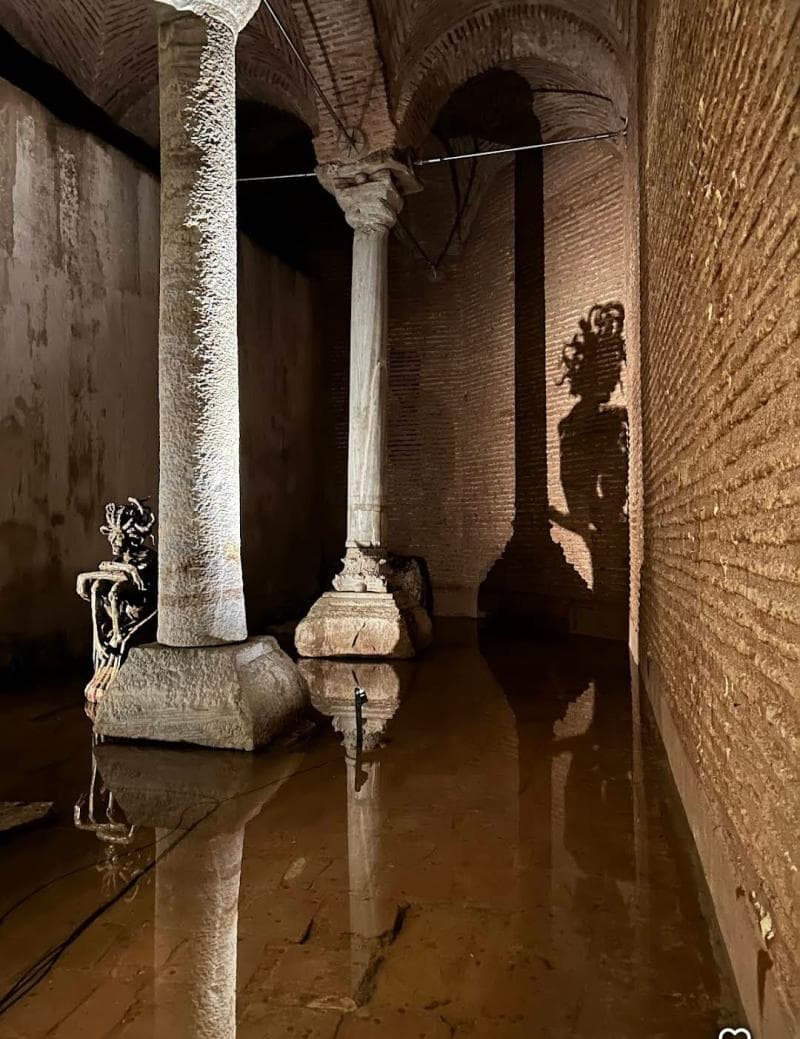

Explore the Marble Columns of Basilica Cistern in Istanbul, Turkey. Discover the history, legends, and architectural marvel of this ancient underground reservoir.
Overview
Deep beneath the bustling streets of Istanbul, Turkey, lies the magnificent Basilica Cistern, a subterranean marvel that once supplied water to the Byzantine capital. Among its most striking features are the 'Marble Columns', a silent, awe-inspiring forest of ancient pillars that hold aloft the cistern's vaulted ceiling. Known locally as 'Yerebatan Sarayı', or the 'Sunken Palace', this vast underground reservoir is an enduring testament to Byzantine engineering and a captivating journey into Istanbul's rich history.
The cistern houses 336 marble columns, arranged in 12 rows of 28, stretching across the dim, reflective waters. Each column stands approximately nine meters (30 feet) tall, creating a mesmerizing sense of depth and architectural grandeur. Visitors traverse elevated walkways, offering an intimate perspective of these ancient structures and their serene reflections.
History & Cultural Background
The Basilica Cistern's construction was commissioned by the Eastern Roman Emperor Justinian I in the 6th century CE, specifically between 527 and 565 AD. Its primary purpose was to store and filter water for the Great Palace of Constantinople and surrounding buildings, ensuring a vital supply, especially during sieges or dry periods. The cistern was strategically located beneath what was once a large public square known as the Stoa Basilica, hence its modern name.
A remarkable aspect of the cistern's construction is the extensive use of 'spolia' – architectural elements repurposed from earlier Roman and Greek structures. Many of the marble columns were salvaged from older temples and buildings across the Byzantine Empire, a practical approach that provided robust materials and reduced construction time. This practice results in a fascinating diversity of column styles, including Corinthian, Ionic, and Doric capitals, alongside more plain designs.
After the Ottoman conquest of Constantinople in 1453, the cistern continued to supply water, initially for Topkapi Palace, but its existence was largely forgotten by the public for centuries. It was rediscovered in the 16th century by the French scholar Petrus Gyllius, who documented locals drawing water and even fishing from openings in their homes.
What Makes It Special
The Marble Columns are not merely structural supports; they are a historical mosaic. Their varied origins mean that each column tells a subtle story, a fragment of a different ancient past brought together in a singular, grand design. This 'forest' of pillars, stretching into the dimly lit distance, creates an ethereal and contemplative atmosphere, unlike any other historical site.
The sheer scale of the 336 columns, meticulously arranged, showcases the incredible engineering prowess of the Byzantine era. The way they rise from the shallow, still water, often reflecting the vaulted ceilings above, adds to the illusion of an 'underground palace', giving visitors a sense of stepping into a forgotten world.
Recent restoration efforts by the Istanbul Metropolitan Municipality, notably in 2020-2022, have further enhanced the visitor experience. These works involved strengthening the structure, cleaning the columns of moss and dirt, and installing modern, dynamic lighting that highlights the columns' intricate details and the cistern's mysterious ambiance.
Stories, Fun Facts & Local Details
The most famous and enigmatic of the Marble Columns are those resting on the inverted and sideways Medusa heads, located in the northwest corner of the cistern. The exact origin of these ancient Roman sculptures is unknown, but they were almost certainly salvaged from another building, possibly a temple or even the Forum of Constantine. Legend often attributes their unusual placement—one head upside down, the other on its side—to a desire to nullify Medusa's petrifying gaze. However, historians more commonly suggest that these large blocks were simply reused due to their size and convenient shape for column bases, without particular symbolic intent regarding their orientation.
Another column of note is the 'Tear Column' or 'Hen's Eye Column', featuring teardrop-like carvings. Some popular belief suggests it was erected in memory of the thousands of slaves who toiled and reportedly lost their lives during the cistern's 38-year construction. Its damp appearance also contributes to the 'crying' imagery.
For centuries after its rediscovery, locals reportedly used the cistern's cool water to store food and even caught fish within its depths. The persistent coolness inside the cistern makes it a pleasant retreat, especially during Istanbul's hot summer months.
Visitor Perspective
Stepping into the Basilica Cistern is a journey into a tranquil, dimly lit realm, a profound contrast to the vibrant city above. The sheer number of Marble Columns, bathed in atmospheric lighting, creates a hauntingly beautiful 'forest' effect, with reflections dancing on the shallow water. The air is notably cooler and carries a sense of ancient mystery, enhanced by the gentle drip of water and soft echoes.
The experience is often described as serene and mystical, offering a unique perspective on Byzantine history and ingenuity. Visitors are captivated by the intricate details of the columns, the famous Medusa heads, and the tranquil ambiance that pervades the space. It's a place where history feels tangible, and the whispers of the past seem to linger among the ancient stones.
Coordinates: 28.9778, 41.0084
View on Google Maps💬 How Travelers Describe This Place
Based on community votes
Interesting
872Unique
846Photogenic
684Must See
121Beautiful
87
Traveler Stories
Discover memorable experiences shared by travelers who have visited this place.
No traveler stories yet.
Be the first traveler to share what made this place memorable.

Tour
By
Spot
Discover amazing places around the world. Your journey starts here.
Explore
© 2026 TourBySpot. All rights reserved.