Maqam Ibrahim
Mecca, Saudi Arabia
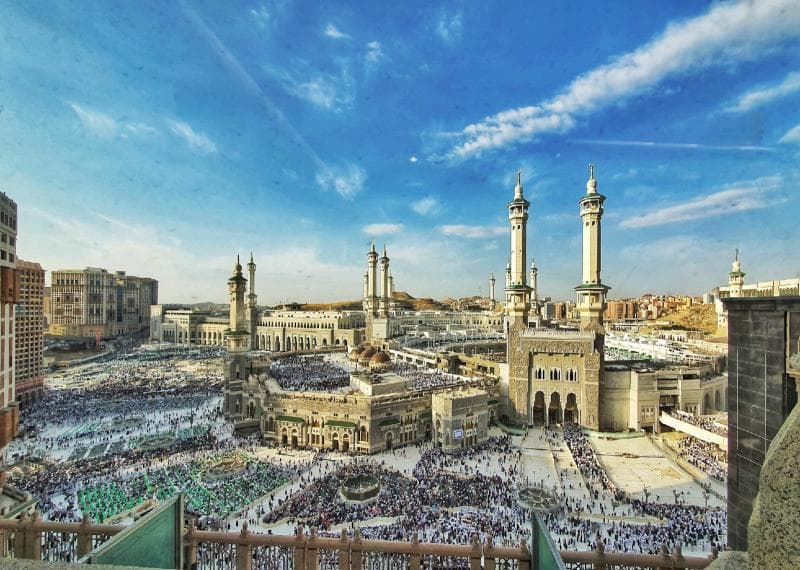
Discover Maqam Ibrahim in Mecca, Saudi Arabia, the sacred stone bearing Prophet Ibrahim's footprints, a pivotal site for prayer within Masjid al-Haram.
Overview
Deep within the revered Masjid al-Haram in Mecca, Saudi Arabia, stands Maqam Ibrahim, a site of profound spiritual significance. This sacred spot, known as the 'Station of Ibrahim' or Abraham, is marked by a stone believed to bear the footprints of Prophet Ibrahim (Abraham). It is centrally located in the Mataf area, just a short distance from the Holy Kaaba, making it a focal point for millions of pilgrims annually.
Maqam Ibrahim is not merely a historical relic; it is an integral part of the Hajj and Umrah pilgrimage rituals. After completing the seven circumambulations (Tawaf) around the Kaaba, pilgrims are encouraged to perform two units of prayer behind Maqam Ibrahim, as instructed in the Quran.
History & Cultural Background
The history of Maqam Ibrahim is deeply intertwined with the construction of the Kaaba, the first house of worship for Allah. According to Islamic tradition, Prophet Ibrahim, alongside his son Prophet Ismail, was tasked by Allah to build the Kaaba. As the walls of the Kaaba grew taller, Prophet Ibrahim used this stone as a platform to reach the higher sections, with Ismail handing him stones.
A miraculous aspect of this stone is that it softened under Prophet Ibrahim's feet, preserving his footprints as a divine sign. While the original imprints may have faded over centuries due to people touching and wiping the stone, their shape remains visible today. The Quran itself elevates the status of Maqam Ibrahim, instructing believers: 'And take the place of Ibrahim as a place of prayer' (Quran 2:125).
Originally, Maqam Ibrahim was positioned very close to the Kaaba. Over time, as the number of pilgrims increased, it was moved slightly farther to its current location, approximately 10 to 13 meters east of the Kaaba, to facilitate the smooth flow of Tawaf and prayer without obstruction. This adjustment occurred during the time of Caliph Umar ibn al-Khattab and was a practical decision to manage the growing crowds, ensuring the safety and ease of worshippers.
What Makes It Special
Maqam Ibrahim stands out not only for its antiquity but also for its explicit mention in the Holy Quran, which mandates it as a place of prayer. This divine command imbues it with a unique sanctity, setting it apart from countless other historical sites.
The stone serves as a tangible link to Prophet Ibrahim, one of Islam's most revered prophets, symbolizing his unwavering faith, obedience, and monumental effort in building the Kaaba. The practice of praying two rak'ahs behind it after Tawaf is a Sunnah (tradition) of Prophet Muhammad, further cementing its importance in Islamic worship.
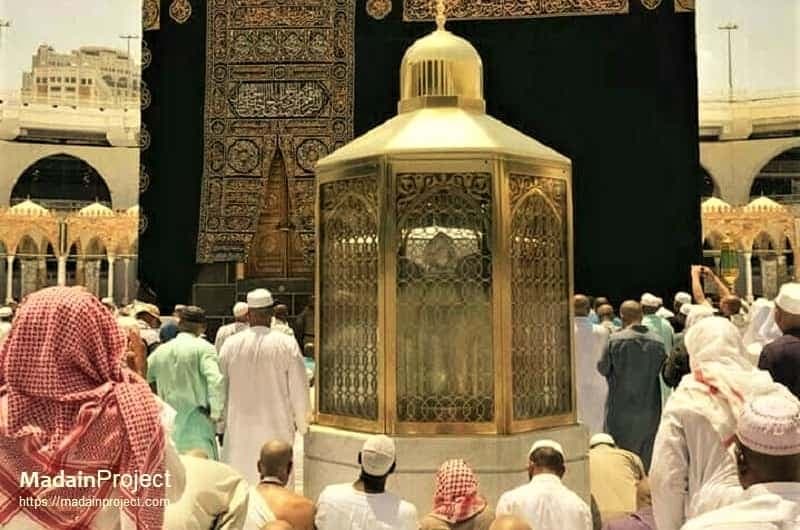
The Maqam today is protected by an elegant gold and glass enclosure, allowing pilgrims a clear view of the sacred stone and its historic footprints, even amidst the bustling Mataf area.
Stories, Fun Facts & Local Details
Numerous traditions enrich the narrative of Maqam Ibrahim. Beyond its use during the Kaaba's construction, some accounts suggest Prophet Ibrahim also stood on the stone to call people to perform the pilgrimage to Mecca after the Kaaba's completion. Another tradition mentions the footprints appeared when Ismail's wife washed Ibrahim's head while he stood on the stone.
The stone itself is described as a soft 'water stone' with a reddish-black hue and a touch of white. It measures roughly 40-50 cm in length and width, and about 20 cm in height. The imprints of Prophet Ibrahim's feet, though softened by centuries of touch, are still discernable, measuring approximately 22-27 cm in length. The current protective casing, a beautiful golden cylinder with a glass dome, was installed to preserve the relic while making it visible to all.
This 'Station of Ibrahim' is a powerful reminder of the sacrifices made by prophets and the enduring legacy of faith. It encourages Muslims to reflect on themes of trust, obedience, and patience, echoing the life of Prophet Ibrahim.
Visitor Perspective
For pilgrims, visiting Maqam Ibrahim is a deeply emotional and spiritual experience. Despite the constant flow of people performing Tawaf around the Kaaba, many feel a profound sense of peace and connection when they approach this sacred spot.
The act of praying behind Maqam Ibrahim is a moment of profound reflection, linking the individual directly to the prophetic history of Islam. It is a moment where pilgrims consciously follow in the footsteps of Prophet Muhammad and Prophet Ibrahim, reinforcing their faith and commitment. Even when direct access to pray immediately behind the Maqam is limited due to crowds, pilgrims find comfort and blessings by praying anywhere in the vicinity behind it. This small stone, gleaming in its golden enclosure, serves as a beacon of devotion and a silent testament to the rich spiritual heritage of Mecca.
Coordinates: 39.82631, 21.42258
View on Google Maps💬 How Travelers Describe This Place
Based on community votes
Interesting
951Beautiful
748Must See
499Photogenic
491Unique
427
Traveler Stories
Discover memorable experiences shared by travelers who have visited this place.
No traveler stories yet.
Be the first traveler to share what made this place memorable.

Tour
By
Spot
Discover amazing places around the world. Your journey starts here.
Explore
© 2026 TourBySpot. All rights reserved.