Maps & Documents
Ulaanbaatar, Mongolia
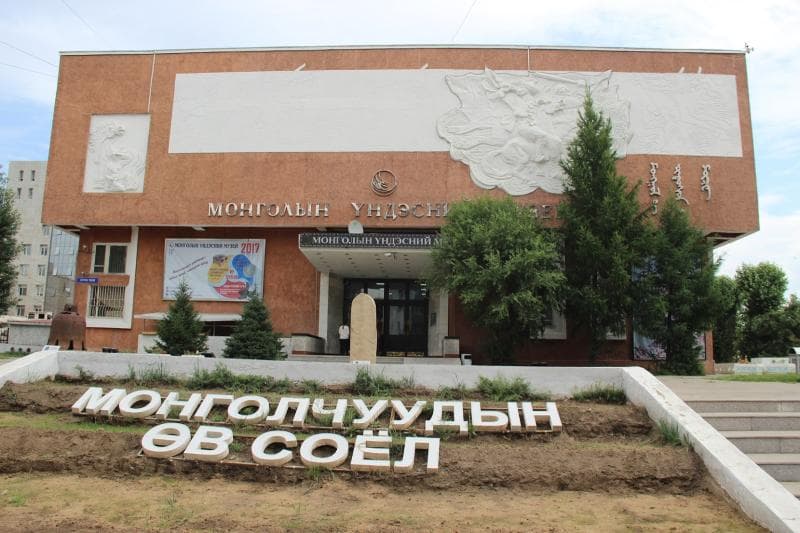
Explore historical maps and documents at the National Museum of Mongolia in Ulaanbaatar. Uncover Mongolia's rich past, from ancient times to the modern era.
Overview
While not a singular, dedicated hall named 'Maps & Documents', these invaluable artifacts are intricately woven throughout the extensive collections of the National Museum of Mongolia in Ulaanbaatar. They form a crucial part of the museum's commitment to preserving and interpreting Mongolia's rich and complex history, offering profound insights into its geographical evolution, administrative structures, and the enduring resilience of its cultural identity. The museum, which houses over 57,000 historical, archaeological, and ethnographical objects, utilizes these documents and maps to unfold the compelling story of the Mongolian people from prehistoric times to the end of the 20th century. Visitors keen on immersing themselves in the historical narrative through authentic records and cartographical representations will discover these treasures thoughtfully integrated into various thematic and chronological exhibitions across the museum's numerous halls.
Each map and document serves not merely as an object but as a primary source, bringing to life the eras of powerful empires, the nuances of nomadic traditions, and the continuous process of state-building that defines Mongolia's heritage. They are narrative threads, guiding curious travelers through millennia of the nation's past.
History & Cultural Background
Mongolia boasts a rich tradition of documentation and cartography, deeply interconnected with its nomadic lifestyle and significant state-building endeavors. Historically, Mongolian manuscript maps often reflected administrative divisions, such as leagues and banners, especially during the Qing dynasty, rather than focusing solely on precise scientific measurements. These hand-drawn maps provided a 'bird's eye view' of territories, serving practical purposes in land administration, boundary delineation, and resource documentation within the nomadic society.
The historical collection within the National Museum is broadly subdivided into archaeological, medieval history of Mongolia, and modern historical objects, which includes photography, recordings, and documents. From the ancient states to the vast Mongol Empire, documents played a vital role in governance, diplomacy, and recording historical events. For instance, some exhibits delve into periods like the Qing rule and the early 20th century, documenting Mongolia's struggles for independence through military and political records.
What Makes It Special
The 'Maps & Documents' within the National Museum of Mongolia are special because they offer direct, tangible connections to the nation's past. Unlike secondary accounts, these original artifacts allow visitors to witness the direct evidence of historical processes and cultural practices. They include rare Mongolian manuscripts, such as those found in Turfan, East Turkestan, fragments of ancient books, and even copies of written genealogies, providing a personal touch to broad historical narratives.
These documents illuminate the complexities of nomadic life and governance. For example, a merchant's debt account book offers a glimpse into historical economic practices, while maps detailing the distribution of Stone Age and Bronze Age finds help visualize early human settlements and activities in the region. The documents underscore how Mongolians, despite their nomadic heritage, developed sophisticated administrative and record-keeping systems that were crucial for managing vast territories and diverse populations.
Stories, Fun Facts & Local Details
One fascinating aspect visitors might discover are the maps illustrating ancient finds, such as those depicting the distribution of artifacts from the Stone Age and Bronze Age. These maps help contextualize Mongolia as a 'cradle of humanity,' with evidence of human habitation dating back nearly 800,000 years. Imagine tracing the lines on a historical map, understanding how nomadic tribes established empires in what is today Mongolia, from the Hunnu to the Turk, Uighur, and Khidan.
The museum also presents compelling stories through specific documents, such as copies of written genealogies, providing a window into the lineage and historical importance of figures like Khalkh Setsen Khan Sholoy. Another intriguing item is a merchant's debt account book, which offers a rare, everyday perspective on economic life in historical Mongolia. These details transform abstract history into relatable human experiences. Furthermore, documents related to the 1911 national independence revolution showcase Mongolia's resilience and its journey towards sovereignty, providing a profound understanding of the nation's political evolution.
Visitor Perspective
For the curious traveler, encountering the maps and documents at the National Museum of Mongolia is an enriching experience. While there isn't a single, isolated room, the artifacts are thoughtfully integrated, providing depth and context to each historical period presented. Visitors can spend time examining the intricate details of ancient manuscripts or pondering the geographical scope of historical maps. The museum strives to make its collections accessible, with most exhibits featuring labels in both Mongolian and English, ensuring a comprehensive understanding for international guests.
Walking through the halls, one gains a holistic view of Mongolian history, understanding how maps charted the physical world and documents recorded the human journey. It is an educational journey that connects visitors directly with the authentic records of a proud nation, allowing for a deeper appreciation of Mongolia's unique cultural heritage and its significant place in world history.
Coordinates: 106.9154, 47.9208
View on Google Maps💬 How Travelers Describe This Place
Based on community votes
Beautiful
897Photogenic
657Must See
605Unique
498Interesting
481
Traveler Stories
Discover memorable experiences shared by travelers who have visited this place.
No traveler stories yet.
Be the first traveler to share what made this place memorable.

Tour
By
Spot
Discover amazing places around the world. Your journey starts here.
Explore
© 2026 TourBySpot. All rights reserved.