Manas Statue
Bishkek, Kyrgyzstan
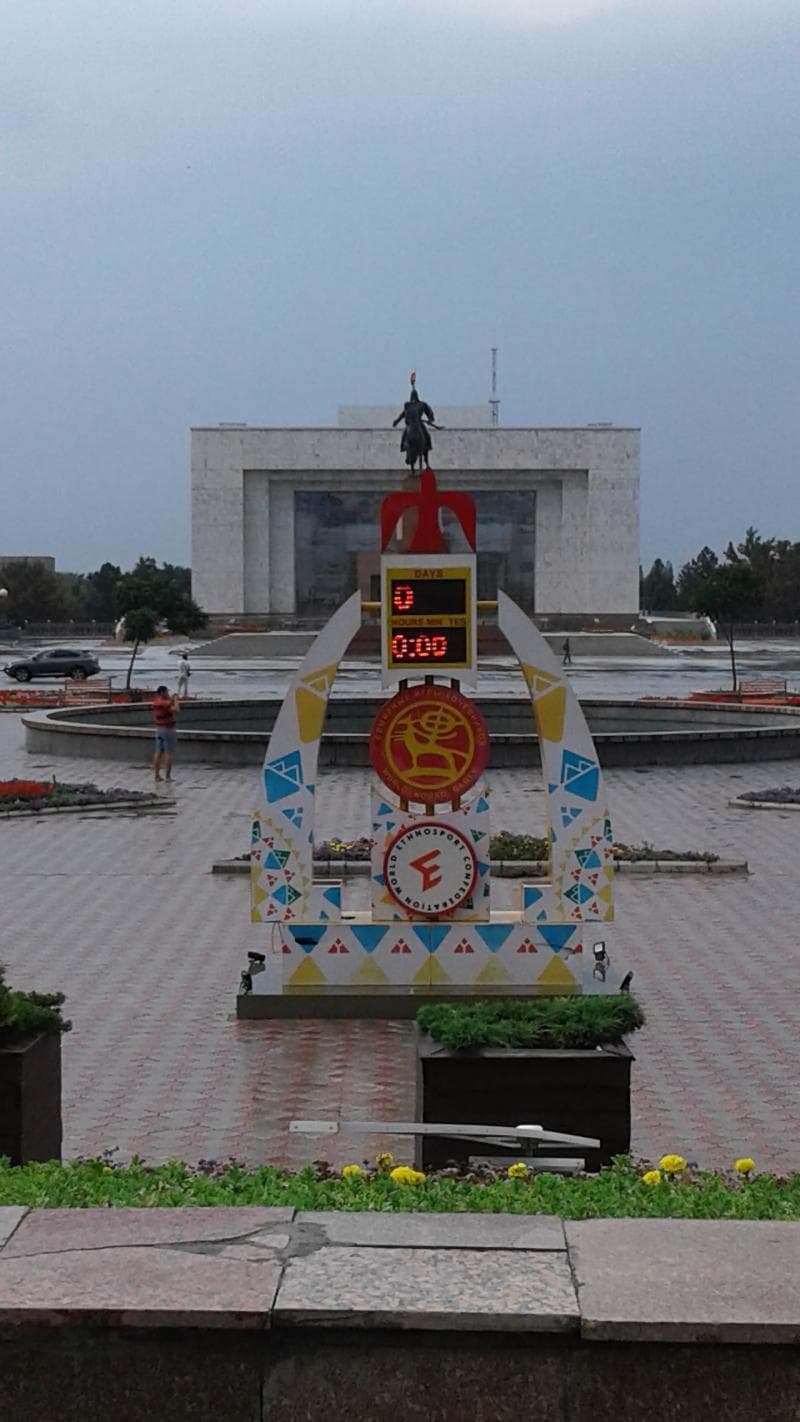
Discover the Manas Statue in Bishkek, Kyrgyzstan's central Ala-Too Square. Explore the history and cultural significance of this legendary hero.
Overview
In the vibrant heart of Bishkek, Kyrgyzstan, lies Ala-Too Square, the city's central and most significant public space. Dominating this expansive square is the majestic Manas Statue, an imposing monument dedicated to the legendary hero of the Kyrgyz people. This grand equestrian sculpture serves as much more than just a piece of art; it is a profound symbol of national identity, unity, and the enduring spirit of Kyrgyzstan. Standing tall amidst modern developments, the statue offers visitors a compelling glimpse into the country's rich historical and cultural tapestry, inviting them to reflect on the legacy of a hero who united a nation.
The statue depicts Manas, the central figure of the Epic of Manas, mounted on his faithful steed, Ak-Kula. His right hand is raised in a gesture that conveys peaceful intentions and openness, a powerful representation of the hero's magnanimity, with his sword intentionally remaining in its scabbard. The monument's impressive scale, with the figure of Manas himself reaching ten meters in height, commands attention and underscores its importance to the Kyrgyz people. Surrounded by other significant landmarks like the State Historical Museum and a towering flagpole, the Manas Statue is a focal point for both local celebrations and curious travelers eager to connect with Kyrgyzstan's heritage.
History & Cultural Background
The Manas Statue's presence in Ala-Too Square is a relatively recent development, yet it stands on grounds steeped in history and shifting national narratives. Ala-Too Square itself was established in 1984, during the Soviet era, and was initially known as Lenin Square, featuring a prominent statue of Vladimir Lenin. Following Kyrgyzstan's independence from the Soviet Union in 1991, the square underwent a transformation reflecting the country's newfound sovereignty. In 2003, Lenin's statue was relocated, replaced by the 'Erkindik' (Freedom) statue, which depicted a winged female figure holding a 'tunduk,' the circular frame of a traditional Kyrgyz yurt.
However, this 'Freedom' monument was itself replaced on August 31, 2011, when the Manas Statue was unveiled to commemorate the 20th anniversary of Kyrgyzstan's independence. This change symbolized a deeper embrace of indigenous cultural heroes over more abstract concepts of liberty. The creation of the Manas Statue was partly funded by public donations, highlighting its significance as a truly national endeavor. This monument solidifies the Epic of Manas, an oral tradition recognized by UNESCO as a Masterpiece of the Oral and Intangible Heritage of Humanity, as a foundational element of Kyrgyz identity.
What Makes It Special
The Manas Statue is special not just for its monumental size and artistic detail, but for the profound cultural narrative it embodies. It is a direct homage to Manas the Great, the legendary warrior and unifier who, according to the epic, brought together disparate Kyrgyz tribes into a single state. This heroic narrative, preserved for centuries through oral tradition by bards known as Manaschi, is deeply woven into the fabric of Kyrgyz identity.
The statue's design, crafted by sculptor Bazarbay Sadykov, meticulously captures the essence of Manas. The warrior's armor and the horse's intricate trappings are rendered with exceptional thoroughness, reflecting a blend of historical context and artistic vision. The symbolic gesture of Manas's raised hand, indicating peace rather than aggression, sets this monument apart, portraying the hero as a leader of constructive character. Its central position in Ala-Too Square ensures it remains at the heart of national life, a constant reminder of the country's origins and resilience.
Stories, Fun Facts & Local Details
The Manas Epic is one of the world's longest oral epics, comprising over 500,000 lines. It is not merely a tale of war, but an extensive encyclopedia of Kyrgyz life, encompassing marriage, mourning, alliances, and honor. Bards, or Manaschi, can recite portions of this epic for days or even weeks, a testament to its complexity and the enduring tradition of oral storytelling.
A fascinating detail about the statue is the subtle artistic choice made by sculptor Bazarbay Sadykov. It is said that the facial features of the hero Manas hint at the appearance of the renowned Kyrgyz actor Suimonkul Chokmorov, subtly linking the past with a more contemporary national figure. The continuous evolution of the monuments in Ala-Too Square tells its own story of Kyrgyzstan's journey. From Lenin, to the abstract 'Freedom' statue, and finally to Manas, each change marked a new chapter in the nation's search for its defining symbols and identity. Observing the hourly changing of the guard at the nearby flagpole adds a ceremonial touch to any visit, connecting the statue's historical significance to present-day national pride.
Visitor Perspective
Visiting the Manas Statue in Ala-Too Square offers a compelling experience for any traveler. The sheer scale and artistry of the bronze monument are immediately striking, inviting contemplation on the legendary figure it represents. Strolling through the spacious square, especially during evening hours, allows visitors to absorb the tranquil yet vibrant atmosphere where locals gather and celebrate.
The monument serves as an excellent backdrop for photography, particularly as the sun begins to set, casting a golden light upon the heroic figure and offering stunning views against the backdrop of the surrounding mountains. Beyond its visual appeal, the Manas Statue acts as a gateway to understanding Kyrgyz culture. It is a powerful educational opportunity to learn about the Epic of Manas and its profound role in shaping the nation. The square's accessibility by public transport makes it an easy and essential stop on any Bishkek itinerary, providing a tangible connection to the heart and soul of Kyrgyzstan.
Coordinates: 74.6037122, 42.8766909
View on Google Maps💬 How Travelers Describe This Place
Based on community votes
Photogenic
551Interesting
547Unique
336Beautiful
219Must See
186
Traveler Stories
Discover memorable experiences shared by travelers who have visited this place.
No traveler stories yet.
Be the first traveler to share what made this place memorable.

Tour
By
Spot
Discover amazing places around the world. Your journey starts here.
Explore
© 2026 TourBySpot. All rights reserved.