Main Stupa
Yangon, Myanmar
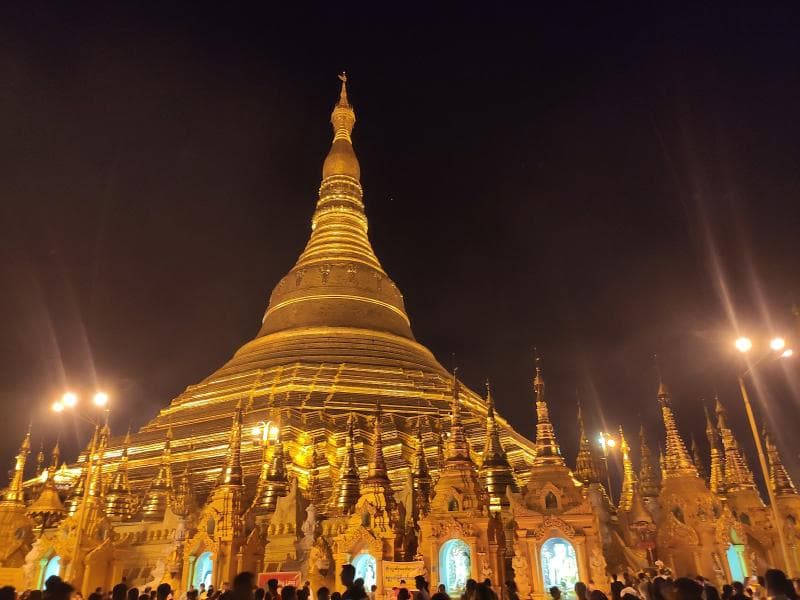
Explore the Main Stupa of Shwedagon Pagoda in Yangon, Myanmar. Discover its golden grandeur, ancient history, and spiritual significance.
Overview
The Main Stupa of Shwedagon Pagoda, officially known as Shwedagon Zedi Daw, stands as the crowning jewel of Yangon, Myanmar's spiritual landscape. This magnificent golden edifice is the heart of the Shwedagon Pagoda complex, an awe-inspiring landmark visible from almost every corner of the city. Rising majestically from Singuttara Hill, the Main Stupa reaches a height of 99 meters (325 feet), its radiant gold plating a testament to centuries of devotion. It is not merely a monument but a vibrant center of worship, drawing pilgrims and visitors alike to witness its splendor and profound spiritual atmosphere. The entire structure gleams, adorned with an incredible display of precious gems, making it one of the most revered Buddhist sites globally.
History & Cultural Background
Legend holds that the Shwedagon Pagoda is over 2,500 years old, positioning it as one of the oldest Buddhist stupas in the world. Its origins are deeply intertwined with the earliest days of Buddhism, believed to enshrine sacred relics of four Buddhas of the present kalpa. Most famously, it is said to house eight strands of hair from Gautama Buddha himself, alongside the staff of Kakusandha, the water filter of Koṇāgamana, and a piece of the robe of Kassapa. While archaeological evidence suggests significant expansions between the 6th and 10th centuries, the tradition of its ancient founding remains a cornerstone of its spiritual significance. Throughout history, various monarchs have contributed to its grandeur. Queen Shin Saw Pu in the 15th century notably raised its height and gilded the structure, setting a precedent for future embellishments. Subsequent kings, including King Hsinbyushin after a devastating earthquake in 1768, continued to rebuild and adorn the stupa, solidifying its status as Myanmar's most sacred Buddhist site.
What Makes It Special
The sheer opulence of the Main Stupa is unparalleled. It is entirely covered in gold plates, with devotees having contributed tons of gold over the centuries to maintain its shimmering exterior. At its zenith rests the 'hti,' a spectacular umbrella-like crown adorned with thousands of diamonds, rubies, sapphires, and other precious stones. A massive 76-carat diamond famously caps the very top, catching the sunlight and casting dazzling reflections across the complex. The Main Stupa is encircled by 64 smaller stupas, creating a harmonious and visually rich tableau. Surrounding the central structure are numerous shrines and pavilions, each contributing to the pagoda's intricate beauty and spiritual pathways. The collective artistry and the sheer volume of precious materials make the Main Stupa a breathtaking marvel of human dedication and faith.
Stories, Fun Facts & Local Details
The most compelling legend surrounding the Shwedagon's Main Stupa involves two merchant brothers, Tapussa and Bhallika. According to lore, they encountered Gautama Buddha shortly after his enlightenment and received eight strands of his hair. These precious relics were then brought to Myanmar and, with the help of a local king, enshrined on Singuttara Hill, the very spot where the Main Stupa now stands. This narrative underscores the pagoda's profound connection to the Buddha himself. Beyond its ancient origins, the Shwedagon has also played a significant role in Myanmar's modern history. It has served as a rallying point for political protests and pro-democracy movements, symbolizing national identity and resilience. Locals view the pagoda not just as a historical site but as a living entity, with continuous donations of gold leaf by worshippers ensuring its ongoing brilliance. A single sheet of gold leaf costs less than a dollar, making participation in its upkeep accessible to all. It's a place where families gather, monks pray, and daily rituals unfold, offering a genuine glimpse into Burmese Buddhist life.
Visitor Perspective
Visiting the Main Stupa of Shwedagon Pagoda is an immersive and deeply spiritual experience. Upon arrival, visitors are required to remove their shoes, a sign of respect, and can choose from four covered stairways, each guarded by mythical 'chinthes' (lion-dragon statues), to ascend to the main platform. The atmosphere transforms dramatically between day and night. During sunrise or sunset, the golden stupa shimmers with an ethereal glow, creating a truly magical spectacle. Observing the devout locals offering flowers, lighting candles, and performing their planetary post rituals provides a profound insight into their faith. The vast platform surrounding the Main Stupa allows for circumambulation, a meditative practice, and offers ample space to appreciate the intricate details of the surrounding shrines. Guides are available for those seeking deeper historical context, but simply wandering and soaking in the spiritual ambiance, particularly during the cooler hours of early morning or late afternoon, offers an unforgettable journey into Myanmar's cultural heart.
Coordinates: 96.149705, 16.798354
View on Google Maps💬 How Travelers Describe This Place
Based on community votes
Unique
791Interesting
514Beautiful
457Must See
252Photogenic
207
Traveler Stories
Discover memorable experiences shared by travelers who have visited this place.
No traveler stories yet.
Be the first traveler to share what made this place memorable.

Tour
By
Spot
Discover amazing places around the world. Your journey starts here.
Explore
© 2026 TourBySpot. All rights reserved.