Main Staircase
Bali, Indonesia
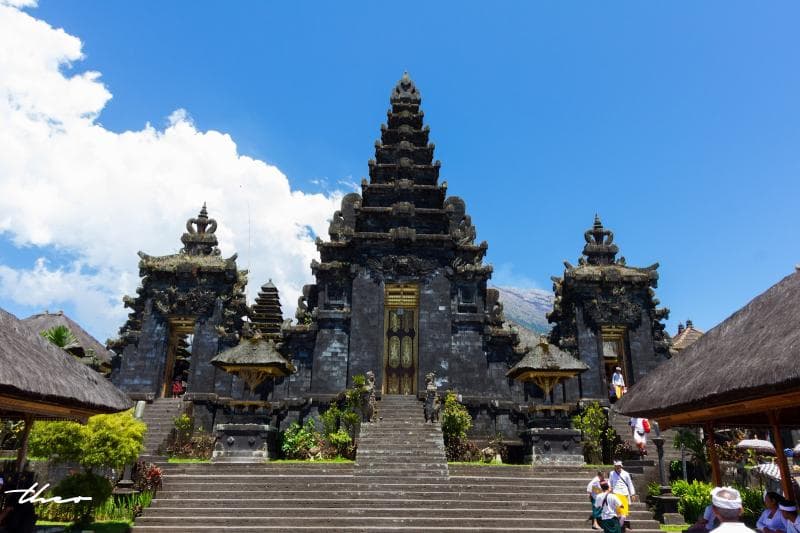
Explore the Main Staircase of Pura Penataran Agung at Besakih Temple, Bali, Indonesia. Discover its history, cultural significance, and spiritual ascent.
Overview
The Main Staircase of Pura Penataran Agung, nestled within the expansive Besakih Temple complex in Bali, Indonesia, serves as much more than a mere ascent; it is a profound journey toward the spiritual heart of Balinese Hinduism. This iconic staircase leads to the largest and most central structure of the Mother Temple, Pura Penataran Agung, which is dedicated to Shiva. Perched majestically on the southwestern slopes of Mount Agung, Bali's highest and most sacred volcano, the staircase initiates visitors into a series of terraced levels that symbolize a physical and spiritual climb towards the divine. The entire Besakih Temple complex, comprising 23 distinct but related temples, occupies a sacred position approximately 1,000 meters above sea level, offering breathtaking vistas and a palpable sense of spiritual energy.
Known as Bali's 'Mother Temple', Besakih is a vital pilgrimage site, uniquely welcoming devotees from all castes to worship side by side. The Main Staircase acts as a central artery, guiding both worshippers and curious travelers upwards through this ancient and hallowed ground, reflecting a deep-rooted cultural belief in spiritual elevation. It's a place where the earthly realm converges with the divine, inviting contemplation and respect from all who traverse its stone steps.
History & Cultural Background
The origins of Besakih Temple are steeped in antiquity, predating the arrival of Hinduism in Bali. Megalithic stepped pyramids, reminiscent of its current terraced layout, suggest that this volcanic slope was a sacred site over 2,000 years ago. The first recorded mention of the temple dates back to 1007 AD, and its foundational layout, oriented towards Mount Agung, was further established by the Indian sage Rsi Markandeya in 1284. By the 15th century, the powerful Gelgel dynasty recognized Besakih as their state temple, solidifying its importance as the spiritual epicenter of the island.
A pivotal moment in the temple's history, deeply ingrained in Balinese belief, occurred during the catastrophic eruption of Mount Agung in 1963. Despite the widespread devastation and loss of life in surrounding villages, the lava flows miraculously missed the main structures of Pura Penataran Agung by a mere 15 meters. This near-miss was interpreted by Balinese Hindus as a divine signal, a powerful demonstration of the gods' immense power while simultaneously protecting their revered earthly abode. This event profoundly reinforced the sacredness and resilience of the Mother Temple, turning its survival into a testament of divine intervention.
What Makes It Special
The Main Staircase of Pura Penataran Agung is not merely a path, but a meticulously designed architectural and spiritual feature. It consists of a massive stone staircase, with some accounts noting 52 individual steps, leading up to an iconic Candi Bentar, or split gateway. This 15-meter-tall gateway, constructed without mortar, perfectly frames the peak of Mount Agung on clear days, creating a breathtaking visual and symbolic alignment. The staircase's upward trajectory, combined with the temple's six terraced levels, is intentionally designed to evoke a continuous physical and spiritual ascent towards the divine, mirroring the climb to the sacred mountain.
The overall design of Besakih Temple, with its steep stone staircases and split gateways connecting 23 individual temples, creates a powerful sense of progression. The Pura Penataran Agung complex itself represents the seven layers of the Hindu universe, with each area featuring its own shrine. The architectural grandeur, especially the Main Staircase, effectively draws worshippers and visitors deeper into the complex, fostering a sense of connection to the spiritual heart of Bali.
Stories, Fun Facts & Local Details
For many, ascending the Main Staircase of Pura Penataran Agung evokes the profound sensation of 'climbing steps to heaven.' This emotional connection underscores the deep spiritual significance of the journey. During annual festivals, such as the Bhatara Turun Kabeh, thousands of worshippers undertake this climb, bearing towering fruit offerings (gebogan) on their heads, some reaching up to two meters high, a truly remarkable sight. These vibrant ceremonies highlight the living, breathing spiritual heritage of Besakih.
Another fascinating detail is the legend of Naga Besukian, a dragon deity believed to reside within Mount Agung's fiery heart. Local lore suggests that it was Naga Besukian that, during the 1963 eruption, stirred and spared the Mother Temple, interpreting the lava's redirection as a powerful warning rather than a ruin. This intertwining of myth, history, and natural phenomena adds layers of mystique to the temple complex and its commanding staircase.
Visitor Perspective
Approaching the Main Staircase, visitors are often struck by its sheer scale and the panoramic views of lush landscapes, rice fields, and the majestic Mount Agung in the background. While tourists are permitted to climb the staircase, access to the inner sanctums of the temple remains strictly reserved for Hindu worshippers, ensuring the sanctity of this active place of worship. Navigating the steep and sometimes uneven stone steps requires comfortable footwear, and a sarong and waist sash are mandatory for all visitors as a sign of respect, often included with the entrance fee.
A visit here is not just about sightseeing; it's an immersive cultural experience. Guides, often included in the ticket price, can share the temple's rich lore and history, offering insights that deepen one's understanding of Balinese Hinduism. The cooler air at this altitude, compared to Bali's coastal areas, adds to the serene atmosphere. The journey up the Main Staircase is a memorable and spiritual encounter, connecting travelers to centuries of Balinese devotion and the awe-inspiring power of nature.
Coordinates: 115.450936, -8.374368
View on Google Maps💬 How Travelers Describe This Place
Based on community votes
Beautiful
953Unique
658Photogenic
585Interesting
69Must See
22
Traveler Stories
Discover memorable experiences shared by travelers who have visited this place.
No traveler stories yet.
Be the first traveler to share what made this place memorable.

Tour
By
Spot
Discover amazing places around the world. Your journey starts here.
Explore
© 2026 TourBySpot. All rights reserved.