Main Shrine
Tokyo, Japan
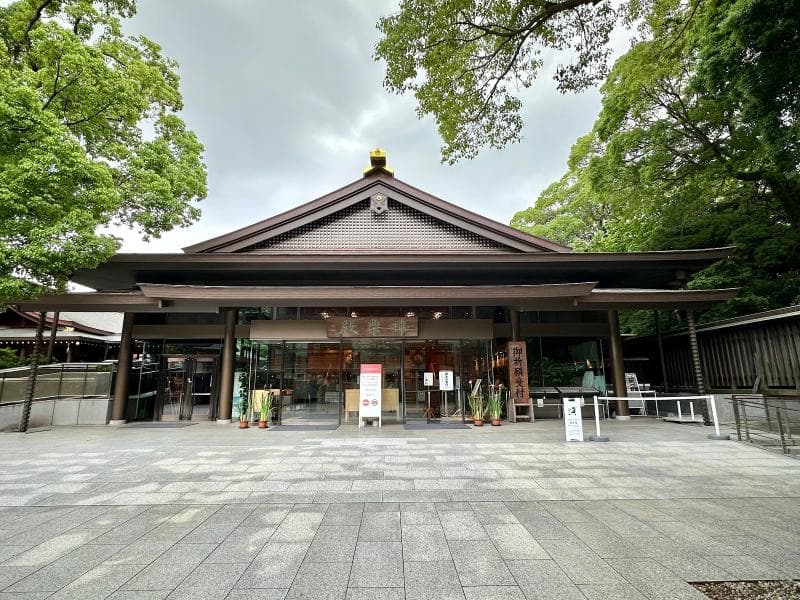
Explore the Main Shrine (Honden) at Meiji Jingu in Tokyo, Japan, a serene sanctuary dedicated to Emperor Meiji and Empress Shoken. Discover its history, architecture, and cultural significance.
Overview
Nestled within a sprawling, man-made forest in the heart of Tokyo, Japan, lies the sacred Meiji Shrine, or Meiji Jingu. At its spiritual core is the Main Shrine, known as the Honden, a serene sanctuary dedicated to the deified spirits of Emperor Meiji and his wife, Empress Shoken. This revered structure stands as a tranquil oasis, offering a profound escape from the bustling urban landscape surrounding it. Visitors stepping onto the gravel paths are immediately enveloped by the sounds of nature, a stark contrast to the city's vibrant energy, and are guided towards this central place of worship, where a deep sense of peace and historical significance permeates the air.
History & Cultural Background
The story of the Main Shrine at Meiji Jingu begins after the passing of Emperor Meiji in 1912 and Empress Shoken in 1914. To honor their pivotal roles in the Meiji Restoration, a period that transformed Japan from a feudal society into a modern, industrialized nation, a resolution was passed to commemorate them. Construction of the shrine complex began in 1915, culminating in its formal dedication on November 3, 1920, and completion in 1921. The original Main Shrine was a magnificent example of traditional Japanese architecture, primarily constructed from Japanese cypress. However, this revered structure, like much of Tokyo, was tragically destroyed during the air raids of World War II in 1945. Through a nationwide public fundraising effort, the Main Shrine was meticulously rebuilt, with the current iteration completed in October 1958, symbolizing Japan's resilience and enduring respect for its imperial past.
What Makes It Special
The Main Shrine (Honden) is distinct for its traditional nagare-zukuri architectural style, characterized by a gracefully flowing roof, with the front extended longer than the back. This design emphasizes simplicity and a harmonious integration with the natural environment. Crafted primarily from unpainted Japanese cypress wood, chosen for its durability and sacred significance, the building radiates a natural beauty. The roofs, in the reconstructed shrine, are clad with copper plates, replacing the original tree bark for improved fireproofing. What truly sets the Main Shrine apart is its location within the vast, man-made 'Eternal Forest' of Meiji Jingu. This forest, comprising 120,000 trees of 365 species donated from all corners of Japan, acts as a profound symbol of the nation's unity and reverence, creating an unparalleled serene environment where the Main Shrine stands as the spiritual focal point.
Stories, Fun Facts & Local Details
Beyond its grand architecture, the Main Shrine is steeped in meaningful cultural details. The chrysanthemum, the crest of the Imperial Family, can be observed subtly repeated throughout the shrine grounds, signifying its deep ties to royalty. Visitors will often encounter towering stacks of sake barrels and wine barrels, traditionally offered to the enshrined deities as symbols of abundance and good fortune. While not part of the Main Shrine itself, the adjacent Inner Garden houses Kiyomasa's Well, a historical 'power spot' visited by Emperor Meiji himself, believed to radiate positive spiritual energy. The Main Shrine also serves as a backdrop for traditional Shinto weddings, offering a glimpse into vibrant cultural ceremonies, especially on weekends. During the New Year, millions flock to the shrine for 'hatsumode,' the year's first prayers, making it one of Japan's most popular sites for this annual tradition.
Visitor Perspective
Approaching the Main Shrine, visitors first encounter massive wooden torii gates, signifying the transition from the mundane to the sacred. It is customary to bow once before passing through these gates and to walk along the sides of the gravel path, leaving the center open for the deities. Before reaching the Honden, a stop at the temizuya (purification fountain) is essential; here, visitors ritually cleanse their hands and mouth, signifying purification of mind and body. At the Main Shrine itself, visitors can partake in traditional Shinto practices, including making offerings, purchasing charms and amulets, or writing their wishes on small wooden tablets known as 'ema.' The prayer ritual involves offering a coin, bowing twice, clapping hands twice, silently making a wish, and bowing once more. The overall experience at the Main Shrine is one of profound tranquility and respectful immersion in Japanese spiritual tradition, a true sanctuary in the heart of a bustling metropolis.
Coordinates: 139.6928, 35.6723
View on Google Maps💬 How Travelers Describe This Place
Based on community votes
Photogenic
951Unique
748Beautiful
499Interesting
427Must See
94
Traveler Stories
Discover memorable experiences shared by travelers who have visited this place.
No traveler stories yet.
Be the first traveler to share what made this place memorable.

Tour
By
Spot
Discover amazing places around the world. Your journey starts here.
Explore
© 2026 TourBySpot. All rights reserved.