Main Sanctuary
Manila, Philippines
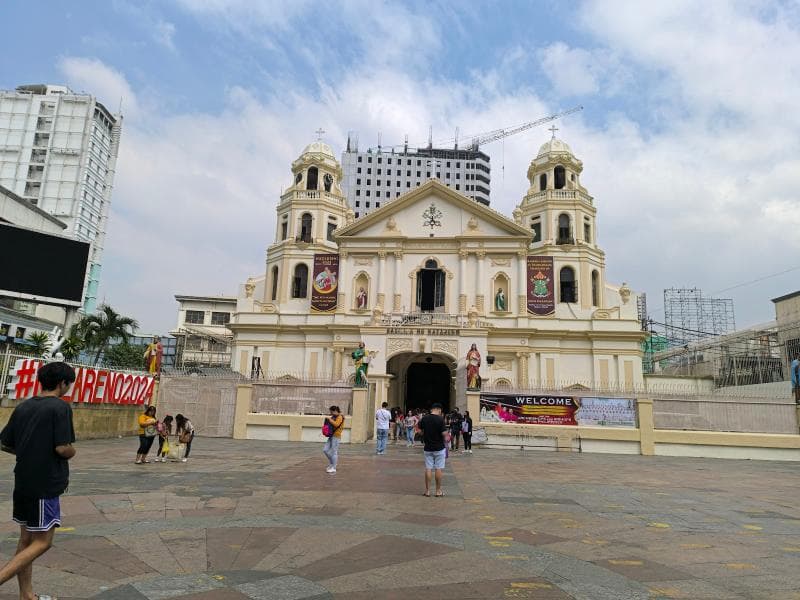
Explore the Main Sanctuary of Quiapo Church in Manila, Philippines, home to the revered Black Nazarene. Discover centuries of faith, history, and spiritual devotion at this iconic pilgrimage site.
Overview
At the very heart of Quiapo Church, officially known as the Minor Basilica and National Shrine of Jesus Nazareno in Manila, Philippines, lies its sacred Main Sanctuary. This inner sanctum is far more than just an architectural space; it is the spiritual core of one of the Philippines' most revered religious sites. It is here that millions of devotees from across the archipelago converge, drawn by an unwavering faith in the miraculous image of the Black Nazarene, which is permanently enshrined above the main altar. The Main Sanctuary serves as the focal point for daily masses, fervent novenas, and profound personal prayers, pulsating with a unique energy that blends centuries of history with the deep-seated spirituality of the Filipino people.
History & Cultural Background
The story of the Quiapo Church and its Main Sanctuary is one of remarkable resilience and enduring faith. The first church on this site was constructed in 1588 by Franciscan missionaries, built humbly from bamboo and nipa. Over the centuries, this house of worship faced numerous trials, including devastating fires in 1603, 1791, and 1929, as well as powerful earthquakes in 1645 and 1863. Each time, the church, and remarkably, the sacred image it houses, emerged from the ashes, leading to successive reconstructions that shaped its current form.
The current stone basilica reflects these layers of rebuilding, with elements dating from different eras of Manila's past. A significant reconstruction in 1933, led by National Artist Architect Juan Nakpil, established much of the church's modern appearance. Later, in the 1980s, the church underwent an expansion designed by Architect Jose Maria Zaragoza to accommodate its ever-growing congregation, carefully preserving the 1933 facade and the integrity of the Main Sanctuary. In 1987, Pope John Paul II declared it a Minor Basilica, and more recently, it has been recognized as a National Shrine, cementing its national and international religious significance.
What Makes It Special
The undisputed centerpiece of the Main Sanctuary is the Black Nazarene, a life-sized, dark-skinned wooden statue of Jesus Christ carrying the cross. Brought from Mexico to the Philippines by Augustinian Recollects in 1606, the image was eventually transferred to Quiapo Church in 1787. The original head of this revered image is now permanently enshrined on the basilica's main altar for preservation, while a replica body is used for the grand processions.
What truly makes the Main Sanctuary special is the palpable sense of devotion it inspires. The Black Nazarene is believed by millions to possess miraculous healing powers and to grant petitions, making the sanctuary a constant beacon of hope and spiritual solace. The architectural design of the sanctuary, though having undergone many changes, still provides a powerful backdrop for this intense faith, with its high ceilings and solemn atmosphere directing focus towards the venerated image.
Stories, Fun Facts & Local Details
The legendary dark complexion of the Black Nazarene has several captivating theories. Some believe it was intentionally carved to reflect the skin color of native Mexicans, while a more popular local legend suggests it gained its dark hue after surviving a fire aboard the galleon that transported it from Mexico. Miraculously, the image has also survived numerous church fires, earthquakes, and even the ravages of World War II, further strengthening the belief in its divine protection.
Every year on January 9th, the Main Sanctuary becomes the starting and ending point for the Traslación, a grand procession celebrating the Feast of the Black Nazarene. Millions of barefoot devotees participate in this incredibly fervent display of faith, hoping to touch the image or its ropes, believing that such contact can bring healing or blessings. Fridays are particularly significant in the sanctuary, as thousands gather for the weekly novena, a series of prayers and devotions, often spilling out into Plaza Miranda, the square in front of the church.
Visitor Perspective
Visiting the Main Sanctuary offers a profound glimpse into Filipino Catholic devotion. Inside, one can observe a deeply spiritual and communal atmosphere, with worshipers often kneeling, praying, and lighting candles in quiet petition. The scent of incense, the soft glow of candlelight, and the murmur of prayers create an immersive experience. While the Main Sanctuary maintains an intimate vibe, it can become incredibly crowded, especially during Friday novenas and, of course, the Feast of the Black Nazarene, which attracts millions.
For visitors, it's advisable to dress modestly, covering shoulders and knees, especially when entering active worship spaces, out of respect for the sacred environment. While photography is generally allowed in the church, flash photography is typically forbidden inside the sanctuary. Stepping into the Main Sanctuary is not just about witnessing a historical artifact; it's about experiencing a living tradition, a powerful testament to faith that has shaped the cultural identity of Manila and the Philippines for centuries.
Coordinates: 120.9837, 14.5988
View on Google Maps💬 How Travelers Describe This Place
Based on community votes
Interesting
879Photogenic
741Beautiful
482Unique
396Must See
274
Traveler Stories
Discover memorable experiences shared by travelers who have visited this place.
No traveler stories yet.
Be the first traveler to share what made this place memorable.

Tour
By
Spot
Discover amazing places around the world. Your journey starts here.
Explore
© 2026 TourBySpot. All rights reserved.