Main Prayer Hall
Vientiane, Laos
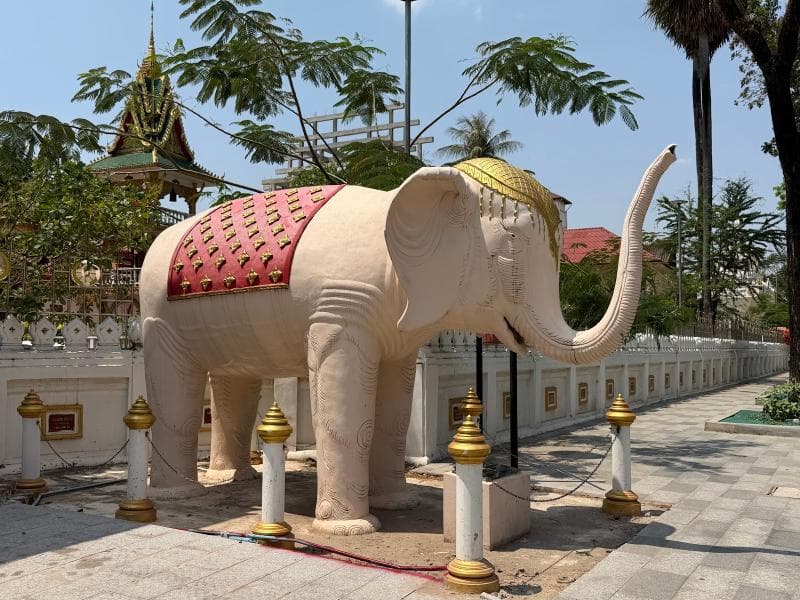
Explore the serene Main Prayer Hall of Wat Ong Teu Mahawihan in Vientiane, Laos, home to the colossal Phra Ong Teu Buddha statue and a hub for Buddhist learning.
Overview
Stepping into the Main Prayer Hall, or 'Sim,' of Wat Ong Teu Mahawihan in Vientiane, Laos, immediately transports visitors to a realm of profound spirituality and rich cultural heritage. This revered space, central to the temple complex, is famous for housing the magnificent Phra Ong Teu Buddha statue, a name that literally translates to 'Temple of the Heavy Buddha' due to its colossal bronze resident. As one of Vientiane's most significant and respected Buddhist temples, the Main Prayer Hall serves not only as a primary site for worship and meditation but also as a vibrant center for Buddhist education, drawing monks and devotees from across the nation and beyond. Its tranquil atmosphere, coupled with breathtaking traditional Lao architecture, offers a deep insight into the enduring faith and artistic mastery of Laos.
History & Cultural Background
Wat Ong Teu Mahawihan boasts a storied past, originally founded in the 16th century by King Setthathirath I, a pivotal figure who moved the capital of Laos to Vientiane. This period is often celebrated as the golden age of Buddhism in Laos. The temple was built to enshrine the very first of the Phra Ong Teu Buddha images, with King Setthathirath I intending it as his living quarters and a sacred dwelling for the statue. However, like many historic structures in the region, the temple faced destruction during the Siamese invasion of 1828. It underwent significant rebuilding and restoration efforts in the 19th and 20th centuries, ensuring its survival and continued importance. Beyond its role as a place of worship, Wat Ong Teu evolved into a prominent Buddhist learning center during the 17th century under King Souligna Vongsa. It continues this tradition today, serving as a vital institution for training monks and studying the Dhamma, with the Lao Buddhist Institute having been established here in 1929.
What Makes It Special
The undisputed centerpiece and the very heart of the Main Prayer Hall is the colossal bronze Phra Ong Teu Buddha statue. Standing majestically at over 6 meters (or 5.8 meters) tall, this revered image is renowned as the largest Buddha in Vientiane. It depicts the Buddha in the bhumisparsha mudra, or 'earth-touching gesture,' symbolizing the moment of his enlightenment and his steadfastness against earthly temptations. The craftsmanship is exquisite, featuring intricate details on its flowing robes, elaborate headdress, and serene facial features. The 'sim' itself showcases a captivating blend of traditional Lao and Thai architectural styles, characterized by a multi-tiered roof adorned with intricate wooden carvings and gilded ornaments. The facade is embellished with colorful murals depicting scenes from Buddhist mythology and the life of the Buddha, creating an immersive spiritual environment. The use of traditional Lao elements, such as steeply pitched roofs, carved wooden eaves, and decorative naga serpent guardians, highlights the temple's rich artistic heritage.
Stories, Fun Facts & Local Details
The name 'Ong Teu,' meaning 'heavy Buddha,' refers directly to the immense weight of the bronze statue it houses, which was traditionally measured in an ancient Lao unit called 'teu.' While the Main Prayer Hall itself might not be filled with a myriad of intricate individual stories beyond its central figure, the temple complex as a whole is an active hub for the Lao Buddhist community. It's a place where the daily rhythms of Buddhist life are palpable. For instance, the Deputy Patriarch of the Lao monastic order resides within this monastery, overseeing the Buddhist Institute. The atmosphere inside the hall is consistently peaceful and awe-inspiring, inviting contemplation. Visitors often light incense and offer flowers as a sign of devotion, observing monks and local worshippers engaged in prayer and meditation. The temple's carved wooden doors, for example, represent scenes from the Thao Khatanam legend, a local hero's fight against a great serpent, adding layers of local folklore to its religious significance.
Visitor Perspective
For any curious traveler, a visit to the Main Prayer Hall of Wat Ong Teu Mahawihan offers a unique opportunity to immerse oneself in the living traditions of Lao Buddhism. The hall is open for daily prayers, and one might witness morning rituals led by monks, often attended by local worshippers bringing offerings. The sheer scale and serene presence of the Phra Ong Teu Buddha statue are truly captivating, inspiring a sense of calm and reverence. The intricate murals and gold-leaf designs adorning the interior are a feast for the eyes, illustrating Buddhist teachings and historical narratives. To fully appreciate the spiritual ambiance, visitors are encouraged to spend a few quiet moments sitting at the base of the massive Buddha. It's important to remember and respect the dress code: shoulders and knees must be covered as a sign of respect when entering the sacred space. Located conveniently in the historic center of Vientiane, near the Mekong Riverside, the temple provides a tranquil respite from the city's hustle and bustle, making it an easily accessible and profoundly enriching experience.
Coordinates: 102.6038, 17.9656
View on Google Maps💬 How Travelers Describe This Place
Based on community votes
Must See
913Photogenic
748Interesting
499Beautiful
337Unique
94
Traveler Stories
Discover memorable experiences shared by travelers who have visited this place.
No traveler stories yet.
Be the first traveler to share what made this place memorable.

Tour
By
Spot
Discover amazing places around the world. Your journey starts here.
Explore
© 2026 TourBySpot. All rights reserved.