Main Prayer Hall
Dushanbe, Tajikistan
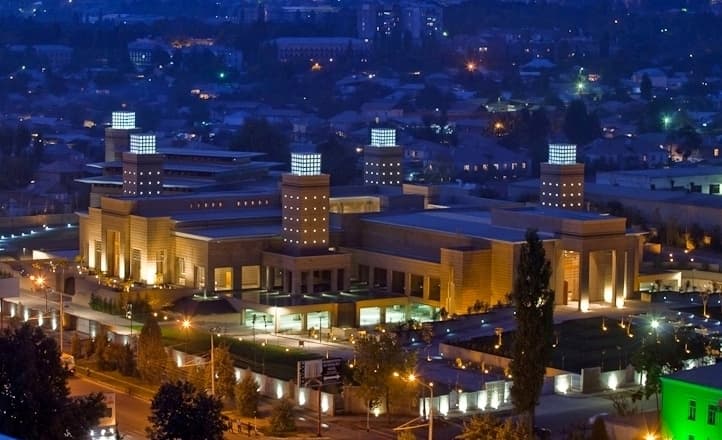
Discover the tranquil Main Prayer Hall of the Ismaili Centre Dushanbe, Tajikistan. Explore its stunning Samanid-inspired architecture, intricate tile work, and rich cultural heritage.
Overview
Nestled in the heart of Dushanbe, Tajikistan, the Main Prayer Hall of the Ismaili Centre stands as a beacon of spiritual contemplation and cultural richness. As part of the broader Ismaili Centre Dushanbe, it represents a significant landmark for the Ismaili Muslim community, particularly as the first purpose-built Ismaili Centre in Central Asia. Opened in 2009, this serene space offers visitors a unique opportunity to witness a blend of historical architectural traditions and contemporary design, all while fostering a sense of peace and understanding.
The Ismaili Centre itself serves as a vital hub for community gatherings, social interaction, educational programs, and cultural exchange, reflecting the Ismaili Imamat's commitment to intellectual advancement and pluralism. Within this multifaceted complex, the Main Prayer Hall provides a dedicated environment for spiritual reflection and prayer, designed to inspire and uplift those who enter its sacred confines.
History & Cultural Background
The Ismaili Centre, Dushanbe, and by extension its Main Prayer Hall, emerged from a rich history spanning over a thousand years of Ismaili presence in Central Asia, particularly in regions like Badakhshan. The foundation stone for the Centre was laid in August 2003, and it was officially inaugurated on October 12, 2009, by His Highness the Aga Khan IV, the spiritual leader of the Ismaili Muslims, and Tajikistan's President Emomali Rahmon.
The architectural vision for the Centre, conceived by Canadian architect Farouk Noormohamed, sought to repatriate and celebrate the architectural heritage of Tajikistan and Central Asia, which had often been historically overlooked. Its design draws profound inspiration from the 10th-century Samanid dynasty, considered Tajikistan's national heritage, evoking the distinctive brickwork of the Samanid Mausoleum. This deliberate connection to historical regional styles is also evident in its homage to the grand courtyards of legendary cities like Samarkand, Bukhara, and Khiva, thereby bridging ancient traditions with modern aspirations.
What Makes It Special
The Main Prayer Hall distinguishes itself through its meticulous design and the profound symbolism embedded within its aesthetic. The interior walls are a testament to exquisite craftsmanship, adorned with vibrant blue ceramic tiles featuring traditional handmade Uzbek patterns that catch the eye and soothe the spirit.
A striking feature is the intricate calligraphy woven into the architecture, with patterns meticulously inlaid in brick, echoing the names of 'Allah', 'Muhammad', 'Ali', 'Hasan', 'Hussain', and 'Zahra'. The interplay of light, often cast dramatically across these calligraphic elements, enhances the spiritual atmosphere of the hall. The flooring, too, is a work of art, fashioned from patterned granite mosaics or rich parquet crafted from beech, wenge, and cherry wood, contributing to the hall's overall warmth and elegance. This serene space is not merely functional; it is a carefully curated environment that encourages introspection and fosters a deep sense of peace.
Stories, Fun Facts & Local Details
One fascinating aspect of the Centre's design, which influences spaces like the Prayer Hall, is the incorporation of elements like the traditional Pamiri chorkhona. This skylight design, characterized by layered concentric squares, recalls ancient philosophical symbols for earth, water, air, and fire, deeply integrated into Central Asian cultural traditions. The extensive use of sandstone baked brick, combined with blue and turquoise glazed tiles, was not just an aesthetic choice; it was a conscious effort to revive and integrate local craft traditions and indigenous materials, sourced even from places like Samarkand.
The Ismaili Centre itself, housing the Main Prayer Hall, is sometimes referred to as a 'jamatkhana,' a term signifying a place of assembly or prayer for Ismaili Muslims. The Centre's commitment to sustainability is also notable, featuring innovative systems like an elastic wood roof diaphragm for earthquake resistance and water-source heating and cooling, a forward-thinking approach at the time of its construction.
Visitor Perspective
For the curious traveler, a visit to the Main Prayer Hall within the Ismaili Centre Dushanbe offers a profoundly enriching experience. The atmosphere inside is consistently described as peaceful and serene, inviting quiet contemplation regardless of one's personal beliefs.
Visitors are generally welcomed to observe the prayer services and learn more about the Ismaili faith and its cultural expressions. To ensure a respectful experience for all, visitors should dress modestly, covering shoulders and knees, and remove their shoes before entering the prayer areas. The Centre often hosts cultural events, exhibitions, and lectures, and on weekends, specifically from 9:00 AM to 12:00 PM, free guided tours are available, providing deeper insights into the architecture, function, and significance of the entire complex, including the Main Prayer Hall. This provides an excellent opportunity to appreciate the detailed craftsmanship and the spiritual tranquility of this remarkable space.
Coordinates: 68.7634, 38.58521
View on Google Maps💬 How Travelers Describe This Place
Based on community votes
Beautiful
996Interesting
673Must See
585Unique
143Photogenic
80
Traveler Stories
Discover memorable experiences shared by travelers who have visited this place.
No traveler stories yet.
Be the first traveler to share what made this place memorable.

Tour
By
Spot
Discover amazing places around the world. Your journey starts here.
Explore
© 2026 TourBySpot. All rights reserved.