Main Prayer Hall
Pristina, Kosovo
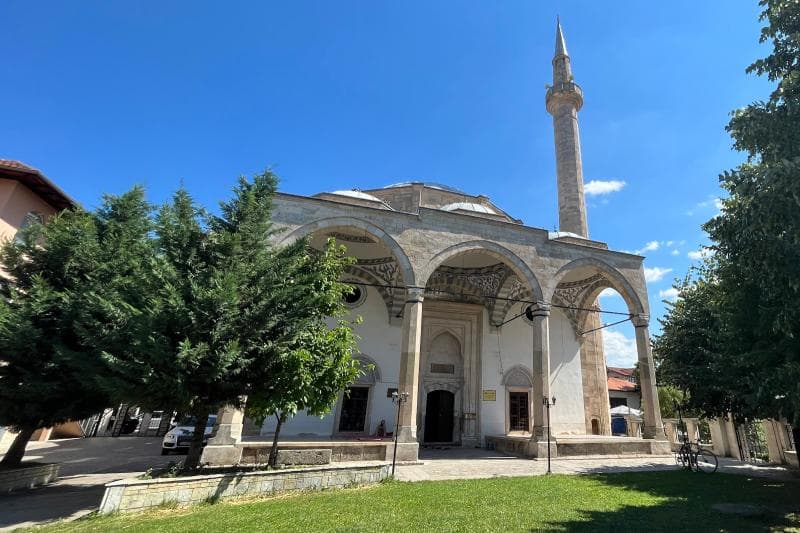
Explore the Main Prayer Hall of the Imperial Mosque in Pristina, Kosovo. Discover its 15th-century Ottoman architecture, rich history, and cultural significance.
Overview
The Main Prayer Hall, nestled within Pristina's revered Imperial Mosque, stands as a profound testament to Kosovo's rich Ottoman heritage and enduring faith. Often referred to as the Sultan Mehmet Fatih Mosque, King's Mosque, or simply the Great Mosque, this architectural marvel is one of the oldest and most significant Islamic monuments in Pristina, the capital city of Kosovo. Constructed in 1461 under the direct orders of Sultan Mehmed II, known as 'the Conqueror,' the mosque has been a focal point of spiritual and community life for centuries. Its prominent location in the old quarter of Pristina, surrounded by other historical landmarks like the Great Hammam and the Clock Tower, makes it an indispensable starting point for understanding the city's layered past.
History & Cultural Background
The Imperial Mosque's foundation in 1461 marked a pivotal moment in Pristina's history, symbolizing the establishment of Ottoman rule in the region. An Arabic inscription above the entrance portal precisely records its construction date. Over its long history, the mosque has witnessed various transformations and challenges. During the Austro-Turkish wars in the late 17th century, it was temporarily converted into a Catholic church. Notably, the prominent Albanian writer Pjetër Bogdani, an active leader of pro-Austrian rebels, was interred here during this period. However, after the Ottoman re-capture in 1690, his remains were exhumed and cast into the streets by Ottoman soldiers. The mosque has undergone several significant restorations, including one in 1682-1683 during the reign of Sultan Mehmed IV and another following an earthquake in 1955, underscoring its resilience. Recognized for its immense cultural value, it was declared a Monument of Culture of Exceptional Importance in 1990.
What Makes It Special
The Main Prayer Hall is the heart of the Imperial Mosque, captivating visitors with its grandeur and intricate details. Architecturally, it is a prime example of early Ottoman design in the Balkans. The hall features a magnificent central dome, which is one of the largest domes found in 15th-century buildings across Eastern Europe, spanning approximately 13.5 to 15 meters in diameter. The mosque was constructed using carved yellow sandstones, while the interior walls are lined with bricks joined and plastered with lime mortar. Inside, the atmosphere is enriched by decorative paintings, including beautiful plant motifs applied using the 'al Seko' technique. The wooden pew, adorned with geometric ornaments, and the marble mihrab and minbar, further highlight the artistic craftsmanship of the era. With its 37 windows, the hall is bathed in natural light, enhancing the beauty of its subtle decorative elements. Its unique structure and decorative richness position it among the most important buildings of Islamic architecture in Eastern Europe.
Stories, Fun Facts & Local Details
A fascinating legend associated with the mosque speaks to Sultan Mehmed II's meticulous nature: it is said he required the builders to perform ritual ablutions in the nearby Great Hammam twice a day to ensure the construction proceeded with utmost cleanliness and divine blessing. This story underscores the deep spiritual significance embedded in the mosque's creation. Known by various names—Imperial Mosque, King's Mosque, or Fatih Mosque—each appellation reflects a facet of its history and local identity. Its enduring presence in the urban fabric means that centuries of city planning changes have occurred around it, yet the mosque has remarkably preserved its original appearance and the irregular network of surrounding streets, offering a glimpse into authentic historical Kosovo.
Visitor Perspective
The Main Prayer Hall of the Imperial Mosque remains an active and welcoming spiritual center, open to visitors of all faiths. Non-Muslims are generally permitted to enter outside of prayer times, typically between 6:00 AM and 8:00 PM, though schedules can vary seasonally. Visitors are encouraged to dress modestly, covering heads, arms, and legs, with scarves often available if needed. A visit offers a unique opportunity to connect with living history, to admire the architectural elegance, and to experience the profound tranquility that contrasts with the bustling city outside. Exploring the prayer hall allows for appreciation of traditional ornaments and the impressive dome from within, making it a truly enriching cultural experience. Admission is free, making this historical and spiritual landmark accessible to all curious travelers.
Coordinates: 21.1670097, 42.6669856
View on Google Maps💬 How Travelers Describe This Place
Based on community votes
Interesting
965Must See
862Photogenic
629Beautiful
443Unique
184
Traveler Stories
Discover memorable experiences shared by travelers who have visited this place.
No traveler stories yet.
Be the first traveler to share what made this place memorable.

Tour
By
Spot
Discover amazing places around the world. Your journey starts here.
Explore
© 2026 TourBySpot. All rights reserved.