Main Ordination Hall
Chiang Mai, Thailand
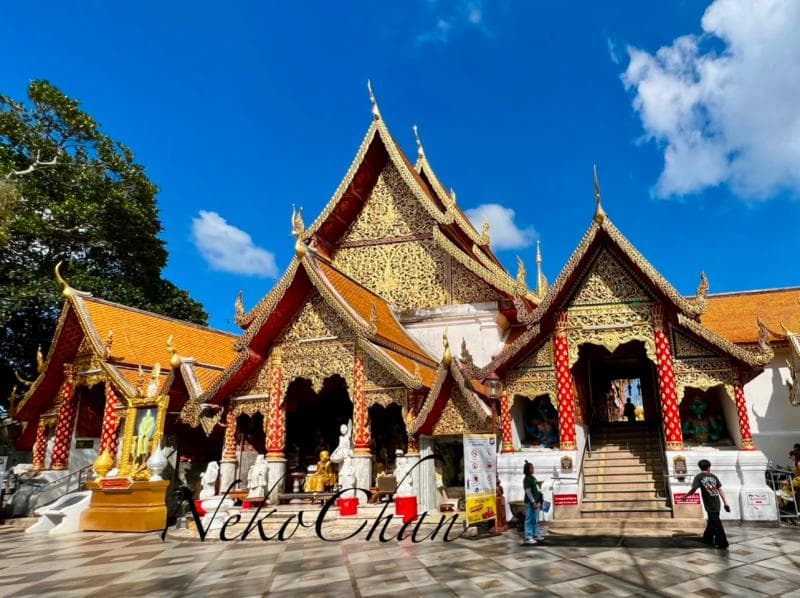
Explore the Main Ordination Hall (Ubosot) at Wat Phra That Doi Suthep in Chiang Mai, Thailand. Discover its history, cultural significance, and spiritual role.
Overview
Nestled high above the city of Chiang Mai, Thailand, within the revered Wat Phra That Doi Suthep temple complex, lies the Main Ordination Hall, known in Thai as the Ubosot. While the temple's golden chedi often captures immediate attention, the Ubosot holds profound spiritual significance as the sacred space where Buddhist monks are ordained and essential monastic rituals are performed. This hall is an integral part of the larger temple, which is perched at an elevation of over 1,000 meters (3,500 feet) on Doi Suthep mountain, offering breathtaking panoramic views of the surrounding landscape and city below.
The Main Ordination Hall, like other structures within Wat Phra That Doi Suthep, showcases the intricate beauty of Northern Thai architecture, featuring detailed ornamentation and a serene atmosphere that invites contemplation. It serves as a spiritual heart for the monastic community, embodying centuries of Buddhist tradition and practice. Visitors exploring the temple grounds will encounter various shrines, statues, and the resonant sounds of temple bells, all contributing to the temple's deeply spiritual ambiance.
History & Cultural Background
The history of Wat Phra That Doi Suthep itself dates back to the late 14th century, specifically founded in 1383 during the reign of King Keu Naone of the Lanna Kingdom. Its establishment is rooted in a fascinating legend involving a sacred Buddha relic. According to tradition, a monk from Sukhothai possessed a bone fragment believed to be from the Buddha's shoulder. This relic was said to possess magical properties. Upon reaching Chiang Mai, the relic reportedly split into two pieces. One piece was enshrined at Wat Suan Dok, while the other was placed on the back of a white elephant. The elephant was then released and ascended Doi Suthep mountain, stopping at a particular spot, trumpeting three times, and then passing away. This event was interpreted as a divine omen, prompting King Keu Naone to order the construction of a temple at that precise location to house the relic.
Over the centuries, the temple complex expanded beyond its initial stupa to include various other important buildings, such as wiharns (sermon halls) and the ubosot (ordination hall). The Main Ordination Hall, therefore, grew alongside the temple, becoming a central point for the monastic community's spiritual life and official ceremonies. Its architectural style reflects the prevailing Lanna and Sukhothai influences of the period, contributing to the temple's rich historical and cultural tapestry.
What Makes It Special
The Main Ordination Hall's specialness lies primarily in its sacred function. As an Ubosot, it is the most significant building in a Buddhist monastery, specifically consecrated for the performance of the Buddhist ordination ritual (upasampadā) and other vital ecclesiastical acts for monks. This makes it a place of immense spiritual power and sanctity, where new monks are brought into the Sangha and significant communal services take place.
While many temple structures house Buddha images, the Ubosot is distinguished by its role as the formal assembly hall for the monastic community. In the Thai tradition, the boundary of an Ubosot is marked by eight boundary stones, known as 'bai sema,' which delineate the sacred space. A ninth, often larger, stone sphere is typically buried beneath the main Buddha image within the hall. Though not always open to casual visitors, its presence reinforces the spiritual heart of Wat Phra That Doi Suthep, anchoring the temple's living traditions and continuous devotion.
Stories, Fun Facts & Local Details
The Main Ordination Hall, or Ubosot, at Wat Phra That Doi Suthep, plays a silent yet central role in the ongoing narrative of the temple. Its existence is a testament to the enduring Buddhist practices that have shaped Thai culture for centuries. Local pilgrims and devout Buddhists visit the temple not just for its stunning views or golden chedi, but for the profound spiritual energy emanating from places like the Ubosot, where the lineage of Buddhist practice is continued. Though typically closed to the general public to maintain its sanctity and allow for monastic ceremonies, its serene facade contributes to the overall peaceful atmosphere.
Within the broader temple complex, visitors can also find other structures such as wiharns, which are sermon halls used for religious ceremonies involving both monks and lay devotees, and a museum housing ancient relics. The architectural details, from the tiered roofs of the halls to the intricate murals depicting the Jataka tales (stories of the Buddha's previous lives), offer a rich visual commentary on Buddhist philosophy and Thai artistry.
Visitor Perspective
For most visitors to Wat Phra That Doi Suthep, the journey to the mountaintop temple is an experience in itself, often involving a climb up the iconic 306-step Naga staircase or a ride on the funicular railway. Once within the temple grounds, appropriate dress (covered shoulders and knees) and removing footwear before entering sacred spaces are customary signs of respect. While the magnificent golden chedi and the panoramic viewpoints are often the highlights, understanding the role of structures like the Main Ordination Hall enriches the visit immensely.
Although the Main Ordination Hall (Ubosot) at Wat Phra That Doi Suthep is generally not accessible to visitors, its presence signifies the active spiritual life of the monastery. Knowing that within its walls, monks carry out the ancient rites of ordination and other monastic duties adds a layer of depth to the temple experience. Visitors can still appreciate its exterior architecture and reflect on its profound purpose, recognizing it as a cornerstone of the temple's religious identity and a living link to centuries of Buddhist tradition in Northern Thailand.
Coordinates: 98.9216, 18.805
View on Google Maps💬 How Travelers Describe This Place
Based on community votes
Photogenic
753Must See
747Beautiful
302Interesting
172Unique
79
Traveler Stories
Discover memorable experiences shared by travelers who have visited this place.
No traveler stories yet.
Be the first traveler to share what made this place memorable.

Tour
By
Spot
Discover amazing places around the world. Your journey starts here.
Explore
© 2026 TourBySpot. All rights reserved.