Main Honden
Osaka, Japan
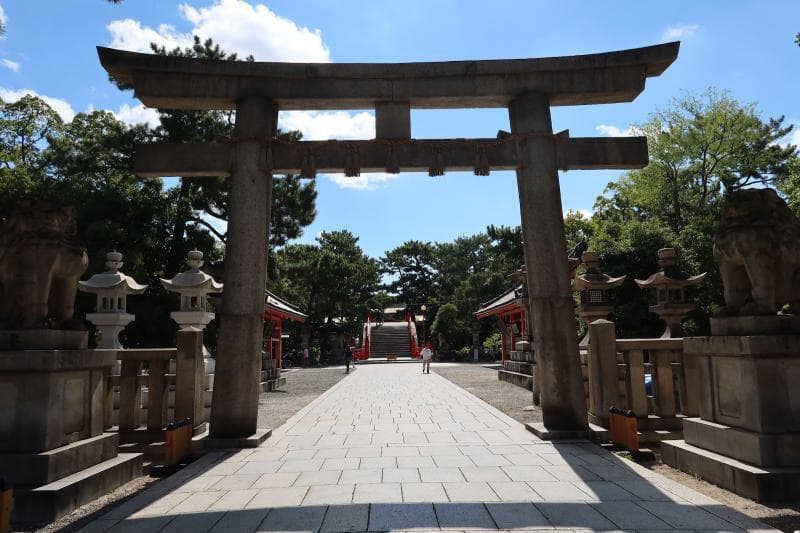
Explore the Main Honden (main halls) of Sumiyoshi Taisha in Osaka, Japan. Discover its unique Sumiyoshi-zukuri architecture, ancient history, and cultural significance.
Overview
Deep within the ancient Sumiyoshi Taisha in Osaka, Japan, lie the sacred Main Honden, or main halls, which stand as National Treasures and represent the spiritual heart of this historic shrine. Sumiyoshi Taisha itself is one of Japan's oldest and most significant Shinto shrines, traditionally believed to have been founded in 211 AD by the legendary Empress Jingū. It serves as the head shrine for over 2,300 Sumiyoshi shrines found across the nation. The Main Honden are dedicated to the Sumiyoshi Sanjin—three powerful sea deities—and Empress Jingū, whose spirit was enshrined alongside them. These four halls, dating from 1810, showcase the unique Sumiyoshi-zukuri architectural style, which predates Buddhist influences on Japanese design. Unusually, the first three main halls are aligned in a straight line, facing west towards what was once Osaka Bay, with the fourth hall positioned parallel to the third, an arrangement often likened to a fleet of ships setting sail.
History & Cultural Background
The architectural style of the Main Honden, known as Sumiyoshi-zukuri, is a truly rare and significant glimpse into Japan's indigenous building traditions. It is one of only three styles considered purely Japanese, having developed before the arrival of Buddhism introduced more elaborate designs. The defining characteristics of Sumiyoshi-zukuri are its simplicity and elegance: straight, elevated roofs, often thatched with *kaya* grass, feature distinctive *chigi* (forked roof finials) and *katsuogi* (short horizontal billets) along the ridge. The main halls are painted in a striking vermilion for their pillars and white for their walls, a combination that proved influential in later, more vibrant styles. Each honden's entrance is located under its gable end, a style known as *tsumairi-zukuri*, and the interior is thoughtfully divided into an outer room for worship and an inner sanctuary housing the deity. Historically, like the revered Ise Grand Shrine, the Main Honden at Sumiyoshi Taisha were periodically rebuilt to preserve their original design, though this practice ceased in the early 19th century, making the current 1810 structures particularly valuable.
What Makes It Special
The Main Honden at Sumiyoshi Taisha offer a unique architectural experience unlike almost any other shrine in Japan. The Sumiyoshi-zukuri style, with its uncurved rooflines and simple yet striking red and white palette, stands in stark contrast to many later, more ornate shrines influenced by continental designs. It represents an authentic expression of early Shinto aesthetics. What truly sets these main halls apart is their arrangement: the three shrines dedicated to the sea gods are aligned linearly, followed by the fourth for Empress Jingū, all facing west. This orientation, unusual for Japanese shrines which typically face south or east, powerfully signifies the shrine's enduring connection to the sea and its role in protecting maritime voyages. This distinctive layout, said to evoke a fleet of ships, offers a compelling visual narrative that speaks volumes about the shrine's origins and purpose. These four Main Honden are not just buildings; they are designated National Treasures, recognized for their profound historical and architectural significance.
Stories, Fun Facts & Local Details
The lore surrounding the Main Honden is as rich and captivating as their architecture. Tradition holds that Empress Jingū herself, after receiving divine guidance, ordered the construction of Sumiyoshi Taisha in 211 AD to honor the Sumiyoshi Sanjin, the deities who ensured her safe return from a naval expedition. These sea gods are also associated with the three bright stars of Orion's Belt, which served as crucial navigational aids for ancient Japanese sailors. For centuries, the shrine played a vital role in imperial diplomacy; envoys to Tang-dynasty China during the Nara period would frequently visit to pray for safe passage before embarking on their perilous sea journeys. Even today, the Tsumori clan, direct descendants of Tamomi no Sukune—who was instructed by Empress Jingū to enshrine the deities—continue to serve as the head priests of Sumiyoshi Taisha, maintaining a direct link to its ancient past. Though now landlocked due to coastal development, the Main Honden's westward gaze remains a poignant reminder of its original seaside location and its spiritual tether to the ocean. Locals affectionately refer to the shrine as 'Sumiyossan,' highlighting its cherished place in the community, and its renown extends to classic literature, featuring in 'The Tale of Genji' and novels by Nobel laureate Kawabata Yasunari.
Visitor Perspective
Visiting the Main Honden of Sumiyoshi Taisha offers a profoundly enriching experience for any curious traveler. Stepping into the shrine grounds, one immediately feels a sense of tranquility, a welcome respite from the bustling energy of Osaka city center. The architectural purity of the Main Honden, with their straight lines and vibrant colors, provides a tangible connection to Japan's ancient past, allowing visitors to appreciate a style of Shinto architecture that predates external influences. The shrine is open early in the morning and remains accessible throughout the day, offering free entry to explore its significant structures. While millions flock to Sumiyoshi Taisha for the Hatsumode (New Year's first visit) each January, creating a uniquely vibrant atmosphere, a visit during other times of the year allows for a more serene and contemplative appreciation of the Main Honden and their surroundings. The iconic Sorihashi Bridge, with its dramatic arch, often serves as a beautiful prelude to the main shrine area, enhancing the overall journey towards these sacred halls. It's an opportunity to engage with living history and a spiritual tradition deeply embedded in Japanese culture.
Coordinates: 135.4929417, 34.6127972
View on Google Maps💬 How Travelers Describe This Place
Based on community votes
Interesting
804Photogenic
733Unique
563Must See
100Beautiful
63
Traveler Stories
Discover memorable experiences shared by travelers who have visited this place.
No traveler stories yet.
Be the first traveler to share what made this place memorable.

Tour
By
Spot
Discover amazing places around the world. Your journey starts here.
Explore
© 2026 TourBySpot. All rights reserved.