Main Golden Stupa
Vientiane, Laos
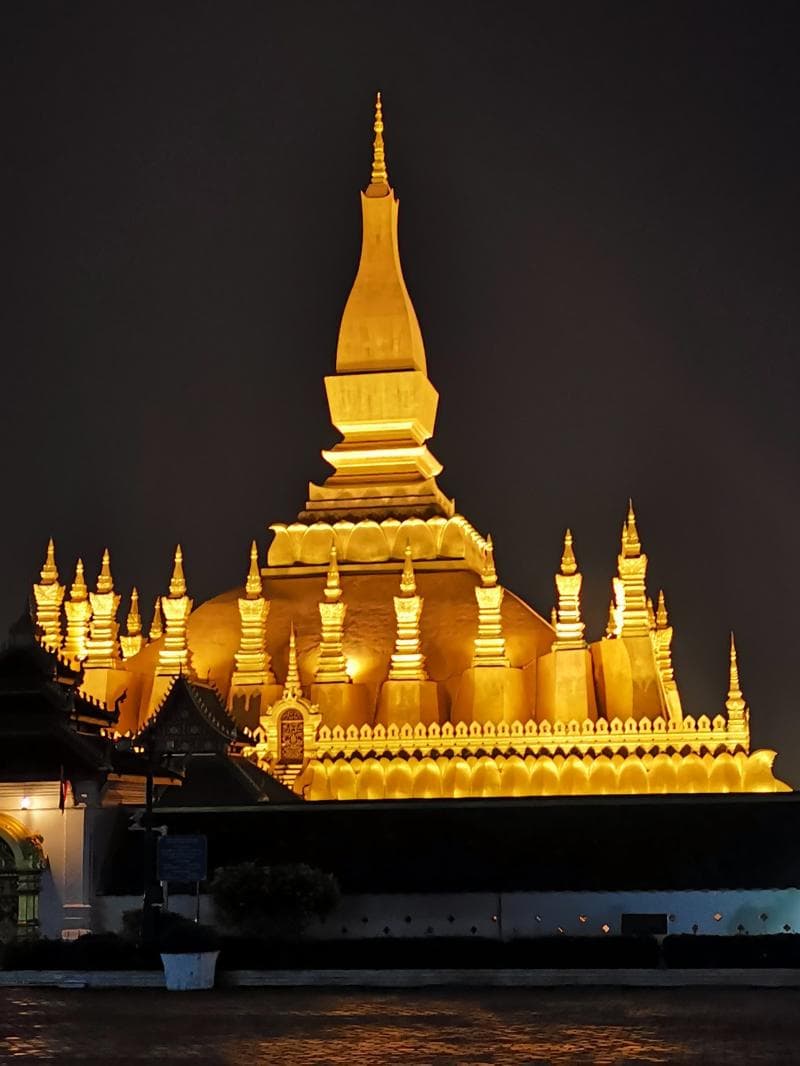
Discover the Main Golden Stupa of Pha That Luang in Vientiane, Laos – a gold-covered national symbol steeped in Buddhist history and culture.
Overview
The Main Golden Stupa, locally known as Pha That Luang, stands as an unparalleled emblem of Laos' rich cultural and spiritual heritage, nestled within the vibrant capital city of Vientiane. More than just a monument, this majestic, gold-covered stupa is revered as the most important national symbol and sacred Buddhist site in the country. Its radiant presence, often depicted on the national emblem and currency, signifies both the nation's spiritual devotion and its sovereignty. Standing prominently, the stupa is the focal point of the larger Pha That Luang complex, drawing pilgrims and curious travelers alike to witness its splendor and delve into centuries of history.
With its gleaming surfaces and intricate architecture, Pha That Luang represents the pinnacle of Lao Buddhist art and design. Its very name, meaning 'Great Stupa' in Lao, hints at its colossal size and profound significance. The structure has endured through various epochs, witnessing periods of both glory and destruction, yet consistently re-emerging as a beacon of national pride and religious devotion.
History & Cultural Background
The origins of Pha That Luang are steeped in ancient legend, with archaeological evidence and local lore suggesting that a religious monument has stood on this site for an exceptionally long time. Tradition holds that as early as the 3rd century BC, Buddhist missionaries sent by Emperor Ashoka of India brought a sacred relic – believed to be a breastbone of the Buddha – to this location, enshrining it within an earlier stupa.
The current magnificent structure largely owes its form to King Setthathirat, who, in 1566, ordered its construction. This pivotal decision coincided with his relocation of the Lan Xang Kingdom's capital from Luang Prabang to Vientiane, intending for Pha That Luang to serve as a grand symbol for the new capital. Initially built on the ruins of a 13th-century Khmer temple, the stupa was designed to be a monumental structure, boasting a height of 45 meters and a base length of around 69 meters, surrounded by 30 smaller stupas. Over subsequent centuries, Pha That Luang faced numerous challenges, suffering damage and destruction during various invasions, particularly by Siamese forces in 1828. Extensive reconstruction efforts, notably led by French architects in the 1930s, meticulously restored the stupa to its former glory, drawing upon detailed drawings from the late 19th century.
What Makes It Special
The Main Golden Stupa's most striking feature is its dazzling gold-covered exterior, which catches the sunlight and radiates a profound spiritual aura. While the pinnacle is adorned with genuine gold leaf, weighing hundreds of kilograms, the rest of the structure is meticulously painted in a golden hue, creating a breathtaking visual spectacle. This opulent covering is not merely decorative; it symbolizes the profound reverence and devotion associated with the Buddha and the path to enlightenment.
Architecturally, Pha That Luang is a masterpiece of Buddhist design, incorporating traditional Lao motifs and rich symbolism. The stupa is constructed in three ascending levels, each representing a different stage in the Buddhist journey towards enlightenment: the material world, the perfections, and ultimately, the spiritual realm of nothingness or enlightenment. The second level is particularly notable for its 30 small surrounding stupas, which are said to represent the 30 Buddhist perfections. The overall design, resembling an elongated lotus bud, further emphasizes its sacred connection to Buddhist teachings.
Stories, Fun Facts & Local Details
One of the most captivating stories associated with Pha That Luang is the legend of the Buddha's breastbone relic, which is believed to be enshrined deep within the stupa. This sacred relic imbues the site with immense spiritual power, making it a primary pilgrimage destination for Buddhists across Laos and beyond. Another fascinating account comes from Gerrit van Wuysoff, a Dutch envoy who visited Vientiane in 1641. He was reportedly awe-struck by the 'enormous pyramid' and its top 'covered with gold leaf weighing about a thousand pounds', offering one of the earliest Western descriptions of the stupa's grandeur.
Pha That Luang is not just a historical monument but a vibrant center of religious life. It hosts the annual Boun That Luang Festival, the largest and most significant Buddhist celebration in Laos. Held during the full moon of the 12th lunar month (typically in November), this festival transforms the complex into a hub of ceremonies, candlelight processions, traditional performances, and fairs, attracting thousands of monks, pilgrims, and visitors. The stupa's image is so ingrained in the national identity that it appears on Lao banknotes and is a source of immense pride for the Lao people.
Visitor Perspective
For a curious traveler, visiting the Main Golden Stupa offers a profound glimpse into the heart of Lao culture and spirituality. The complex is typically open to visitors during specific hours, often closing for a midday break. Upon entering the gated area, one is greeted by the majestic sight of the stupa, shimmering in gold, surrounded by peaceful courtyards, ancient Buddhist sculptures, and other religious monuments. It is possible to walk around the grass-covered interior and the cloister, which houses various Buddhist images and Khmer and Lao artifacts, providing a serene environment for reflection and appreciation.
Beyond the central stupa, the surrounding grounds often include smaller temples like Wat That Luang Neua and Wat That Luang Tai, each offering additional insights into local Buddhist practices and architectural styles. While the interior of the main stupa is not accessible to visitors, observing its grandeur from the outside, particularly during sunrise or sunset when the golden surfaces are most luminous, provides a truly memorable experience. The presence of monks and pilgrims engaged in daily worship further enhances the spiritual atmosphere, allowing travelers to witness an active and living religious tradition.
Coordinates: 102.63425, 17.9761667
View on Google Maps💬 How Travelers Describe This Place
Based on community votes
Photogenic
961Must See
881Beautiful
598Interesting
555Unique
387
Traveler Stories
Discover memorable experiences shared by travelers who have visited this place.
No traveler stories yet.
Be the first traveler to share what made this place memorable.

Tour
By
Spot
Discover amazing places around the world. Your journey starts here.
Explore
© 2026 TourBySpot. All rights reserved.