Main Dome
Belgrade, Serbia
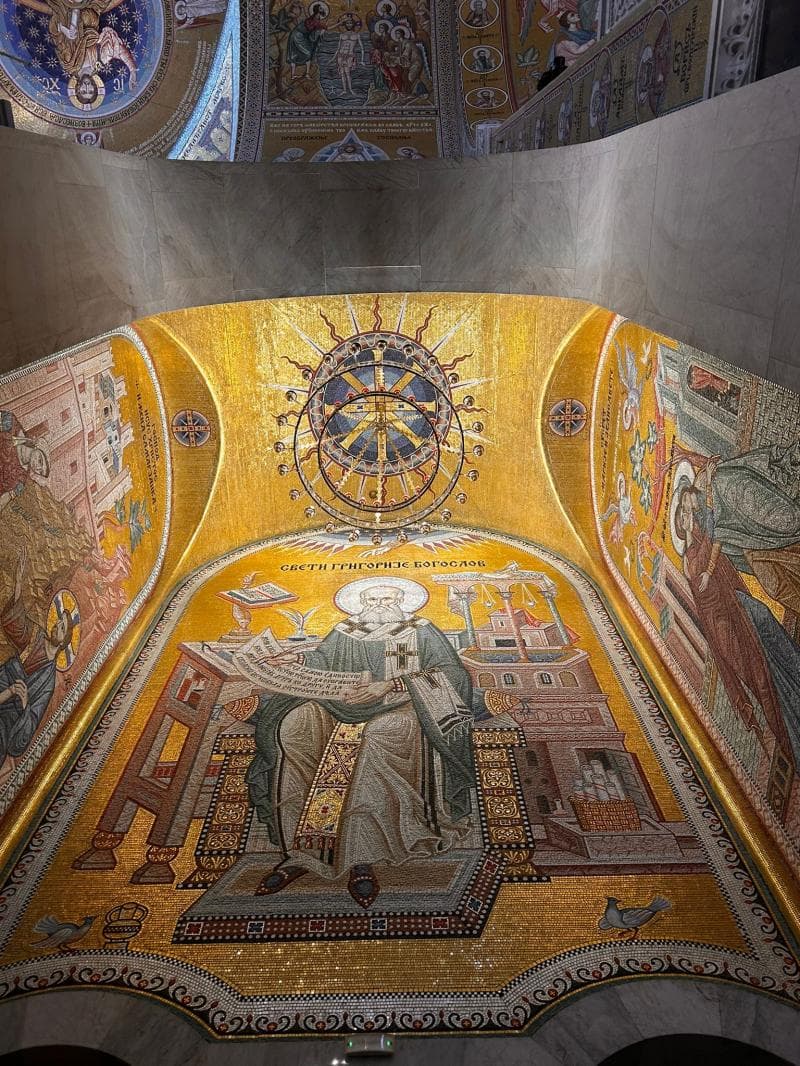
Explore the majestic Main Dome of the Church of Saint Sava in Belgrade, Serbia. Discover its stunning Neo-Byzantine architecture and world-class mosaics.
Overview
The Main Dome of the Church of Saint Sava in Belgrade, Serbia, stands as a breathtaking testament to faith, artistry, and national resilience. Dominating the city's skyline, this monumental structure is not merely an architectural marvel but also a profound symbol of Serbian Orthodox Christianity and national identity. Dedicated to Saint Sava, the revered founder of the Serbian Orthodox Church, the church is recognized as one of the largest Eastern Orthodox churches globally and among the largest churches in the world by gross volume.
Its awe-inspiring Neo-Byzantine design, heavily inspired by the ancient Hagia Sophia, culminates in the magnificent Main Dome. This central feature, visible from almost every corner of Belgrade, was the capstone of a construction effort spanning decades. The exterior of the church was largely completed by 2004, while the intricate interior mosaic decorations, including those gracing the Main Dome, were brought to their stunning fruition by 2020.
History & Cultural Background
The story of the Church of Saint Sava, and particularly its iconic dome, is deeply intertwined with Serbian history and unwavering faith. The church stands on the sacred Vračar plateau, precisely where the relics of Saint Sava are believed to have been publicly burned by Ottoman forces in 1594, a punitive act following a Serbian uprising. Saint Sava himself, born Rastko Nemanjić, was a medieval Serbian prince who chose a monastic life, ultimately becoming the first Serbian archbishop and a pivotal figure in the nation's spiritual and cultural development.
The aspiration to build a grand church in his honor emerged as early as 1895, three centuries after the burning of his relics. However, numerous historical upheavals—including the Balkan Wars, World War I, World War II, and decades of communist rule—severely delayed its progress. Construction finally commenced in 1935, only to be halted by conflict.
A monumental engineering feat occurred in 1989 when the colossal 4,000-ton central dome, constructed entirely on the ground, was successfully lifted into place. This intricate process took approximately 20 to 40 days using specially designed hydraulic machines, marking a significant turning point in the church's construction. The exterior was finished by 2004, and the painstaking work on the interior mosaics, culminating in the Main Dome's celestial imagery, was finally completed in 2020.
What Makes It Special
The Main Dome is the crown jewel of the Church of Saint Sava, not only for its sheer scale but also for the unparalleled artistry it encapsulates. Rising to an impressive height of approximately 70 meters (with an additional 12-meter gold-plated cross), it is a dominant feature of Belgrade's skyline. The dome boasts an inner diameter of 30.5 meters (100 feet), creating an immense internal volume that is truly awe-inspiring.
Its most striking feature is the breathtaking mosaic of Christ Pantocrator, a masterful depiction of 'Ruler of All,' which adorns the central oculus. This monumental image is part of an expansive mosaic installation that covers over 15,000 square meters (161,000 square feet) of the church's interior, making it one of the largest mosaic decorations in the world. Composed of millions of individual pieces and weighing over 320 tons, these mosaics were meticulously crafted by a team of 70 Serbian and Russian artists, led by the distinguished Nikolai Mukhin. The circular space beneath the dome is traditionally adorned with a rich blue mosaic, designed to evoke the vastness of the heavens. The exterior of the dome, like the rest of the church, is clad in gleaming white Volakas marble and granite, with the copper covering of the dome having oxidized over time to a distinctive green hue.
Stories, Fun Facts & Local Details
The Main Dome, alongside the entire Church of Saint Sava, is more than just a place of worship; it is a profound national symbol that encapsulates Serbian faith and unwavering spirit. Its design, consciously echoing the grandeur of Hagia Sophia, connects modern Serbia to its rich Byzantine heritage.
A remarkable 'fun fact' in its construction history is the aforementioned lifting of the 4,000-ton dome. This engineering marvel, where the entire dome structure was built at ground level and then raised to its final position, speaks volumes about the dedication and innovative spirit behind the project. The total cost of the church's construction and decoration is estimated at around 100 million euros, with a significant 40 million euros dedicated specifically to the mosaics. This colossal undertaking was financed through a combination of contributions from the Serbian government, the Russian government, and countless private donations, reflecting a collective dedication to this sacred landmark. The church can comfortably accommodate between 7,000 and 10,000 worshippers, showcasing its immense scale and importance as a central gathering place for the faithful.
Visitor Perspective
For any curious traveler, visiting the Main Dome of the Church of Saint Sava offers an unforgettable experience. There is no entrance fee to admire its grandeur, making it accessible to all. However, as it is an active place of worship, visitors are encouraged to observe a modest dress code, ensuring shoulders and knees are covered. Respectful behavior is appreciated to maintain the serene and sacred atmosphere.
The church is conveniently located on Vračar Hill and can be reached by public transportation or a pleasant walk from the city center. Upon entering, the sheer scale and luminous beauty of the interior, particularly the ascending gaze towards the mosaics of the Main Dome, are designed to inspire awe and reverence. It's a place where history, art, and spirituality converge, offering a deep insight into the heart of Serbian culture and Orthodox tradition.
Coordinates: 20.4685389, 44.79806
View on Google Maps💬 How Travelers Describe This Place
Based on community votes
Must See
623Unique
545Beautiful
343Photogenic
211Interesting
20
Traveler Stories
Discover memorable experiences shared by travelers who have visited this place.
No traveler stories yet.
Be the first traveler to share what made this place memorable.

Tour
By
Spot
Discover amazing places around the world. Your journey starts here.
Explore
© 2026 TourBySpot. All rights reserved.